Hitachi is pleased to announce that it will be joining a collaborative research team, led by The University of Tokyo, in the BioSkillDX: Unlocking Tacit Knowledge for Experimental Work Support in Life Sciences, which aims to compile tacit knowledge of lab procedures and support research operations in the life sciences. The joint research project is part of the Japan Science and Technology Agency (JST)’s R&D effort to Research and Foundational Technology Related to the Transfer of Human-Operated Tasks that Contribute to the Effective Transmission of Know-How*1 and falls under the Japanese government’s Key and Advanced Technology R&D through Cross Community Collaboration Program (K Program). This collaborative research project strives to use artificial intelligence to develop visual representations of tacit knowledge of the advanced skills, know-how, and techniques that life-science laboratories require and then digitalize this knowledge, making it possible for anyone to reproduce high-precision experiments and thereby forming a foundation to support such operations. Specifically, it will compile data on techniques used in biological experiments such as cell culture and use AI to analyze and extract the implicit knowledge of veteran researchers in terms of their know-how and the tricks that they have developed based on their experience and intuitions. By doing so, the project will make it possible to provide this type of knowledge to less-experienced individual researchers as optimized feedback and experimental protocols*2 that enable them to confidently carry out experiments. Achieving this goal will help boost experiment reproducibility, improve efficiency in nurturing new human resources, and accelerate the pace of research and development. In this way, Hitachi is striving to help create a rich, sustainable society in which all can live healthy, secure lives thanks to the wider distribution of life-science knowledge and the accelerated development of innovations.
*1 Concerning the selection of new R&D theme by the K Program (Issue 1775 of the Japan Science and Technology Agency’s newsletter [Japanese only]).
*2 Experimental protocols: Manuals that provide concrete descriptions of the goals of experiments as well as the reagents, equipment, procedures, conditions, and other details for conducting experiments and research correctly.
Hitachi’s role in the project and the features of the technology
In the field of life-science research and development, the reproducibility and quality of results are highly dependent on the skills of veteran technicians who conduct complex, high-precision experiments. The tacit know-how and tricks involved in this process, which are not described in experimental protocols, are important. However, it has become quite difficult to efficiently develop and train new human resources to do such work and boost the efficiency of such experiments in the face of Japan’s low birthrate and aging population, with its resulting shrinking of the pool of veteran technicians, and a growing reliance on individuals for passing on skills. Under these conditions, there is an urgent need to create an environment in which anyone would be able to produce the same level of results as veteran technicians. In striving to resolve these issues, Hitachi’s role in this project will be to employ the AI and sensing technology shown below to form the basis of the skill transfer and operation support system (Figure 1). The goal of this endeavor is to build the foundation of a system to share the knowledge of actual workplaces so that it can be employed by entire organizations and industries, accelerating R&D processes and generating new innovations.
- AI technology that replicates expert skills by studying their motions and senses
This AI system utilizes images, Hitachi’s proprietary glove sensors,*3 and other advanced technology to collect high-precision data on hand and figure movements and the pressure they exert in delicate, touch-based manual procedures. It then uses AI to conduct multi-modal*4 analysis of the infinitesimal differences between the actions of veteran technicians and inexperienced workers. It is thus expected that tacit knowledge such as know-how and tricks that were previously hard to explain in words will be able to be recorded in a format that allows them to be utilized as shared knowledge, which will help enhance reproducibility and the quality of experiments in laboratories and entire organizations. - Operation support and feedback precisely matched to individual skill levels
Based on multi-modal analysis, AI will estimate each individual technician’s skill level and offer optimum protocols, learning materials, and feedback matched to the individual’s ability. Technical training will thus evolve from conventional systems that have tended to rely heavily on uniform, standardized lessons and training into dynamic support tailored to the individual’s proficiency level, enabling inexperienced technicians to consistently produce high-quality results. This will in turn help make training of new workers more efficient and accelerate R&D processes.
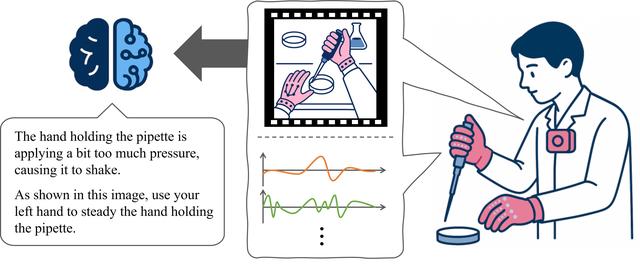
Figure 1: Illustration of how procedural support and feedback is provided through the glove sensor mechanism
*3 “Creating visual representations of workplace know-how through sensing technology” (Hitachi Hyoron) (Japanese only)
*4 Multi-modal: An integrated approach that combines multiple types of data (modalities) such as images, sensor signals, texts, and audio signals.
This research is being conducted with support from JST (K Program, Grant No. JPMJKP25V1).
Future prospects
Through this project, Hitachi aims to promote the development of an AI technology platform to gather and transmit tacit knowledge in the life sciences and thus create a system to support skill transfer and enhance operational efficiency. Hitachi also plans to apply the knowledge gained from the project to its next-generation AI agent Frontline Coordinator – Naivy,*5 which effectively integrates and coordinates workplace events, and to develop it into technologies for bringing Lumada 3.0 to fruition. Naivy will compile and utilize domain knowledge not only in life-science fields, such as medical care, drug discovery, and biotechnology, but also in a wide range of industries, including manufacturing, construction, and maintenance. These efforts will help boost reproducibility and productivity in the workplace, enhance human resource development, and also contribute to the strengthening of workplaces around the world and solutions to social issues.
Portions of this project will be exhibited at CEATEC 2025, which will be held from October 14 to 17, 2025, at the Makuhari Messe convention center in Chiba Prefecture.
For more information, use the inquiry form below to contact the Research & Development Group, Hitachi, Ltd. Please make sure to include the title of the article.
https://www8.hitachi.co.jp/inquiry/hitachi-ltd/hqrd/news/en/form.jsp