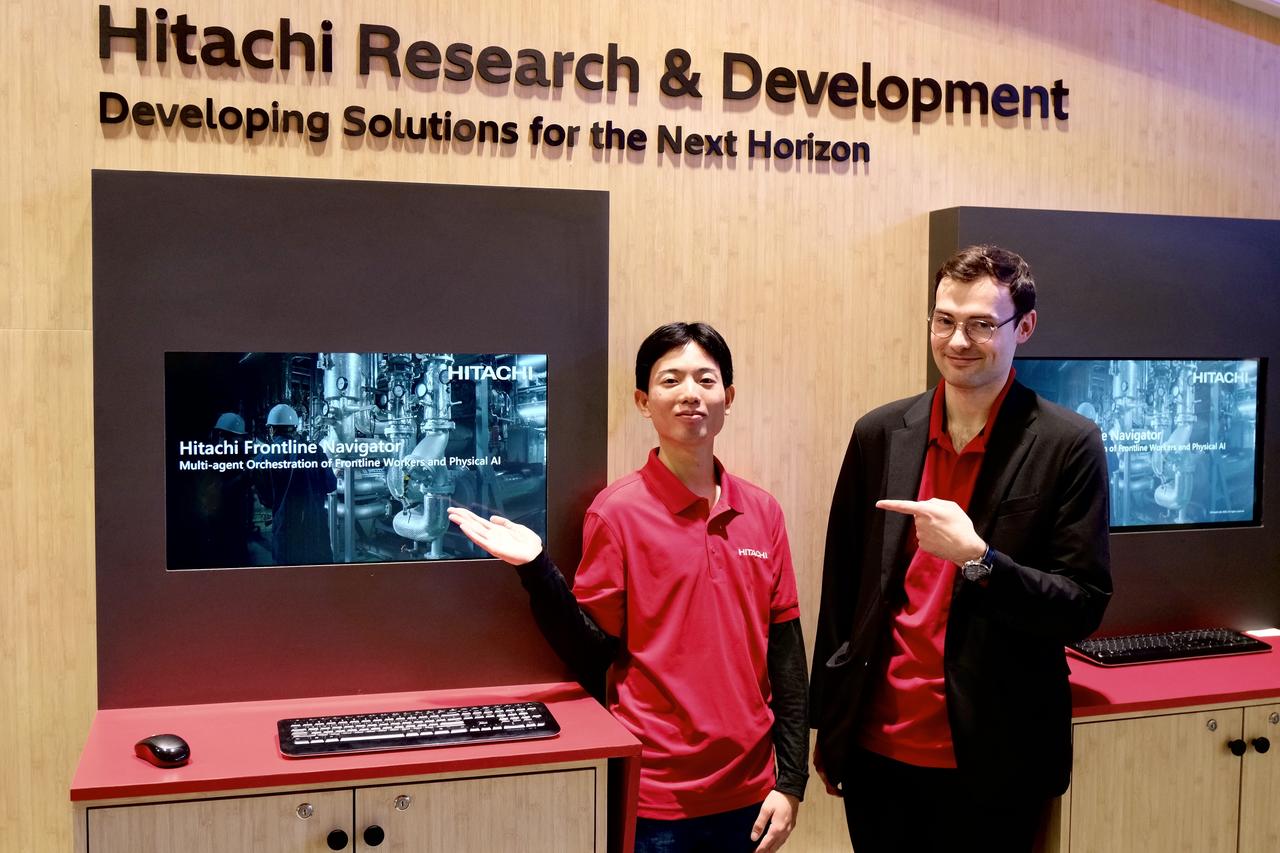
On November 20, 2025, the “2025 Technology Community” technology exchange event was held at Hitachi’s Kokubunji site, part of the Research & Development Group of Hitachi, Ltd.
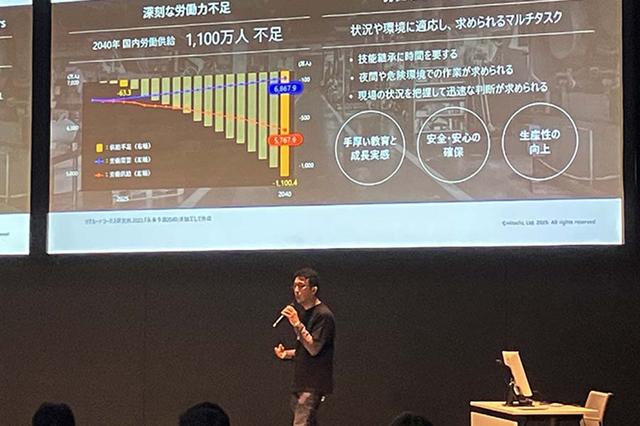
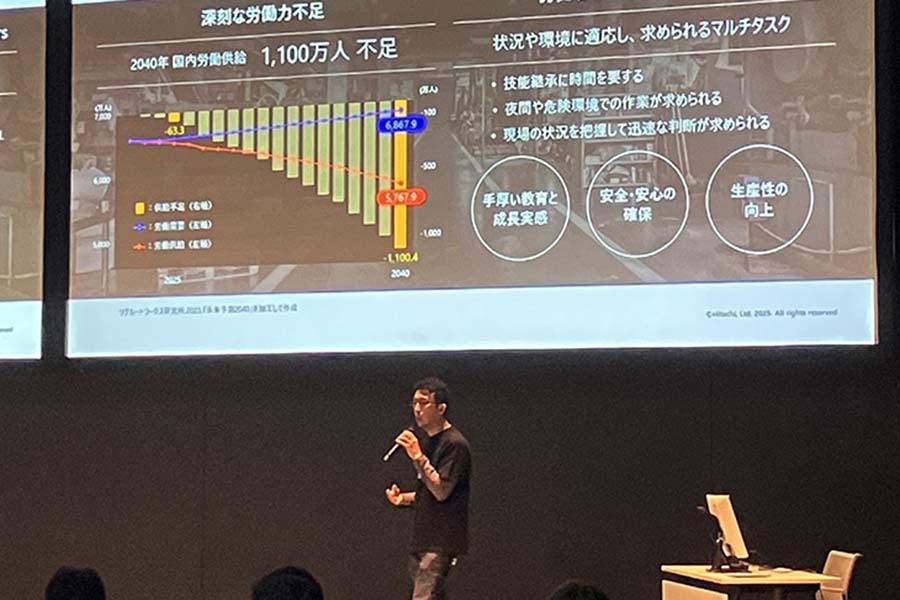
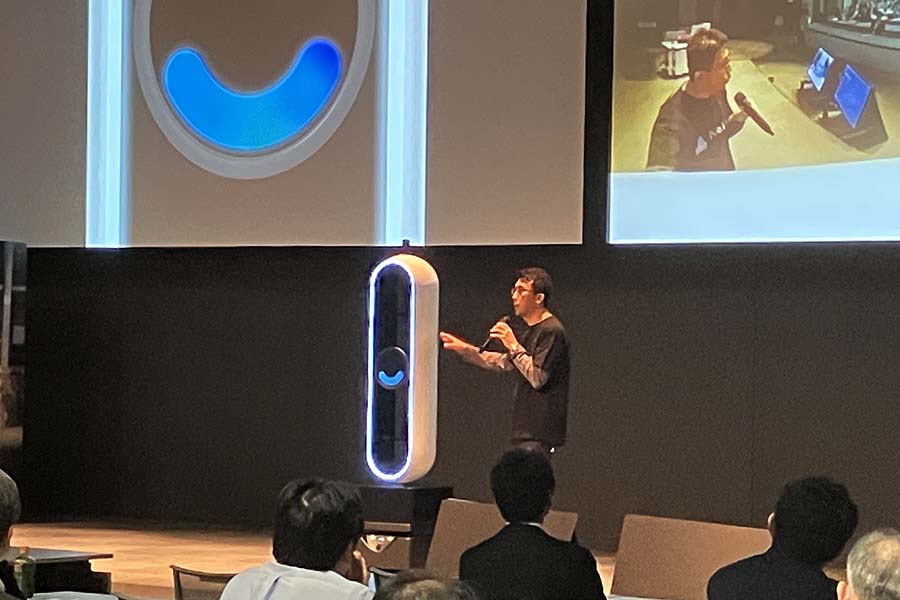
In the lecture session titled “AI Partner for the Future Workplace,” Tomoaki Yoshinaga, Senior Manager of the Vision Intelligence Research Department at the Advanced AI Innovation Center, Digital Innovation R&D, introduced how AI Partner leverages AI technology to address the social issue of frontline worker shortages, specifically by visualizing workplace knowledge and skills, supporting education for newer workers, and reducing the burden on skilled workers.
A video of the lecture session is available.
The presentation includes interviews with internal business divisions and customers who have experienced the AI Partner solution, demonstration videos showing actual operations with the AI Partner, and a concept demo illustrating future workplaces where people and robots collaborate.
Please note: The presentation is delivered in Japanese.
“Frontline Coordinator - Naivy” 未来の現場のパートナー - 日立
www.youtube.comNote: The presentation is in Japanese.
Next-Generation AI Agent “AI Partner for the Future” Workplace
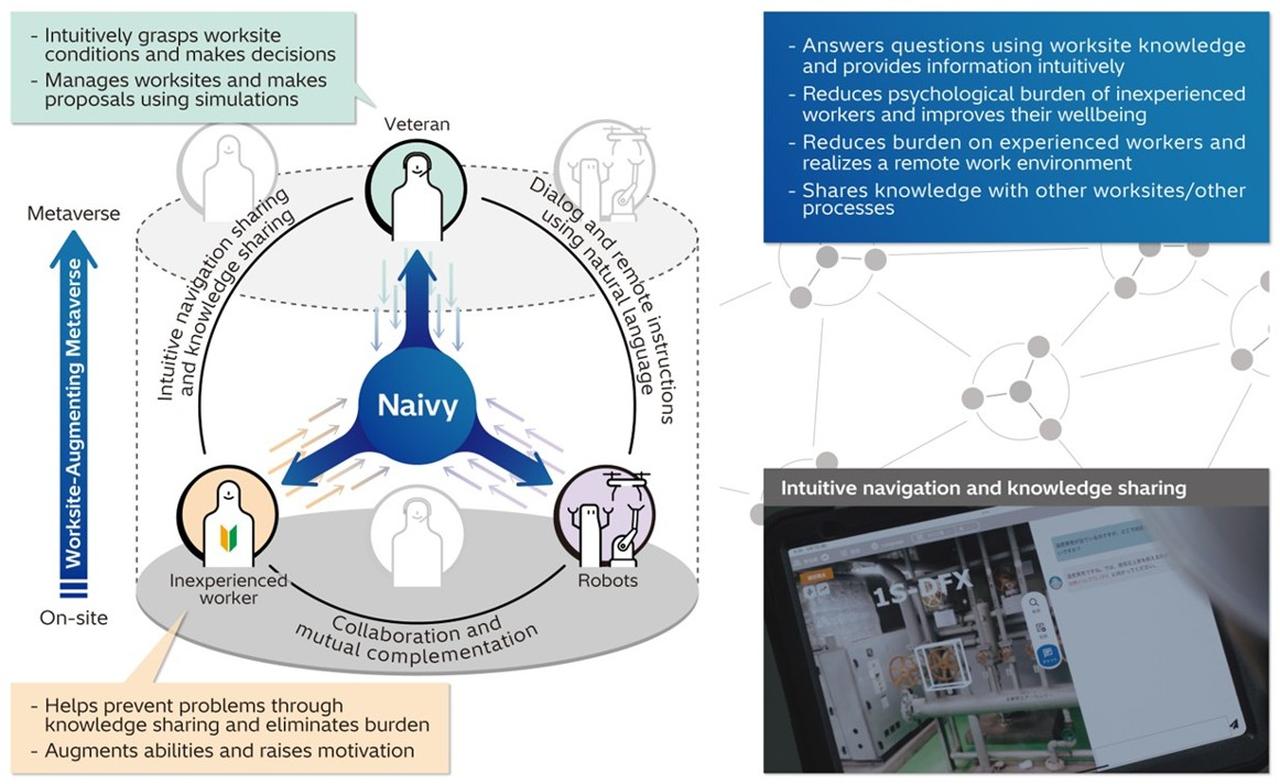
This project directly tackles the global challenge of frontline worker shortages. Its purpose is to visualize workplace knowledge (skills and expertise) using AI, support education for newer workers, and reduce the burden on all workers. Additionally, the AI Partner aims to enhance safety during nighttime or hazardous operations, support quick decision-making to maintain high productivity even with small teams, and ultimately reduce the psychological burden on workers.
Solutions for Frontline Worker Shortages
The shortage of young workers, difficulties in skill transfer, and increasing workload at worksites are recognized as social issues, leading to a negative spiral.
To address these challenges, the AI Partner solution provides the following solutions, aiming to reduce burdens and improve efficiency at worksites:
- Support for Skill Transfer:
By visualizing workplace knowledge with AI, the AI Partner streamlines education for newer workers. - Enhancing Safety:
By visualizing the worksite, the AI Partner supports safe operations, especially during nighttime or in hazardous environments. - Maintaining Productivity:
Through rapid decision support, the AI Partner enables high productivity even with small teams.
The AI Partner’s Mechanism and Hitachi’s Unique Technologies
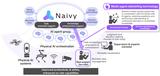
The AI Partner’s system consists of two main components: the “AI engine” and “application suite”.
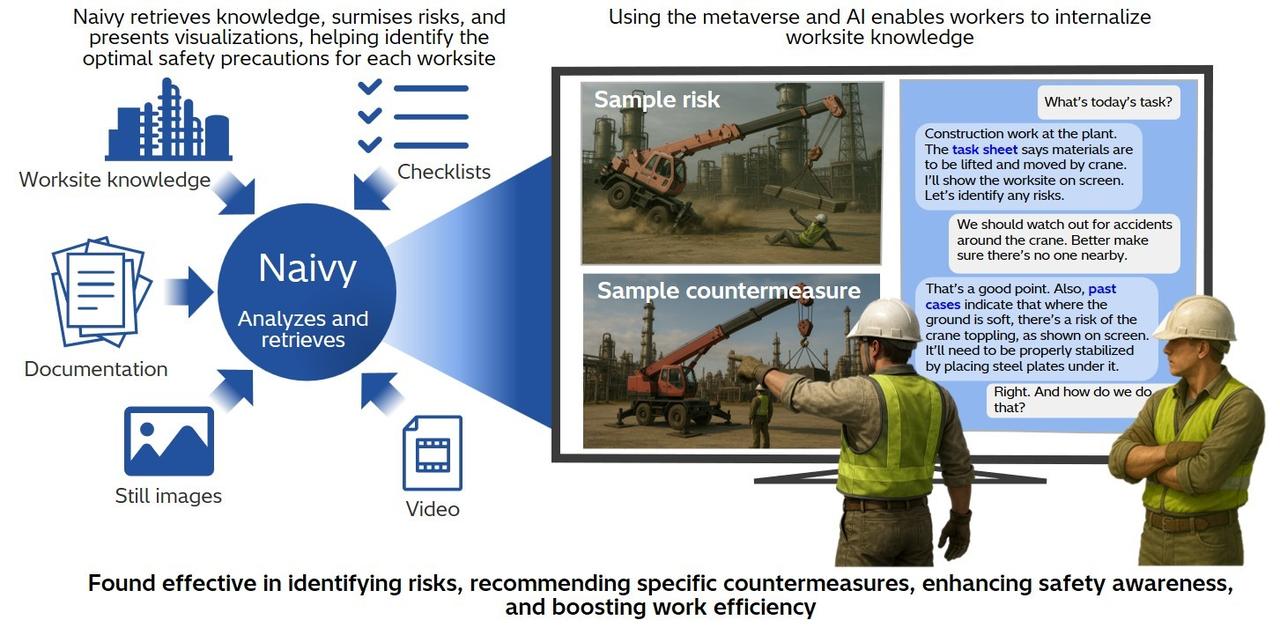
The AI engine analyzes predefined documents, know-how, and manuals to deeply understand the worksite.
It also analyzes daily accumulated data, images, and audio from multiple perspectives, structuring and visualizing workplace knowledge.
The application suite provides various tools needed for real-world operations, such as skill transfer and hazard prediction training. By continuously expanding the lineup, the AI Partner contributes to increasing the value of the worksite.
Hitachi’s unique Physical AI technology supports the realization of the AI Partner.
This technology not only presents information but also helps workers understand the content, intent, and meaning of tasks, enabling them to execute tasks and ultimately elevate their knowledge into wisdom.
Core Technologies of Hitachi’s Physical AI
- Utilization of VLM Technology
AI extracts information from drawings and design intent in a form interpretable by machines, and accumulates it as knowledge graphs. By systematizing knowledge as knowledge graphs, AI agents can propose tasks and provide decision support. - Execution Support
By utilizing multimodal AI, knowledge graphs are linked with on-site equipment and three-dimensional data. This enables intuitive guidance on which equipment to operate and how to execute tasks at the worksite. - Provision of Interpretable Knowledge
By analyzing multiple sources of knowledge, the system provides information so that workers can understand “what will happen if this is executed” and “whether it is safe.”
The Future Envisioned by the AI Partner
The AI Partner demonstrates Hitachi’s unique strengths by using AI to actively support both the “execution” and “learning” of frontline workers.
Looking ahead, the AI Partner will continue to evolve and address workplace challenges. As an AI supporting future worksites, the AI Partner aims to realize a working environment where frontline workers can shine even brighter.
Profile

Tomoaki Yoshinaga
Senior Manager, Vision Intelligence Research Department
Advanced Artificial Intelligence Innovation Center, Digital Innovation R&D
Research & Development Group
Hitachi, Ltd.
Since joining Hitachi, Mr. Yoshinaga has consistently engaged in research and development of image recognition and video analysis AI. He has developed lightweight face recognition technology for consumer video cameras and promoted co-creation activities with U.S. railroad companies for asset management support. Since April 2024, he has served in his current position. He has led the launch and promotion of this project to solve the challenges faced by frontline workers supporting social infrastructure.