Technology presents discussion points for meetings of clinical experts along with supporting evidence, based on treatment histories and relevant literature
Summary
Tohoku University Hospital, Hitachi, and Hitachi High-Tech have jointly developed an artificial intelligence (AI) technology that supports preparation for expert panels*1 (EPs; equivalent to Molecular Tumor Boards (MTBs)), specialized meetings for clinically interpreting genetic test results in cancer genomic medicine.*2 The technology references past comments from physicians, related knowledge, literature databases, and other sources to present points for confirmation and discussion at EPs, including potential treatment strategies, along with supporting evidence.*3 Besides enabling smoother confirmation and discussion during EPs, the technology is expected to shorten the time required to collect and organize information during the preparation phase, helping reduce the workload on physicians. In addition, the system is designed to operate locally on hospital computers in anticipation of usage in operating environments where sensitive information is expected to remain within the hospital. In an evaluation test of the technology using past cases from Tohoku University Hospital, more than 80% of the treatment strategy–related content in the confirmation and discussion points presented by the technology was consistent with the corresponding treatment strategy-related discussion points identified in the EP reviews. Going forward, the three organizations will continue to validate and develop the technology with partners, aiming to contribute to the broader adoption and better quality of cancer genomic medicine by alleviating the burden on healthcare professionals.
*1 Expert panel (EP): A meeting of specialists in the cancer genomic medicine field where multiple experts from diverse perspectives, such as medical oncologists, genetic diagnosticians, clinical geneticists, and pharmacists, review the genetic mutation results for individual patients, discuss optimal treatment strategies and any additional tests required, and provide advice on those approaches. EPs play a critical role in delivering personalized medicine. An EP in Japan is functionally equivalent to a Molecular Tumor Board (MTB).
*2 Cancer genomic medicine: A form of personalized medicine that involves analyzing the genetic mutations in a patient’s cancer cells and using the results to select the most appropriate treatment strategy.
*3 The information presented by the technology is intended to support consideration and discussion, with the final decisions regarding diagnosis and treatment strategies made by healthcare professionals. Treatment strategies are not determined based solely on the technology’s output.
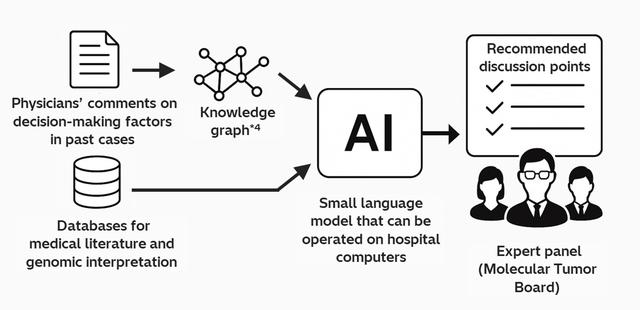
Figure 1. Overview of the AI technology developed to support EP preparation
*4 Knowledge graph: A technology that links and structures knowledge extracted from comments by physicians and other sources, enabling systematic use.
Background and issues
Since 2019, Japan’s national health insurance system has covered comprehensive genomic profiling (CGP) tests*5 for patients with advanced or recurrent solid tumors*6 who have no standard treatment options or have completed standard treatment. As a result, the number of patients eligible for cancer genomic medicine has increased significantly, growing approximately 2.5-fold over the five years from 2020 to 2025.*7 The number of cases for EPs to review has increased correspondingly, as well.
However, EPs require significant preparation work, including confirming test results, collecting related information, and organizing points for consideration and discussion. Depending on the institution and the case, the preparation process may take up to one to two hours per case. Because physicians sometimes engage in these tasks after their regular clinical duties, the process is becoming a source of increased workload. In addition, EPs involve a limited number of specialists, including expert clinicians and molecular biology experts. There is thus a need for a system that allows for an efficient review process that progresses smoothly, based on supporting evidence, and also reduces the preparation workload.
*5 Comprehensive genomic profiling (CGP) test: A test that analyzes DNA from cancer cells and comprehensively identifies mutations across multiple cancer-related genes in a single analysis.
*6 Solid tumors: A general term for cancers that form as a mass (tumor) in organs or tissues in the body.
*7 Cancer genomic medicine and CGP testing website of the Center for Cancer Genomics and Advanced Therapeutics (https://for-patients.c-cat.ncc.go.jp/registration_status [in Japanese]). Monthly average cases increased from approximately 800 in 2020 to around 2,000 in 2025.
Features of the technology and solutions developed to solve these issues
To address these challenges, Tohoku University Hospital, Hitachi, and Hitachi High-Tech developed an AI technology that serves to facilitate confirmation and discussion at EPs by supporting efficient information collection and organization required for preparation steps and presenting confirmation and discussion points, including potential treatment strategies, along with supporting evidence. The key features of the technology are as outlined below.
1. Supports meeting preparation by swiftly referencing and organizing insights from similar cases
Referencing comments from physicians accumulated from past EP discussions, the system extracts viewpoints and decision-making factors used when considering treatment strategies. These are organized into a knowledge graph that clarifies the relationships between factors. This enables the AI to search for and reference insights discussed in similar past cases and present them to physicians, helping streamline the process of collecting and organizing information during the preparation phase.
2. Presents EP confirmation and discussion points together with supporting evidence based on medical databases
Based on the patient’s cancer type and test results, the AI extracts candidate drugs and supporting evidence from the CIViC*8 database and refers to relevant literature in PubMed*9 as necessary. In addition to these sources, the technology references the knowledge graph (created in 1. Above) using retrieval-augmented generation (RAG).*10 The system then draws on these inputs to present points to confirm and discuss at EPs, including potential treatment strategies and supporting evidence, to facilitate confirmation and discussion at the meetings. Furthermore, the system is designed to refrain from generating proposals when supporting evidence is insufficient, enhancing the safety and transparency of the information provided.
*8 Clinical Interpretation of Variants in Cancer (CIViC): A database in which experts from around the world collect and publish information on cancer-related genetic variants and their clinical significance.
*9 PubMed: A medical literature database in the medicine and life science field provided by the US National Library of Medicine.
*10 Retrieval-augmented generation (RAG): A technique in which generative AI retrieves relevant information from databases or document collections and generates a response based on those search results. By generating outputs based not solely on pretrained knowledge but also on retrieved information, RAG helps clarify supporting evidence and reduce incorrect outputs (hallucinations).
3. Ensures sensitive information is protected by operating entirely on hospital computers
To ensure appropriate handling of sensitive information of patients, the development effort utilized a small language model so that the system can operate locally on computers*11 at hospitals. In addition, the processing flow has three stages that align with physicians’ reasoning processes: (1) identifying cancer type and extracting mutations, (2) extracting candidate drugs and literature, and (3) organizing confirmation and discussion points for use at the EP meeting via a knowledge graph. By narrowing the scope of information processing at each stage and passing only necessary information to the next stage, the system is capable of generating the required outputs even on hospital computers with limited input capacity and computing resources. As the system does not require the transmission of sensitive information to external cloud services, it can also operate continuously in accordance with hospital security policies.
*11 A GPU-equipped computer.
Confirmed results
During development 1,000 of the 1,059 cases previously reviewed by EPs at Tohoku University Hospital were used to construct the knowledge graph, with the remaining 59 cases serving as the basis for an evaluation test in which physicians at Tohoku University Hospital compared the conclusions of these EP reviews with the confirmation and discussion points generated by the AI technology. The test found that 84.7% of the treatment strategy-related content in the confirmation and discussion points presented by the technology was consistent with the corresponding treatment strategy-related discussion points identified in the EP reviews.*12
*12 Major causes of discrepancies included recommendations of drugs that have yet to receive approval in Japan and the presentation of clinical trial information outside the scope of the evaluation stage.
Future prospects
Going forward, Tohoku University Hospital, Hitachi, and Hitachi High-Tech will continue working to verify the effectiveness of the technology in reducing preparation workload for EPs and will also study implementation methods to accommodate differences in input data formats and operational practices across medical institutions. With a view to expanding deployment to a wide range of healthcare settings, including cooperative hospitals for cancer genomic medicine, the partners aim to contribute to the broader adoption and improved quality of cancer genomic medicine by helping make preparation for EPs more efficient.
A portion of these research findings will be presented at the 23rd Annual Meeting of the Japanese Society of Medical Oncology, to be held in Yokohama from March 26 to 28, 2026.
For more information, use the inquiry form below to contact the Research & Development Group, Hitachi, Ltd. Please make sure to include the title of the article.
https://www8.hitachi.co.jp/inquiry/hitachi-ltd/hqrd/news/en/form.jsp