As risks affecting social and economic activities become increasingly diverse and complex, the University of Tokyo established the Institute for Digital Observatory in April 2023 with the aim of strengthening the resilience of national and corporate activities through the early detection of risk indicators. Hitachi is advancing research and development of digital observatory technologies that integrate real-world data observation and analysis with generative AI through collaborative research with the Institute.
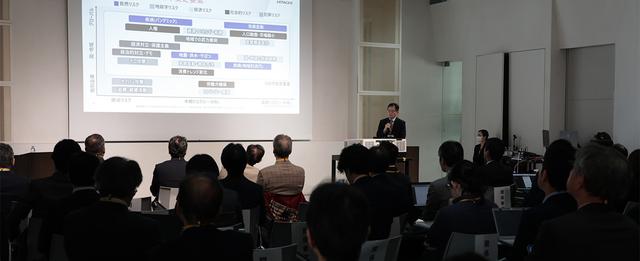
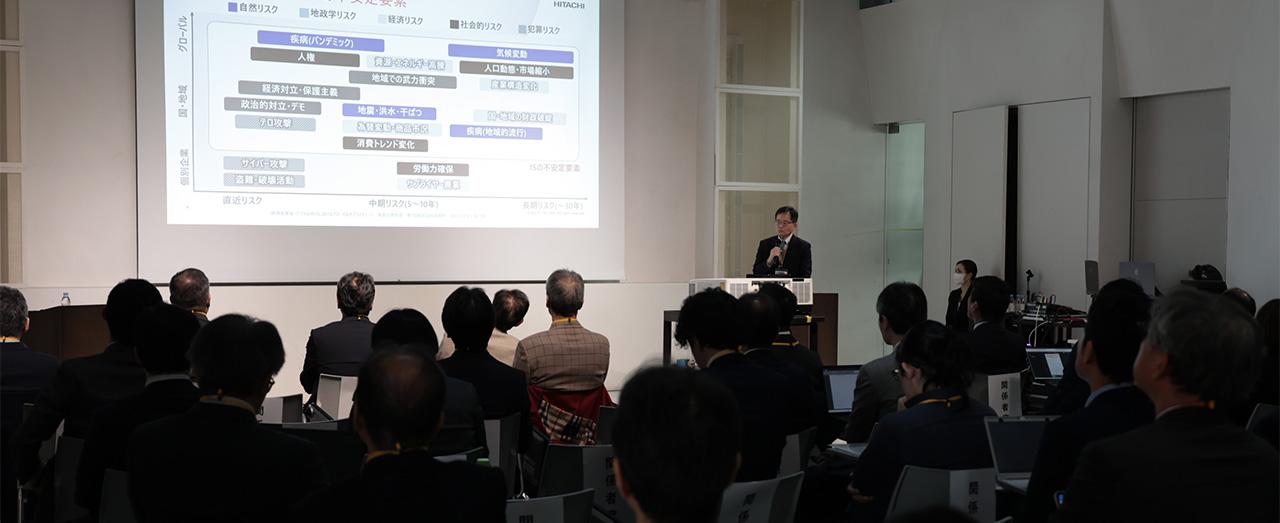
On December 1, 2025, the Institute held its 3rd Forum and Workshop at the Komaba Research Campus of The University of Tokyo. The forum highlighted the significance of the digital observatory in addressing the compound risks facing modern society, including rising geopolitical tensions, the spread of protectionism, intensifying climate change, and inclusion-related challenges, while also presenting the potential of leveraging data and AI agents. This article introduces highlights from the forum together with an overview of research presented by each research team.
Welcoming Address
The Need for Comprehensive Knowledge in a World of Cascading Risks
The forum opened with remarks by University Professor Masaru Kitsuregawa, Director of the Institute for Digital Observatory, The University of Tokyo, who reflected on the background behind the establishment of the Institute and spoke about the fundamental nature of the research it seeks to pursue. Professor Kitsuregawa noted that one of the important roles universities play in society is to provide recommendations and proposals. At the same time, however, he pointed out the reality that many proposals are produced in large numbers only to be forgotten without ever being put into practice. Motivated by this concern, he explained that discussions with Hitachi toward the establishment of the Institute began as part of an effort to explore a form of research capable of delivering tangible outcomes in the real world.
Among the issues shared during these discussions, one of the most significant was the vulnerability of supply chains exposed during the COVID-19 pandemic. Even the absence of a single component could halt an entire system, a simple yet critical problem. This raised questions as to whether there might be ways to predict and avoid such disruptions in advance. Another issue highlighted was the importance of visualizing not only the flow of goods but also production processes linked to human rights violations and unfair labor practices, thereby contributing to healthier and more sustainable supply chains.
Geopolitical tensions are intensifying worldwide due to factors such as war in Ukraine, the situation in Gaza, and the rise of protectionism, further amplifying the cascading nature of global risks. While specialists exist in individual domains, frameworks capable of comprehensively understanding how risks propagate across domains remain limited. Against this backdrop, Professor Kitsuregawa emphasized the urgent need for integrated knowledge that brings together the diverse expertise of the University of Tokyo, including economics, law, international politics, Large Language Models (LLMs), agriculture, and climate change, to observe, understand, and respond to global changes through digital technologies. He concluded by calling on many more researchers to participate in the Institute so that it may serve as an open hub of knowledge.
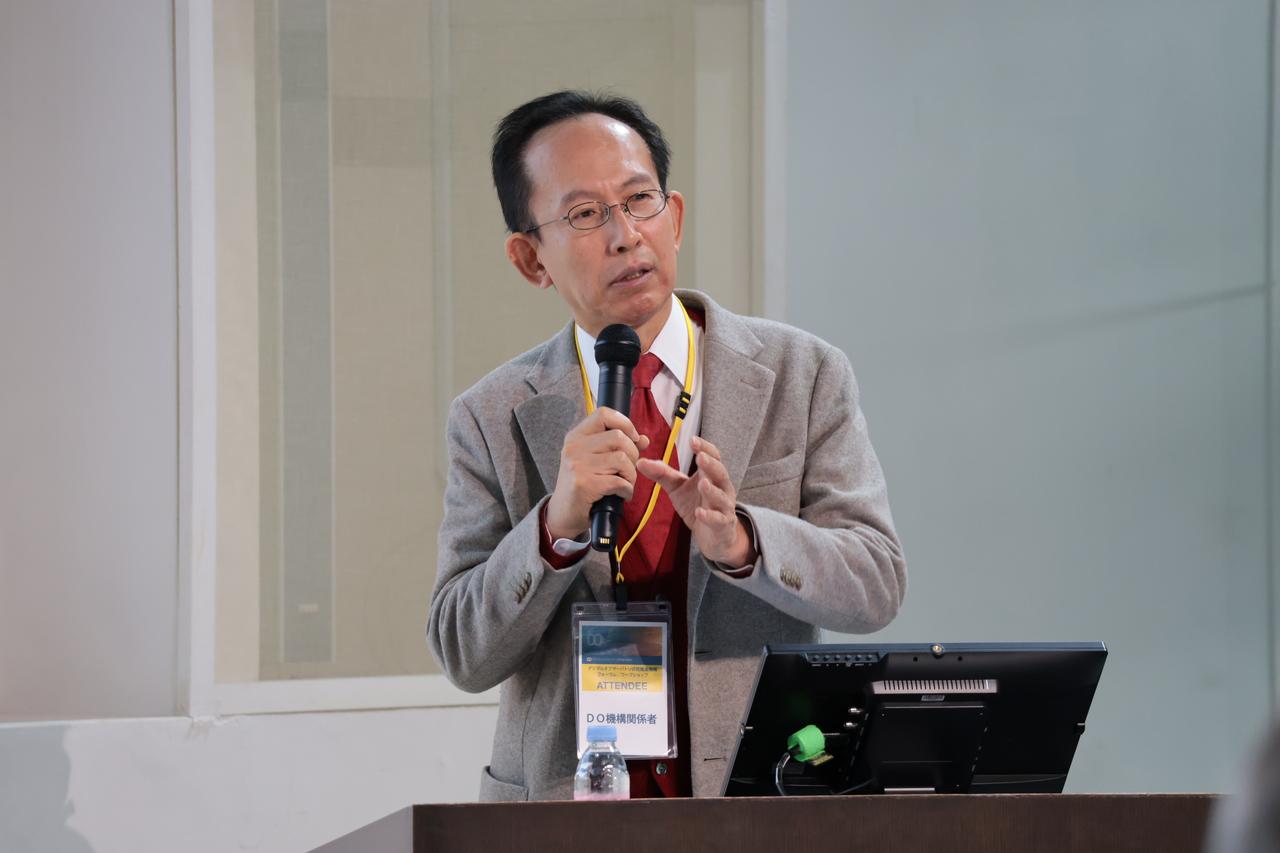
Professor Masaru Kitsuregawa, Director of the Institute for Digital Observatory, The University of Tokyo
Next, Jun Abe, Executive Vice President and Executive Officer delivered remarks on behalf of the forum co-organizer Hitachi. Referring to the digital observatory research jointly pursued by the University of Tokyo and Hitachi, he stated that addressing highly sophisticated and complex challenges, far beyond the capabilities of any single organization requires the interdisciplinary knowledge cultivated at the University of Tokyo across both the humanities and sciences.
The environment surrounding businesses is undergoing rapid change due to supply chain disruptions, geopolitical risks, and tightening regulations, making conventional decision-making based on experience and intuition increasingly insufficient. Under these circumstances, Hitachi is focusing its attention on AI agents that support context-sensitive decision-making and recommendations. By enabling multiple AI agents to collaborate, these technologies are expected to provide flexible responses to change and support the advancement of business operations and social systems.
As a prerequisite for such capabilities, Abe emphasized the importance of establishing a foundation for secure and trustworthy data sharing, and referred to the significance of the Ouranos Ecosystem, a public-private initiative led primarily by Japan’s Ministry of Economy, Trade and Industry (METI) to promote cross-sector data and system interoperability. He concluded by stating: “By combining data-sharing infrastructures with AI agents, we expect to create new approaches for solving social challenges and delivering more advanced services. We hope today’s forum will serve as a venue for in-depth discussion on these possibilities and for bringing together the knowledge and expertise of all participants.”
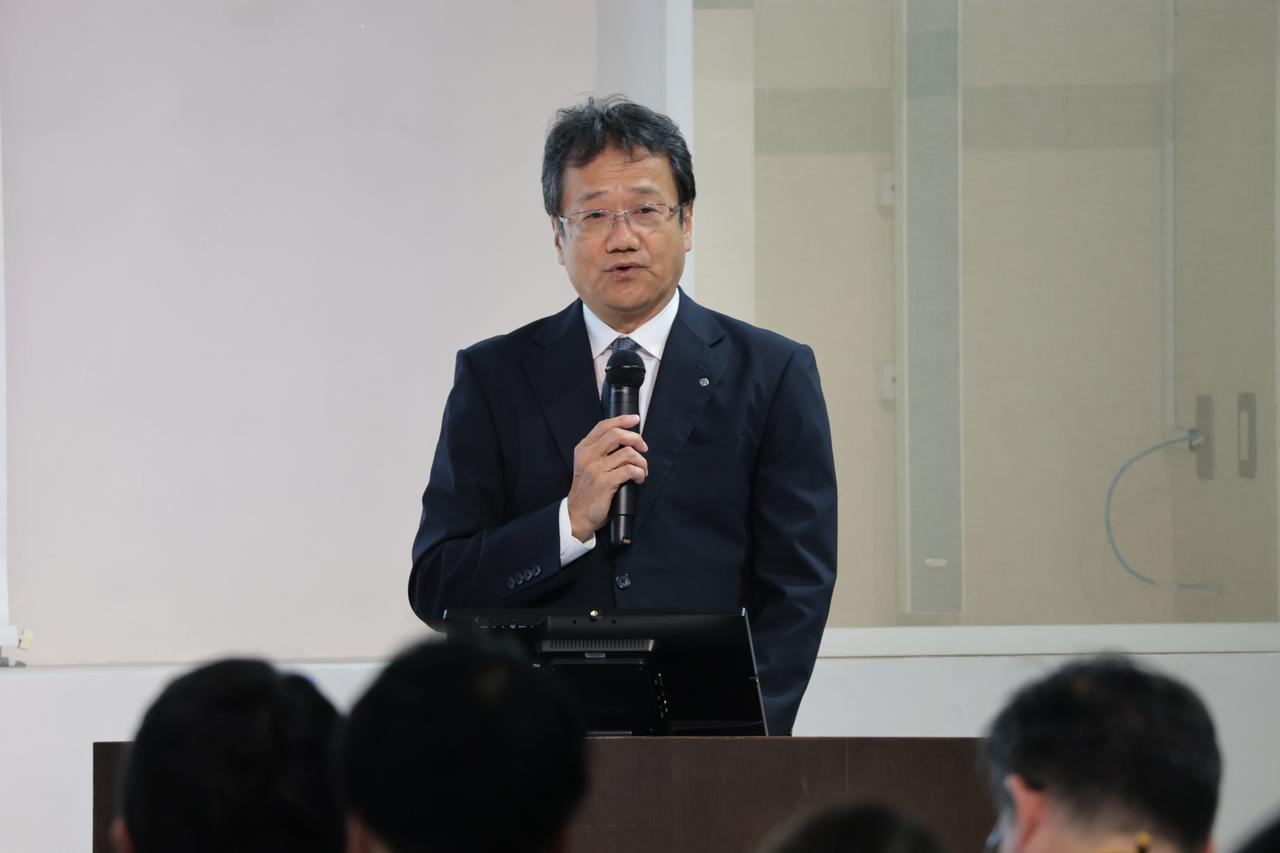
Jun Abe, Executive Vice President and Executive Officer, Hitachi Ltd.
Forum Overview
A Comprehensive Review of the Knowledge Accumulated Through Research
Next, Professor Masashi Toyoda of the Institute of Industrial Science, The University of Tokyo, who serves as Deputy Director of the Institute for Digital Observatory, took the stage to explain the overall structure of the Institute and the objectives of the forum. The Institute brings together eight divisions of the University of Tokyo in an interdisciplinary framework spanning the Graduate School of Economics, Graduate Schools of Law and Politics, Graduate School of Arts and Sciences, Graduate School of Information Science and Technology, Graduate School of Agricultural and Life Sciences, Institute for Future Initiatives, Institute of Industrial Science, and Research Center for Advanced Science and Technology. Another distinctive feature is that the research is not confined within the university itself, but is conducted in close collaboration with Hitachi’s research laboratories.
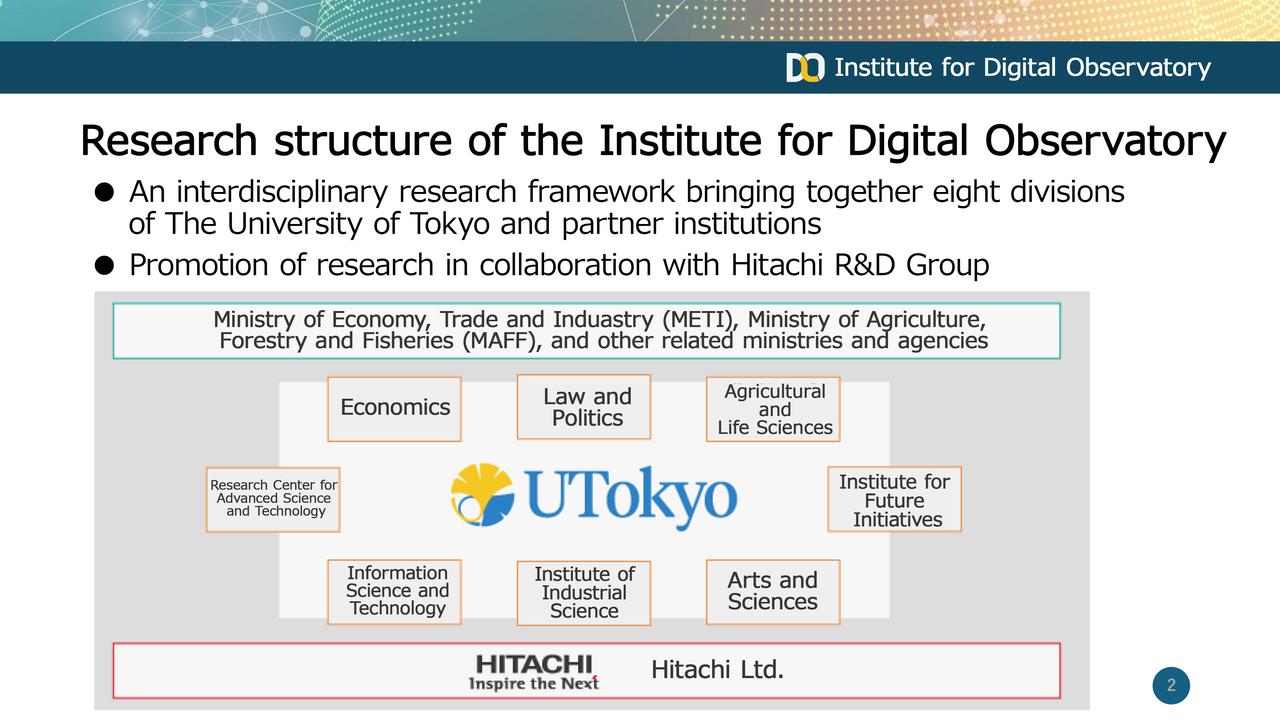
The social risks addressed by the Institute are broadly categorized into four areas: economy and trade, geopolitics, climate and environment, and society and institutions. Research themes cover a wide range of issues, including protectionism, armed conflict, climate change, and inclusion. For all of these risks, it is extremely difficult to predict when, where, and what kind of trigger may escalate into a major shock. To address this challenge, each research team has been working on early warning detection and impact analysis using trade statistics, international input-output tables, news text, vessel movement data, agricultural and climate data, and survey data.
This forum presents an overview of the knowledge accumulated across the Institute through research conducted since 2023.
Overview Reports from Each Research Team
(1) Toward New Developments in Digital Observatory Technologies for Early Detection of Global Market Risks and Identification of New Opportunities
Ken Naono, Principal Researcher at Hitachi Research & Development Group and Project Leader of the Digital Observatory Project presented the role of digital observatory research within Hitachi and reported on the achievements of approximately 32 months worth of research activities. Under its new management plan, Inspire 2027, the Hitachi Group has set forth the realization of a harmonized society, in which environmental sustainability, well-being, and economic growth coexist in balance. To achieve this vision, Hitachi positions digital data observatories capable of accurately observing social activities as a critical foundation.
In collaborative research with the University of Tokyo, the project has identified three key objectives for supply chain management in 2030: clarifying risk points during normal operations, minimizing impacts during crises, and rapidly restoring operations to normal mode after a crisis. To achieve these goals, the project aims to strengthen supply chain resilience by linking and visualizing a wide variety of open and commercial data sources.
To date, the research has addressed eight of the 15 risks identified as factors destabilizing supply chains, representing more than half of the total risk categories under consideration.
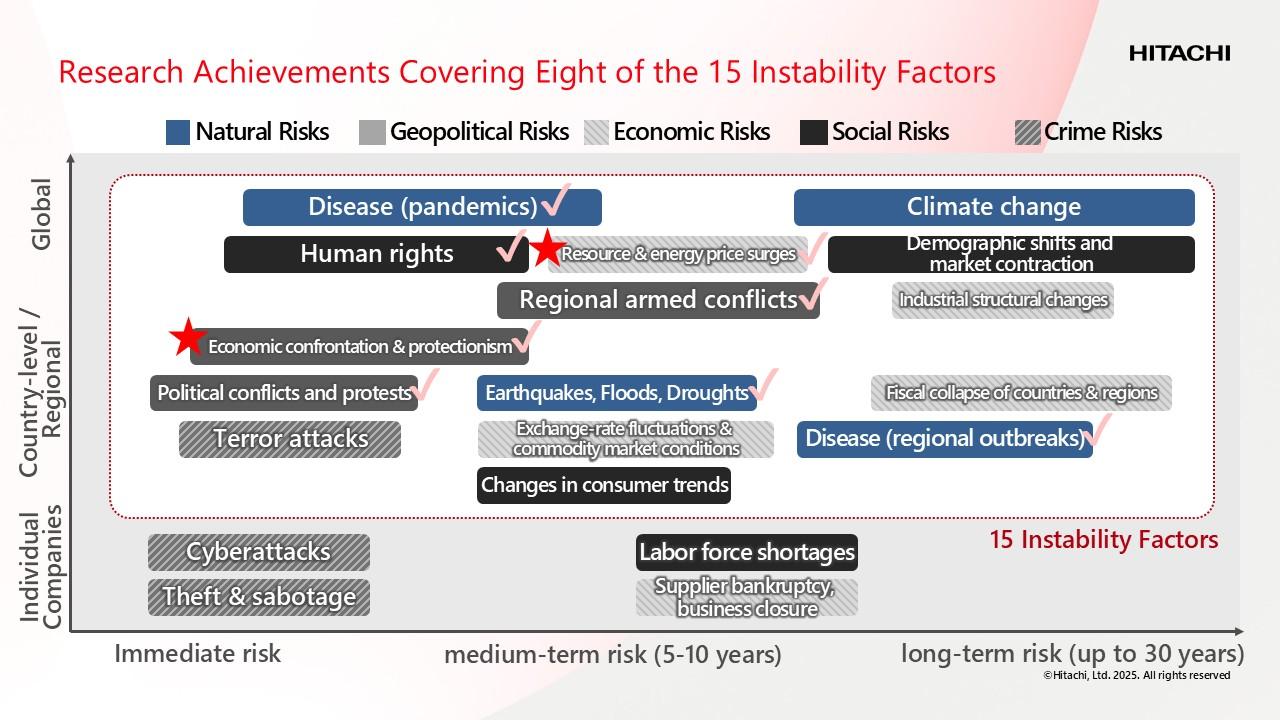
Regarding resource price surge risks, the Institute focused on conflict minerals, minerals that serve as funding sources for armed groups and other actors, as one of the contributing factors. By overlaying conflict locations with mineral deposit information, researchers visualized potential areas of concern and demonstrated that early warning signs of conflict could be identified through news analysis. In addition, with respect to tariff risks associated with economic friction, the Institute demonstrated that signs preceding tariff implementation can be detected through time-series analysis of legal systems and news keywords.
The Research & Development Group has also developed deep insight inferencing technology, which leverages generative AI to estimate manufacturing sites from component names and open data. This technology aims to clarify risk information in secondary and deeper-tier supply chains that had previously been difficult to identify. By combining this technology with observational data, the research is also being expanded toward applications such as the exploration of future business opportunities.
Furthermore, as the next stage of development, the Institute aims to address increasingly complex and interconnected risk events through collaboration among multiple AI agents.
(2) Overview and Infrastructure of the Institute for Digital Observatory
Professor Masashi Toyoda of the Institute of Industrial Science, The University of Tokyo introduced the activities of the infrastructure team. As foundational technologies for enabling the observation of diverse social activities, the infrastructure team is responsible for collecting and accumulating data such as trade statistics and international input-output tables, building data collection and analysis platforms, and providing analytical results to relevant ministries and agencies.
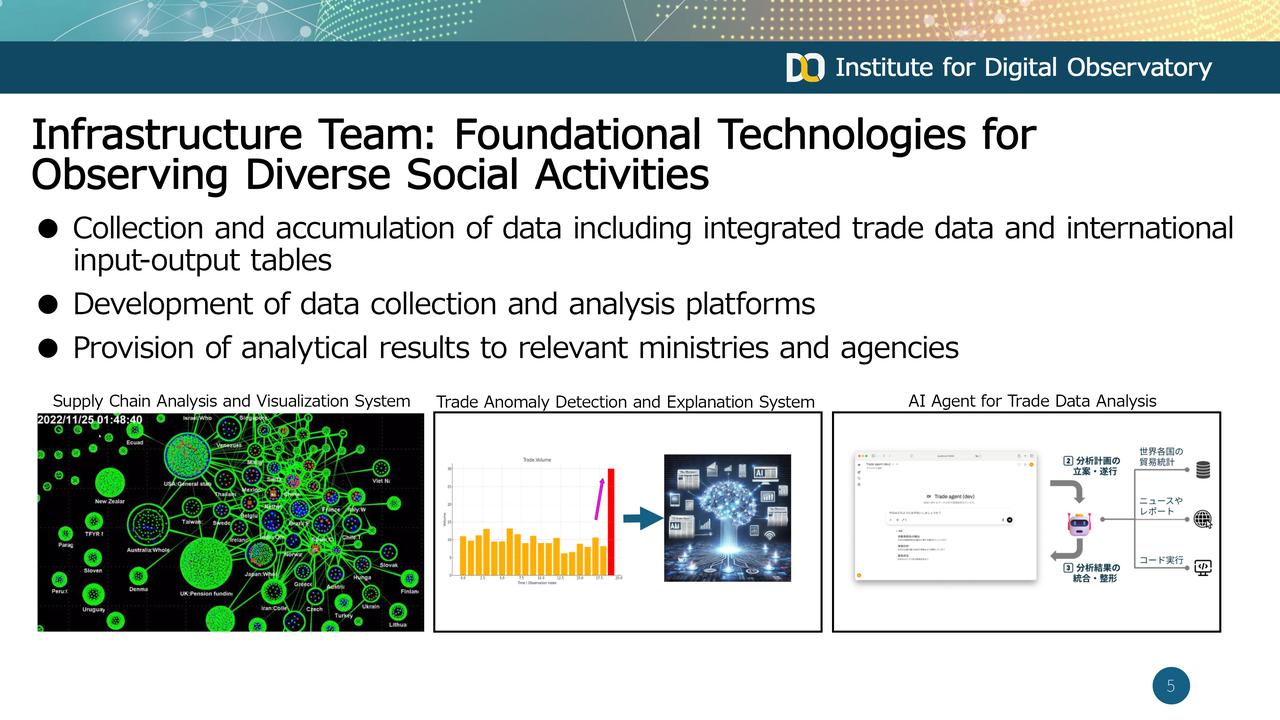
Research using trade statistics data and international input-output tables has focused primarily on three themes. The first is the supply chain analysis and visualization system. By visualizing international input-output tables, the system enables analysis of both direct and indirect interrelationships among industrial sectors. In collaboration with Professor Taiji Furusawa’s team, efforts are also underway to map and visualize the analytical results of general equilibrium trade models.
The second theme is the trade anomaly detection and explanation system using Large Language Models (LLMs). The system acquires daily data from the United Nations trade statistics database, UN Comtrade. When anomalies are detected, multiple generative AI systems search and integrate news sources to explain the underlying factors behind the anomalies.
The third theme, the AI agent for trade data analysis, also leverages LLMs and enables interactive analysis of trade data through natural language dialogue. When users provide analytical objectives or directions, the system automates processes ranging from analytical design to execution using structured query language (SQL) and interpretation of results. Professor Toyoda emphasized that this enables even non-specialists to perform sophisticated analyses and encouraged broader utilization of the system.
(3) General Equilibrium Analysis of Supply Chain Resilience
A research team led by Professor Taiji Furusawa of the Graduate School of Economics, The University of Tokyo has developed a general equilibrium trade model that describes global supply chains. The model incorporates a large number of countries and goods (industries), enabling estimation of the effects that changes in tariff and non-tariff barriers have on domestic production, labor demand through trade, and real income in each country. Covering 36 countries and 22 industries, the model adopts a structure that distinguishes between intermediate goods trade and final goods trade.
Using this model, the team conducted a simulation based on the reciprocal tariff policies envisioned under the Trump administration as of August 2025. The results indicated reductions in real income in nearly all countries, including the United States, China, and Japan. A particularly important finding is that tariffs raise the prices of intermediate goods, which in turn increase production costs and negatively affect the domestic economy itself.
Looking ahead, the team aims to develop additional models, including: models capable of estimating the short-term impacts of tariff policies, long-term models incorporating alternative measures and research and development (R&D) activities in response to export restrictions on specific resources, and models capable of estimating the global ripple effects of detailed supply constraints based on more finely segmented industrial classifications.
(4) Research on Early Detection of Trade Regulations Using Text Analysis
A research team led by Professor Kazuyori Ito and Visiting Associate Professor Kotaro Shiojiri at the Graduate Schools for Law and Politics, The University of Tokyo, has undertaken three initiatives aimed at building a system for detecting early signs of trade regulations, particularly those imposed by the United States, through news text analysis.
First, the team analyzed US news articles published during the first and second Trump administrations, examining trends in keywords appearing before and after the implementation of trade regulations. The analysis confirmed that the frequency of related keywords began increasing even before tariffs were actually imposed, demonstrating the potential for early detection.
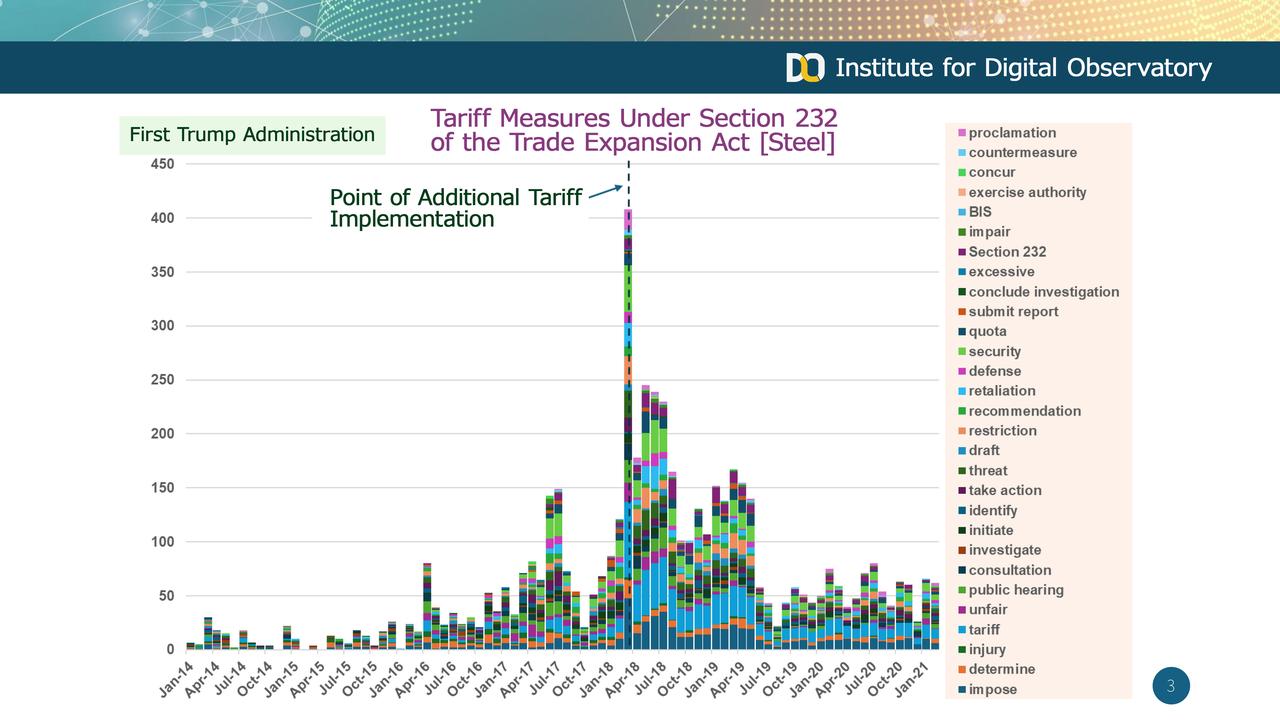
Next, in order to improve the reliability of early-warning detection, the team developed a framework that evaluates risks comprehensively by incorporating major political and economic factors influencing US policymaking, in addition to keyword analysis. By monitoring changes in these indicators over time, the researchers are working to develop methods capable of accurately detecting signals of impending trade regulations.
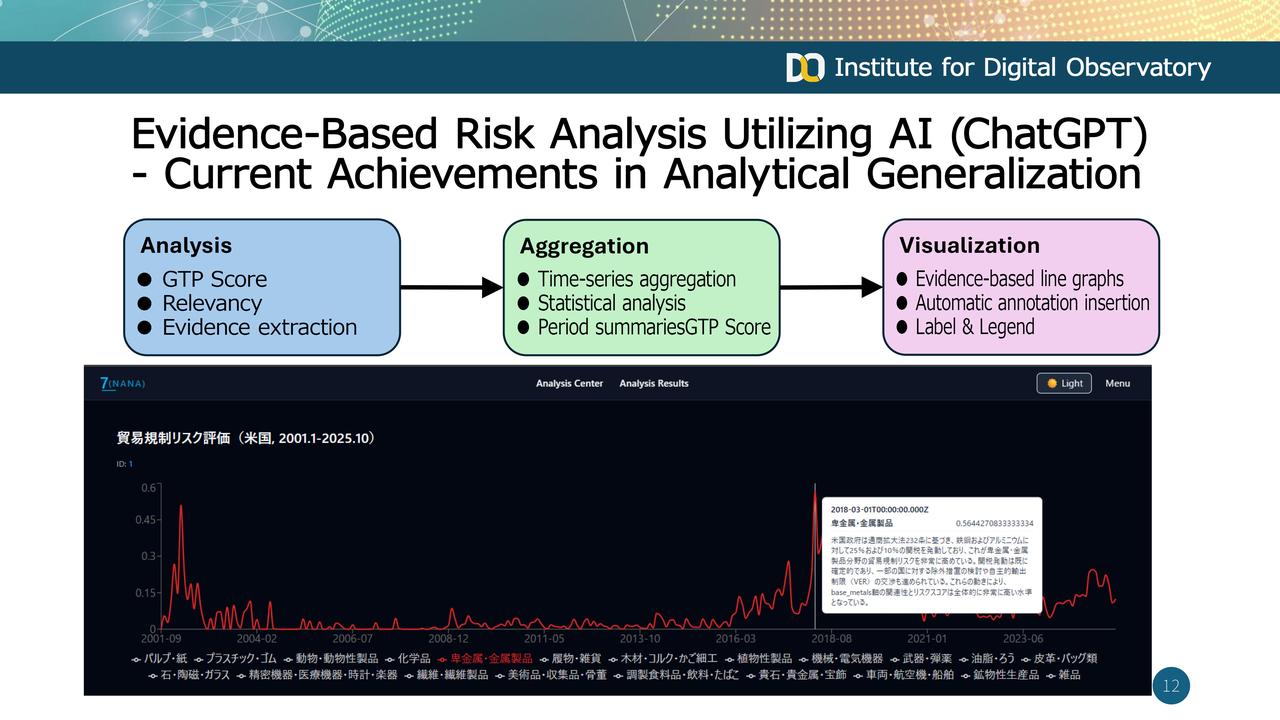
Furthermore, to capture multifaceted social changes, the team developed an analytical pipeline capable of processing diverse information sources in a unified manner. The pipeline consists of three stages: analysis of individual texts and extraction of related data, aggregation of results over time to measure trends, and visualization of the results. The resulting analytical platform, implemented programmatically, includes features such as interactive analysis utilizing generative AI, time-series visualization of risk assessment results, and explanatory displays describing the basis for the assessments, thereby enabling relative risk evaluation.
Going forward, the team will continue improving analytical methods to enhance the accuracy of early-warning detection while also advancing the usability and reliability of the analytical platform.
(5) Understanding and Predicting Political and Social Risks Affecting Global Value Chains
Professor Takuto Sakamoto of the Graduate School of Arts and Sciences, The University of Tokyo, is analyzing the impact of political and social risks, including armed conflict, human rights violations, and geopolitical competition, on global value chains.
Although individual studies have been conducted on specific political and social risks, the data is fragmented and often inconsistent with one another, making it difficult to comprehensively capture diverse risks. Additional challenges include the highly aggregated nature of existing data, the difficulty of collecting fine-grained information, and the lack of real-time responsiveness due to the manual extraction of risk-event information from news texts.
To address these issues, Professor Sakamoto’s team is collaborating with the media analysis team led by Professor Yusuke Miyao to develop methods for automatically extracting risk events from news texts using generative AI. In parallel, the team has begun developing models to predict the occurrence of risk events in advance using existing datasets. While validating existing data-driven models, the researchers are also incorporating expertise from international relations and area studies to build models capable not only of prediction but also of interpretation and explanation.
In addition, the team is investigating, selecting, and acquiring reliable text-based information sources that are useful for detecting and predicting risk events.
Going forward, the researchers will continue working on the automatic generation of highly granular risk-event data and the improvement of prediction accuracy. In addition to applications in the field of economic security, they also aim to contribute to areas such as peace building, development, and humanitarian assistance.
(6) Development of Supply Chain-Related Event Recognition Technology from Text-Based Information Sources
Professor Yusuke Miyao of the Graduate School of Information Science and Technology, The University of Tokyo, in collaboration with Professor Takuto Sakamoto’s team, is conducting research on technologies that automatically extract risk events from various text data sources such as news articles, identify events that may affect supply chains, predict their impacts, and present the results in an explainable manner.
Last fiscal year, as part of the efforts to develop technologies for automatically extracting risk events from text-based information sources, the team focused on conflict-related information and built a system that combines rule-based methods with LLMs to extract and structure detailed information such as dates, locations, and casualty figures from news articles. This fiscal year, based on the guideline framework known as PLOVER, which defines a broad range of risk events, the team is advancing the development of a generalized event extraction technology capable of handling not only conflicts but also a wider variety of risk events, including human rights violations and demonstrations.
Regarding technologies for predicting and explaining the future impacts of risk events on supply chains using natural language, the team generated hypothetical scenarios based on existing supply chain datasets and used them as benchmarks to evaluate explanation-generation tasks. Evaluation using test data showed a tendency for larger models to achieve higher performance, however, overall performance remained limited, indicating a need for further improvements.
Going forward, the researchers will continue improving the accuracy and generalizability of risk-event extraction, as well as advancing technologies for generating impact explanations. They also plan to explore collaboration mechanisms such as feeding automatically extracted risk-event information into Professor Sakamoto’s predictive models.
(7) Resilience Research Through Analysis of Financial, Logistics, and Human Mobility Data -- Focusing on AIS Data
Associate Professor Rie Yamaguchi of the Graduate School of Information Science and Technology, The University of Tokyo, is analyzing maritime transportation flows using Automatic Identification Systems (AIS) data.
Although it is assumed that latent events occur prior to major societal developments such as armed conflicts, directly observing such events is difficult. However, because most global logistics depend on maritime transportation, the research team hypothesized that latent events, such as the securing of resources or preparations for military operations, would alter maritime states. Based on this hypothesis, the team examined technologies for detecting anomalies in maritime states from AIS data in order to identify early signs of armed conflict and other risks.
By using AIS data, it becomes possible to quantitatively identify phenomena such as vessel congestion in specific sea areas, route changes, and sharp declines in shipping traffic volume. The research team analyzed AIS data from approximately 8,000 vessels over a one-year period from July 2024 to June 2025 in the Strait of Hormuz, a critical maritime chokepoint connecting the Persian Gulf and the Gulf of Oman. As a result, two significant anomalies in maritime states were detected, each occurring several days before periods of heightened military tension in the region. This finding suggests that such anomalies may serve as early indicators of emerging risks.
These analytical results indicate that the degree of anomaly in maritime states could function as an early indicator for identifying latent surrounding risks before they become visible in text-based sources such as news reports.
Going forward, the team plans to expand the analysis to other maritime regions and further demonstrate the potential of maritime transportation analysis for early-warning systems.
(8) Global Supply Chain Analysis for Food Security and Spatial/Genetic Analysis of Agricultural Production Risks
Professor Hiroyoshi Iwata and colleagues at the Graduate School of Agricultural and Life Sciences, The University of Tokyo, are conducting research on food security against the backdrop of Japan’s calorie-based food self-sufficiency rate falling below 40% and ongoing environmental changes such as climate change and the declining agricultural workforce. Their work emphasizes the importance of addressing food security from both domestic production and overseas import perspectives.
In research on global supply chain analysis for food security, the team used a multi-country international trade model to conduct simulations assuming a 25% increase in transportation costs along the northern route through the Bashi Channel (noting that trade volume along this route cannot be directly identified from available data and therefore relies on bold assumptions). The simulation results suggested that imports of processed foods from Southeast Asia would decline significantly, resulting in supply shortages and rising prices even if domestic production increased. For fertilizers and wheat, shifts in import sources were projected, while increases in domestic production were expected to remain limited.
Regarding the spatial and genetic analysis of agricultural production risks, the researchers used data from the Agricultural Insurance Association, NOSAI, based in Iwate prefecture and other data, to analyze the decision-making process of agricultural management entities based on actual crop conversion patterns at the field and community levels. The study visualized how insurance systems and regional conditions influence management decisions, while also advancing the monitoring of large-scale land-use changes through integration with remote sensing technologies.
In addition, the team is integrating NOSAI’s data with long-term breeding trial datasets and using LLMs to extract varietal characteristics that are resilient to disaster risks, thereby structuring practical knowledge accumulated in the field. Going forward, the researchers plan to integrate these outcomes into analyses and proposals for food security strategies that connect external environmental factors, domestic structural conditions, and crop breeding technologies.
(9) Foundational Development for Estimating the Long-Term Ripple Effects of Climate Change and Adaptation Measures on Socioeconomic Activities
Professor Akiyuki Kawasaki and colleagues at the Institute for Future Initiatives, The University of Tokyo, are conducting this research based on the recognition that while the impacts of climate change are becoming increasingly severe, particularly in the socioeconomically vulnerable Global South, research on methods for evaluating those impacts remains insufficient.
In the first half of the project, the team constructed a database integrating international input-output tables, national and regional input-output tables, and social statistical data. Using this database, they analyzed the domestic and international propagation of environmental burdens such as CO2 emissions, water and land use, and ecosystem impacts through supply chain pathways. Focusing particularly on China, the researchers integrated provincial input-output tables with statistical data and combined them with IPCC climate change scenarios to establish a methodology for analyzing the impacts of future climate change on industries and environmental burdens at both the national and provincial levels. At the same time, the study also clarified the limitations of top-down input-output analysis for assessing regional impacts at the level of individual goods and services.
Accordingly, in the latter half of the project, the team adopted a bottom-up approach focusing on water-related disasters, aiming to quantitatively demonstrate that climate adaptation measures such as flood control investments can generate long-term socioeconomic benefits, including regional economic development and poverty reduction, in addition to mitigating disaster damage. Specifically, the researchers are developing a framework using causal inference to quantify the broader ripple effects of historical flood control projects in Japan.
They plan to leverage this framework in the future development of tools for evaluating public investments in climate adaptation and disaster prevention from the perspective of socioeconomic impact assessment.
(10) Initiatives Toward Disability-Inclusive Organizational Development -- Targeting Companies, Universities, and Government Agencies
A research team led by Professor Shinichiro Kumagaya at the Research Center for Advanced Science and Technology, The University of Tokyo, is conducting evidence-based research aimed at clarifying organizational mechanisms that contribute to both productivity and the well-being of organizational members, drawing on insights from Tojisha-Kenkyu (self-directed or user-led research).
In research targeting companies, the team established three assessment scales related to workplace mental health and employee engagement in Japanese: psychological safety, knowledge sharing, and humble leadership. They then conducted a cross-sectional survey across multiple companies using these scales. The results showed that humble leadership enhances psychological safety among team members and reduces presenteeism, a state in which employees continue to work despite health or mental challenges, resulting in reduced productivity. Regarding approaches to enhancing humble leadership, the team conducted an intervention study introducing Tojisha-Kenkyu practices into workplaces and are currently analyzing data to confirm the effectiveness of the intervention.
In research involving government agencies, the team collaborated with Japan’s Ministry of Justice using a similar framework and observed comparable trends. Based on these findings, they have implemented initiatives including operational improvements at correctional facilities, Tojisha-Kenkyu workshops for senior officials, and training programs.
At universities, the team analyzed support consultation records accumulated by the University of Tokyo’s Office for Disability Equity (ODE) and categorized different types of difficulties experienced by individuals. In parallel, they are developing an inclusive support system based on natural language processing technologies, including functions for similarity-based retrieval of consultation content and for sharing users’ subjective assessments of their difficulties, with the aim of establishing a continuous and dynamic support framework. Going forward, the team plans to conduct a university-wide inclusion survey to identify and address Diversity, Equity, and Inclusion (DEI) challenges across the university as a whole.
Overall Remarks and Closing Address
Finally, Professor Masaru Kitsuregawa delivered the overall remarks and closing address.
In today’s world, where challenges and risks are becoming increasingly large-scale and complex, knowledge from any single discipline alone is insufficient. What is needed is a “glue” capable of connecting diverse forms of specialized expertise, and AI agents are expected to play that role.
At present, the research conducted by each team may appear somewhat dispersed, however, the organizers will strive to present more integrated and convergent solutions next fiscal year. We look forward to sharing further achievements in the future.