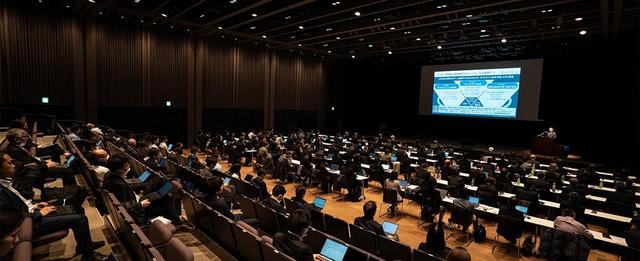
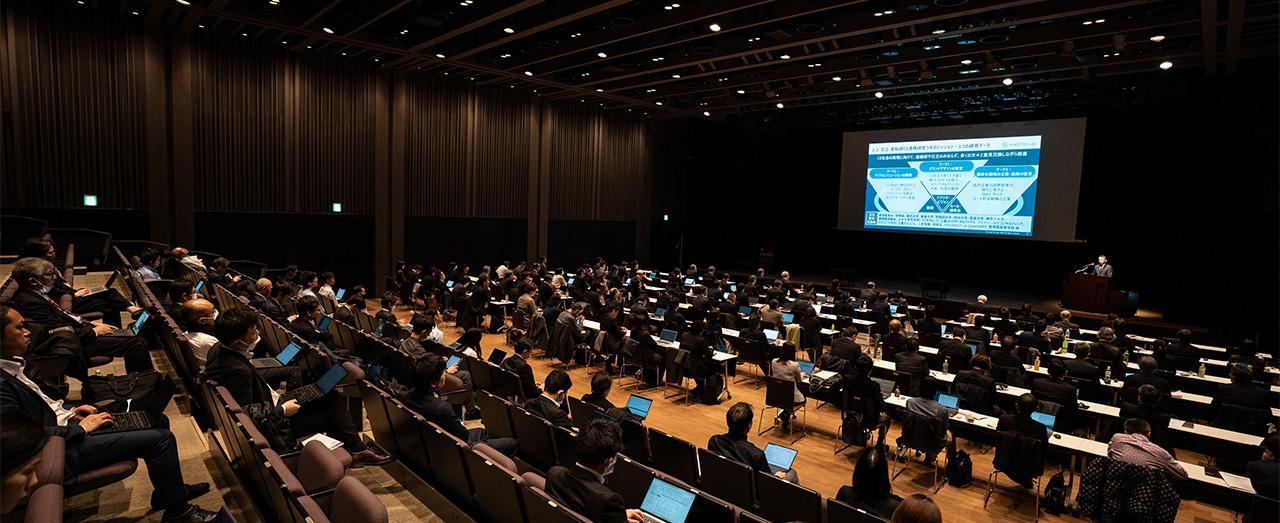
As environmental impacts such as resource depletion and increasing waste have become global challenges, the Hitachi–AIST Circular Economy Collaborative Research Laboratory (Hitachi–AIST CE Lab) held its third open forum. The laboratory was established in 2022 by Hitachi, Ltd. and the National Institute of Advanced Industrial Science and Technology (AIST). The forum presented a roadmap and key requirements for achieving an “ideal future” where diverse stakeholders coexist and social systems work in harmony to foster circularity. The forum also showcased specific initiatives in the areas of digital solutions and standardization. The forum also featured discussions with external experts on the importance of collaboration among stakeholders to accelerate the transition to a circular economy (hereinafter “CE”), as well as on policy measures and approaches that can achieve both economic viability and environmental sustainability.
Opening Address

Left: President Ishimura / Right: Vice President and Executive Officer Sameshima
In his opening remarks, Kazuhiko Ishimura, President and CEO of the National Institute of Advanced Industrial Science and Technology (AIST), highlighted recent developments in domestic and international policies related to resource circulation, as well as growing interests over resource security for critical materials such as rare metals. He noted that a CE has become a critical issue affecting society as a whole. Moreover, he emphasized the need for the integrated design of technology, business and institutional frameworks, and for the capability to translate them into practical societal implementation. “As one of Japan’s largest comprehensive research institutes, AIST is committed to building innovation ecosystems by bringing together companies, universities and public institutions from Japan and around the world, thus advancing technology development and social implementation to help address a wide range of societal challenges,” Ishimura said. He then expressed his expectations for the laboratory, noting that it combines the strengths of AIST and Hitachi to help shape the future of a CE.
The next speaker, Shigetoshi Sameshima, Vice President and Executive Officer, CTO, and General Manager of the Research & Development Group at Hitachi, Ltd., observed that resource-related initiatives are gaining momentum around the world and that resource circulation is entering a new phase characterized by “resource resilience.” He emphasized the importance of promoting local production, local consumption and resource recycling through collaboration extending beyond industry boundaries. He also explained that the laboratory has been working toward an ideal future—a society in which diverse stakeholders coexist and social systems work in harmony to foster circularity—and that the lab has been charting a concrete roadmap toward that vision through continued discussions among industry, government and academia. “To realize this vision, it is important to view not only materials but also energy and information as resources and ensure that they circulate effectively,” he said as he concluded his remarks. “In particular, we believe that the application of rapidly advancing AI technologies will play a key role in accelerating the realization of a CE and enhancing resource resilience.”
Special Presentation
Digital Transformation’s Role & International Standardization Strategy for Multi-Stakeholder Collaboration Toward Realizing CE
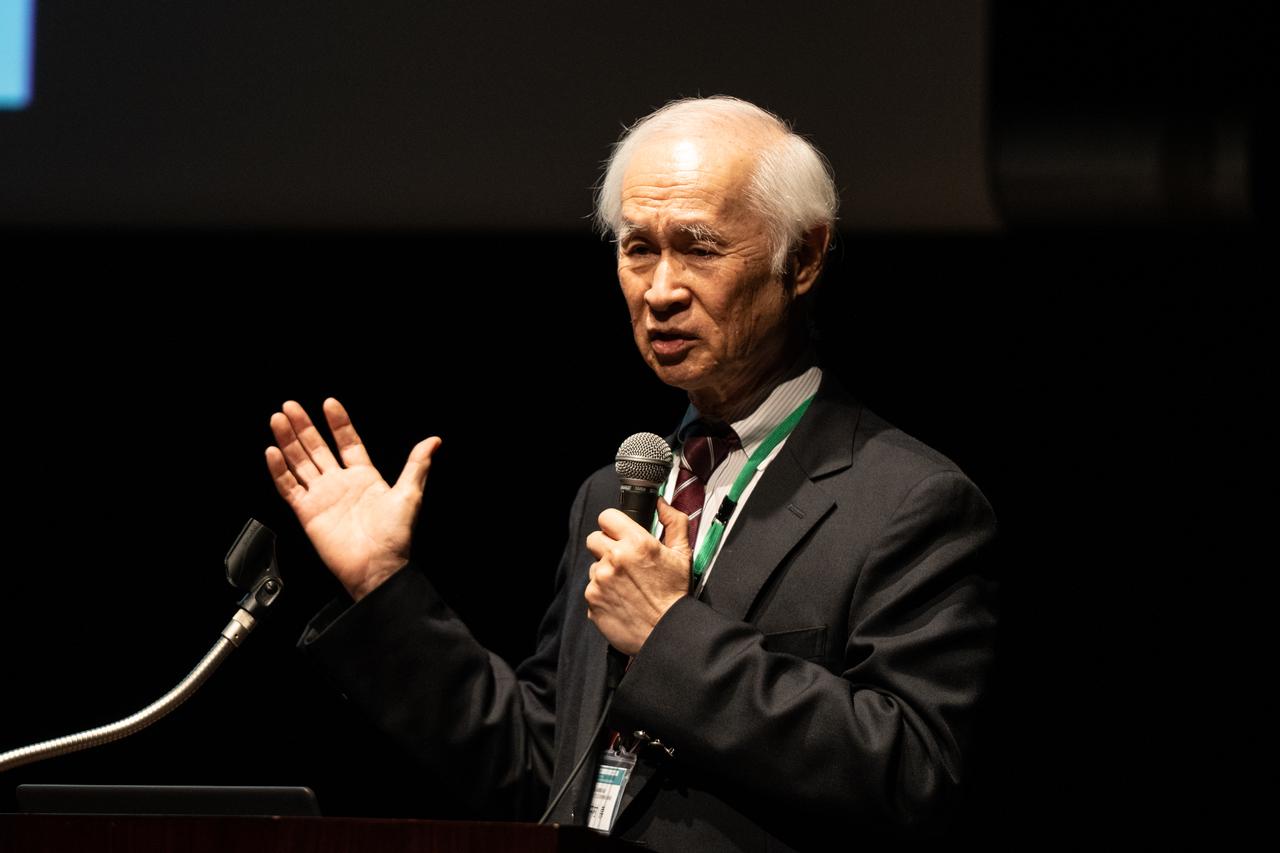
Chair Nakamura
A special keynote lecture was delivered by Takashi Nakamura, a leading expert on the CE who serves as Chair of the Circular Economy Association and head of Japan’s domestic committee for ISO/TC 323 (Circular Economy), among other positions.
The objective of resource circulation is often described as enhancing well-being and achieving the decoupling of economic growth from resource consumption. However, it is important not merely to decouple the two but, rather, cope with swelling resource consumption associated with economic growth and resulting societal challenges such as climate change and biodiversity loss by resolving them through co-evolution with the economy.
Another important factor for consideration is international standardization. While international standards were originally intended to facilitate the smooth global circulation of goods and services, they have increasingly been used strategically as nontariff barriers in recent years, particularly in relation to environmental requirements. Although standardization offers significant benefits, such as the creation of new markets, it also requires a clear strategy regarding what should be standardized and how those standards should be developed. In particular, it is essential to secure the understanding and cooperation of not only businesses but also financial institutions.
The development of the ISO 59000 series—the international standards for a CE—began in 2019. The standards were ultimately formalized and documented following extensive discussions and deliberations within the various working groups (WGs) responsible for principles, business models, circularity indicators, case studies, and information exchange. Although the series was published in May 2024, it took the unusual step of being slated for review immediately upon its adoption, reflecting the rapid evolution of the field and the need for continued refinement. Even the process of defining the concept of CE generated considerable debate within the expert committee. Ultimately, however, it was defined as “an economic system that employs a systematic approach to maintaining a circular flow of resources through their recovery, retention and value enhancement, while contributing to sustainable development.” The key point is to consider resources in terms of both stock and flow perspectives and, in the context of sustainable development, to minimize the input of virgin resources as much as possible and to keep the circular flow of resources as closed as possible in order to minimize resource outflows and losses (waste).
However, the question still remains as to whether a CE can truly function as an economy and where value added is generated within it. In the manufacturing sector, value is added at each stage of the value chain: from resources to raw materials, intermediate materials, components and products/goods, and at the subsequent stages of use, reuse, recycling and waste management. Until now, total value added has increased largely by expanding the customer base. However, given environmental constraints, unlimited growth is no longer feasible and we therefore need to transition from quantity-driven growth to quality-driven growth. Furthermore, across the supply chain as a whole, reducing waste management costs within each sector and improving the efficiency of logistics between sectors can also contribute to value creation. Achieving this requires network-oriented thinking. The effective use of digital technologies to visualize information associated with the movement of goods and materials, together with digital transformation (DX), will be key to realizing this goal.
In a CE, it is important to recognize that value increasingly shifts from physical products to information. Material platforms such as digital product passports (DPPs) are expected to become promising new business opportunities. However, a major challenge lies in establishing effective information sharing and coordination not only across forward supply chains, or the upstream sector of the CE loop such as manufacturing, sales and product use, but also with reverse supply chains, or the downstream sector of the loop like disassembly, dismantlement and sorting. What is needed is an integrated system that takes a holistic view of resource circulation across the entire value chain.
Finally, I would like to emphasize the strong affinity between circular and local economies. I believe it an effective approach to promote a short, localized circulation loop within a region while sketching out a broader system to which it is linked, thereby creating a framework that remains manageable and controllable.
Presentations from Hitachi-AIST CE Lab
(1) Overview of Lab Activities
Hitachi–AIST CE Lab Director Katsumasa Miyazaki reported on the overview of the laboratory's activities as follows.
First, with regard to global trends in the CE, Japan has adopted a collaborative approach involving industry, government and academia. Notable developments include the enactment of amendments to the Act on the Promotion of Effective Utilization of Resources and the participation of more than 800 organizations and institutions in Circular Partners (CPs), an initiative led by the Ministry of Economy, Trade and Industry (METI), reflecting the growing momentum of CE initiatives in Japan. Europe has taken a regulation-driven approach, with progress being made in initiatives such as the Ecodesign for Sustainable Products Regulation, the End-of-life vehicles (ELVs) Regulation, and action plans aimed at securing critical raw materials. In the United States, leading corporations have taken the lead in promoting resource recovery initiatives, while efforts to secure strategic resources have also intensified. China has taken a state-led approach, positioning a CE initiative as one of the pillars of the 14th Five-Year Plan, and has begun to implement multiple action plans.
In light of the accelerating transition toward resource circulation across countries and regions, driven by the need to strengthen resource resilience, we have identified three key challenges for Japan. First, it is necessary to establish a shared vision of society in which resource circulation contributes to economic growth. Second, we must develop and implement specific solutions that simultaneously deliver environmental and economic value. And third, Japan must formulate and execute a rule-making strategy that safeguards its interests while recognizing and accommodating regional diversity.
The laboratory, established to address these challenges, is pursuing three main research themes. The first is the development of a grand design that articulates an ideal future for a CE society and a transition process toward it, with the aim of fostering a shared vision and broad stakeholder engagement. The second is the development of digital solutions to help realize this ideal future. The third is the formulation of standardization strategies and policy recommendations aimed at establishing both offensive and defensive rule-making frameworks that strengthen the international competitiveness of Japanese companies.
For each of these themes, we have been conducting in-depth research through ongoing dialogue with a diverse range of stakeholders, including METI, the Ministry of the Environment (MOE), academic institutions, private-sector companies, and even high school students. Through these efforts, we have defined an ideal future and, to support its realization, developed and implemented a laboratory-designed life cycle simulator. The laboratory has also begun proposing items for international standardization and engaging in dialogue with domestic ISO committees and the World Business Council for Sustainable Development (WBCSD). Through the proactive dissemination of these research outcomes and activities, the laboratory has gained new insights and identified emerging challenges.
Going forward, it will be necessary to regard not only materials and energy, but also information and knowledge as resources, and to facilitate their integration across organizational and stakeholder boundaries. Such integration is expected to enable more efficient collection, dismantling and separation processes, as well as more accurate assessment of the residual value of resources.
(2) Roadmap for Realizing Ideal Future of CE Society
Masahide Ban of Hitachi, Ltd. and Yoshiko Takenaka of AIST provided an overview of the roadmap for achieving the ideal future of a CE society. Ban stated the following as he took the stage:
The CE society we aspire to create is a human-centric society in which materials, energy and information/knowledge circulate at a high level of sophistication. Over the past three years, the laboratory has worked to explore possible futures, define an ideal future, and develop a roadmap for achieving that vision. In exploring possible futures, we combined interpersonal dialogue with the results of a future scenario simulation. The simulation generated approximately 20,000 scenarios, which were subsequently consolidated into nine scenario types. From these, we identified three key branching factors: Development of appropriate regulatory and institutional rules, technological innovation, and changes in human behavior.
Among the most promising scenarios within the nine types, what we selected as our ideal future was one in which a framework for people’s behaviors and values related to resource circulation coexist and are reinforced by technologies that enable them. We concluded that an ideal future is not technology-led, but rather one where technology supports and empowers human behavior.
The key requirements for realizing this scenario include the development of appropriate regulatory and institutional rules by around 2030, the widespread adoption of technologies and services that contribute to extending product lifetimes, and changes in individual behavior that promote resource circulation. Based on these findings, we defined the ideal future state as a “society in which social systems, including rules and technologies, are aligned with people’s diverse values and promote circularity through extended product longevity.” We believe that what are needed are mechanisms that enable both environmentally conscious individuals and those who prioritize convenience to participate in resource circulation in an organic manner.
A key factor in achieving this is the design of appropriate incentives. We view incentives not only as financial mechanisms such as reward points and cashback programs, but more broadly as any means of encouraging circularity, including regulations and rules, technologies and services, and communities and social norms.
Takenaka then reported as follows:
We have developed the roadmap toward the ideal future state through the construction of value networks in a series of workshops, followed by discussions with experts based on those networks. Through this process, we have identified key incentives at each branching phase and subsequently incorporated them into the roadmap. Takenaka noted that the current value network faces three major challenges: Difficulties in collecting end-of-life products, high costs associated with circular operations, and the limited diffusion of CE practices across society. To address these issues, we examined incentives for each of the three key branching phases identified earlier.
At the stage of rule development, the primary challenge is the limited collection of end-of-life products. To address this issue, we propose mechanisms such as digital certification of proper disposal and stable access to recovered resources with assured quality and quantity as incentives to encourage the participation of user companies, manufacturers, and dismantling and recycling businesses. In addition, indicators and institutional frameworks that support the product-to-service transformation can help establish collection channels and diversify the revenue structures of businesses, thereby promoting product recovery.
During the phase of technological innovation, the economic viability of circular systems can be enhanced through AI-enabled technologies that expand and optimize resource circulation, thereby addressing the high-cost structure resulting from limited collection volumes and variability in the quality of recovered resources. Through technologies such as design for easy disassembly, automated repair technology, and residual value assessment techniques, the aim is to improve the efficiency and sophistication of recycling operations while enhancing the value added of secondary product markets.
During the phase of changes in human behavior, one of the key challenges is that participation in circular practices tends to be concentrated among individuals with a strong environmental awareness. To address this issue, we aim to provide choices and communities that accommodate diverse values, thereby fostering a society in which people can engage in circular activities organically and effortlessly as well as a society in which everyone can relate to and support the principles of circularity.
The methodology developed in this study, which focuses on industrial equipment, can also be applied to CE transition roadmaps in other sectors. Going forward, we will publish the findings as a set of recommendations and use them to support broader societal implementation.
(3) Digital Solutions Driving Realization of Ideal Future
Ippei Kono and Yoshiyuki Furukawa of AIST reported on digital solutions that can drive the realization of a desired future state. Kono began by explaining the following:
We envision a cyber-physical system that drives the circulation of materials, energy, information/knowledge, and economic value toward the realization of an ideal future state. By collecting data from real-world operations, evaluating, analyzing and proposing improvements in cyberspace, and translating those recommendations into behavioral change, we aim to simultaneously maximize environmental value and support the business growth of all stakeholders.
To realize this vision, we have developed and validated a life cycle simulator for the quantitative assessment of environmental and economic value, and digital technologies for the downstream sector of the CE loop, which plays a particularly important role in resource circulation.
The life cycle simulator models product life cycles to analyze material flows, CO₂ emissions, and economic value balances, enabling the quantitative evaluation of environmental and economic performance indicators for both the entire life cycle and individual stakeholders. The simulator can simultaneously analyze circulation at the product, component and material levels. In addition, it permits the use of multiple indicators tailored to different evaluation objectives and can accommodate a wide variety of resource circulation patterns.
Furthermore, we have incorporated a user behavior-modeling function into the simulator. This function models the probability that users will choose from among multiple collection options for end-of-life products. Based on this model, it can predict collection rates under different collection service configurations, thereby enabling the design of services that achieve targeted collection rates.
Using screw compressors manufactured by Hitachi Industrial Equipment Systems as a case study, we developed and validated a model for a circular system in which end-of-life products are collected at the time of product replacement and reusable components are recovered for subsequent use. Our analysis demonstrated that we can maximize profits through the appropriate pricing of collection services. It also showed that communicating the environmental benefits of CO₂ emission reduction and component reuse to users can improve both collection rates and profitability.
Furukawa then reported on the refinement of environmental impact assessment through the digitalization of the downstream process.
To improve the identification of recovered products and reduce the environmental burden associated with the downstream process, we have developed three core technologies. The first technology enables model identification through image-based template matching, even when tags or nameplates are unreadable. By applying feature-point extraction and clustering techniques, it enables automatic generation of template images, allowing the database to be updated efficiently. We validated a prototype system using automotive components and achieved an identification accuracy of 97%.
The second technology is a low-cost and easy-to-deploy wireless sensor system for monitoring equipment electricity consumption and operating time. By utilizing continuously collected data from a large number of remotely monitored installations, the system enables the visualization of environmental impacts and costs associated with dismantling and regeneration processes, thereby improving their efficiency.
The third technology is the development of digitalization measures for generating per-unit data on each step in the downstream process. By applying a methodology that calculates process-level environmental impacts based not only on electricity consumption but also on other relevant factors, we conducted an assessment for the major components of screw compressors. The results showed that CO₂ emissions from remanufacturing are approximately twice as high as estimates based solely on material considerations, if we disregard the recycling process. Nevertheless, remanufacturing was confirmed to reduce CO₂ emissions by 20% from the production of new components. The study also revealed that improving the efficiency of performance testing is an effective means of further reducing environmental impacts.
(4) Rule-Making for Coexistence of Diverse Stakeholders
Osamu Hoshino and Yuki Murasato of Hitachi, Ltd., and Koshi Kamigaki of AIST presented the laboratory’s initiatives in the area of rule-making. Hoshino began by outlining the laboratory’s rule-making strategy as follows.
International efforts to establish rules for the CE are advancing, and, depending on developments in different countries and regions, there is a risk that rules may emerge that place particular regions or industries at a disadvantage. In response, we have pursued both offensive and defensive rule-making strategies. The defensive approach involves incorporating leading developments in Europe into business strategies and operations. The offensive approach seeks to enable Japan to play a proactive role in international standardization by promoting Japanese-led rules and standards that are designed to avoid disadvantaging both domestic and international partners.
As a first step, we conducted a comprehensive review of global rule-making trends and mapped major regulatory and standardization arenas, including Europe, Japan, the United States and international standardization bodies. Based on this analysis, we found that Europe is taking the lead in areas such as information disclosure through DPPs and the development of data spaces on the upstream sector of the CE loop. These developments may influence future approaches to data connectivity. At the same time, we identified areas in which Japan could make meaningful contributions to international standardization, including data integration on the downstream sector and the Common Data Dictionary (CDD), an online metadata registry for standardized classifications and formalized product descriptions. In response, we have been promoting activities aimed at building partnerships and fostering collaboration toward the standardization of value visualization mechanisms that connect the cyber and physical worlds and help accelerate the CE’s advancement.
Specifically, we focused on two forms of value visualization. We will explain each of them in turn.
Murasato explained the first approach to value visualization as follows:
While many existing CE indicators place an emphasis on environmental performance, the loss of profitability can undermine business continuity and hinder the transition to a CE. To address this issue, we developed Circular Value-Added Productivity (CVP) as an indicator that focuses on economic viability. CVP evaluates the efficiency of CE activities by dividing the value added generated through CE businesses by the costs incurred in achieving circularity. This enables assessment that takes into account the balance between economic and environmental performance.
To facilitate its practical application, we refined the formulation of CVP by incorporating financial data and extended the metric so that it can be applied to a value network involving multiple collaborating companies. In doing so, we adopted an approach that excludes duplicated amounts arising from transactions within the network in order to avoid the double counting of costs associated with intercompany exchanges.
We conducted a case study for dismantling, shredding and sorting operators involved in a magnet-remanufacturing business. The results confirmed that improvements in efficiency and output quality achieved through the introduction of advanced sorting equipment were reflected in higher CVP values. This demonstrated that the metric can appropriately capture the benefits of capital investment using real operational data.
Next, Kamigaki explained the second approach to value visualization, namely grading for the visualization of residual value, as follows:
We investigated plastic-recycling operations and analyzed what types of data support value transfer, and the meaning and context in which such data are utilized. The analysis revealed two major issues: First, information on end-use applications from the demand side fails to reach collection and sorting operators on the supply side, and second, information regarding product quality and provenance fails to reach stakeholders on the downstream sector effectively.
To address these challenges, we identified three key requirements. The first is basic transactions. By providing information on end-use applications on the demand side, market participants can more clearly identify selection criteria for transactions, thereby improving both transaction success rates and pricing appropriateness. The second is upstream-downstream information partnership and traceability. By making available information that substantiates product quality and reliability, it becomes possible to expand demand for higher-grade recycled materials while reducing uncertainty-related costs. The third is interoperability. By referencing existing international standards, we aim to establish a framework in which residual value can be interpreted consistently across different industries and material types. Together, we expect these measures to accelerate supply–demand matching and contribute to the development of a deeper and more robust downstream market.
Panel Discussion
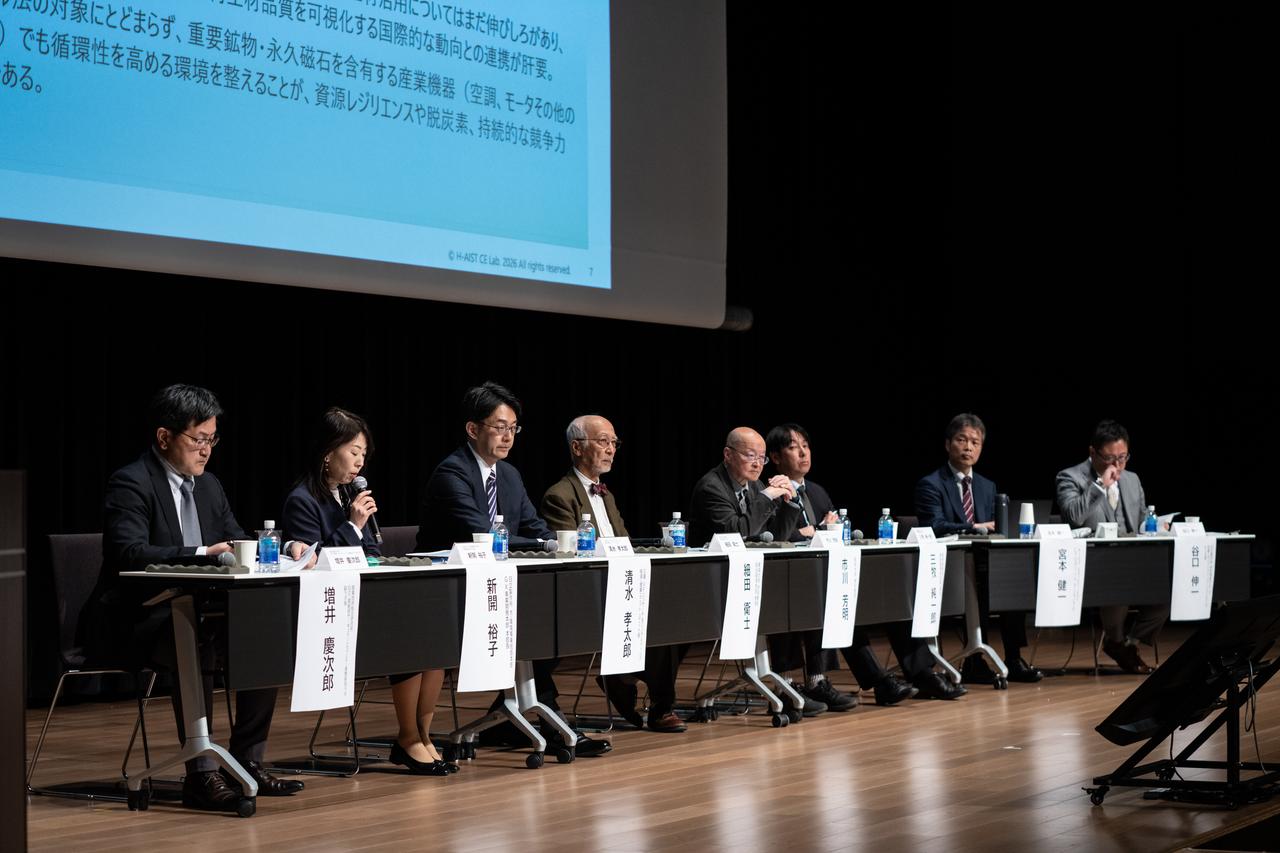
A scene from the panel discussion
In the latter half of the forum, a panel discussion was held featuring the following panelists: Junichiro Mimaki, Director, Resource Efficiency and Circular Economy Division, Ministry of Economy, Trade and Industry (METI); Yoshiaki Ichikawa, specially appointed professor, Research Center for Social Systems,Shinshu University; Eiji Hosoda, Assistant Chancellor and Professor, School of Political Science and Economics, Tokai University; Kotaro Shimizu, Unit Head, Economic and Industrial Policy Unit, Mitsubishi UFJ Research and Consulting Co., Ltd.; Hiroko Shinkai, from the Green Digital Transformation Division, Hitachi, Ltd; and Keijiro Masui, Deputy Director, Hitachi-AIST CE Lab. The discussion was moderated by Ken-ichi Miyamoto, Vice CTO, CTO Office, AIST Solutions; and Shinichi Taniguchi, General Manager, Production Engineering and MONOZUKURI Innovation Center, Research & Development Group, Hitachi, Ltd. The panel explored two key discussion topics.
(Topic 1) Advancing Stakeholder Collaboration and Enhancing International Competitiveness for Realizing CE Society
Miyamoto: Let us start with the first discussion topic. I would like to ask each panelist to briefly introduce yourself and offer your view on this theme.
Mimaki: I have been involved in industrial policy for many years. During my secondment to the Toyama Prefectural Government, I was also engaged in efforts to attract aluminum-related industries and recycling research facilities. In my current role, I am working to promote the CE while remaining mindful of the benefits it can deliver to businesses.
With regard to the first discussion topic, we have been advancing network-building efforts through Circular Partners (CPs), an initiative that encourages participation not only from companies but also from local governments and research institutions. The concept of international competitiveness can be defined in a wide range of manners. However, countries around the world, including China, are actively investing in downstream industries and promoting industrial development through close collaboration between the public and private sectors. In Japan as well, it is essential to translate public–private cooperation into concrete action. In this regard, we believe that CPs should evolve beyond a simple networking platform and serve as a venue for substantive and effective dialogue between government and industry.
Ichikawa: As the Chair of Working Group 2 (WG2) of ISO/TC 323, I was involved in the standardization process leading to the publication of ISO 59010. Since last year, I have also been participating in the reactivated working group, where we are advancing discussions on two new standards in parallel. In addition, among CPs, I serve as the chief coordinator of the International Collaboration and Standardization Working Group.
With regard to the first discussion topic, end consumers, governments and businesses are the three principal stakeholders. From the standpoint of economic rationality, however, effective collaboration among these three groups of actors cannot be taken for granted. The key challenge is how to create incentives and rational value propositions that make participation beneficial for each stakeholder. International competitiveness has two dimensions: the competitiveness of a nation within a CE society and the competitiveness of individual companies. It is therefore important to clearly define the division of roles between the government and businesses, and to determine through intergovernmental negotiations how responsibilities and functions should be shared among countries.
Hosoda: When I returned to Japan in 1985 after studying in the United Kingdom, I felt deeply unsettled by the rapid pace and scale of development taking place in the country. This experience led me to pursue research applying mathematical economics to the analysis of waste management and recycling systems.
Over the years, I have not only developed theoretical frameworks but also visited and studied numerous sites in the field. Based on those experiences, I fully agree with Professor Nakamura’s observation that the CE’s foundation lies in local communities. On the upstream economy, market value is realized by consumers willing to pay for goods and services. In the downstream economy by contrast, value creation may depend on legal requirements or other policy interventions that compel participation and cost sharing. Consequently, the development of appropriate institutional infrastructure becomes a key prerequisite for the functioning of CE activities. Japan’s strength lies not so much in competitiveness itself as in its capacity for co-creation—the ability to generate value through collaboration. I believe we can enhance competitiveness by developing institutional infrastructure and making willingness to pay more explicit through horizontal co-creation, vertical co-creation and hybrid forms that combine the two.
Shimizu: Before the term circular economy became widely recognized, I launched a study group on resource efficiency together with Professor Hosoda and Professor Nakamura. Later, we established the Circular Economy Association as a forum for developing CE standards that reflect the perspectives and needs of industry. Together with Professor Ichikawa, I have also been involved in the ISO/TC 323 committee, contributing to the development of ISO 59010 as well as ISO 59011, which addresses value networks within the CE.
If competitiveness is defined as the ability to capture and expand market share, Europe enjoys the advantage of a large and diverse market that encompasses both advanced economies and regions with strong demand for second-hand products. By contrast, Japan’s domestic market is relatively homogeneous, making it more difficult to accommodate such a wide range of demand conditions within the country alone. Going forward, it will be important to capture multi-layered markets across the entire product life cycle—from second-hand product markets to material-recovering markets—including opportunities overseas. To achieve this, we will require a meta-strategy that coordinates and aligns multiple companies. Even in the absence of capital ties, companies must build relationships that enable them to function as an integrated system under the shared banner of a CE.
Shinkai: We support our customers’ transitions to a CE and carbon neutrality through Hitachi’s digital and physical solutions. A CE cannot be realized by a single company acting alone. Data connectivity is essential for connecting the entire value flow, from raw material procurement and manufacturing to product use, collection and resource recovery. Even when companies wish to use recycled materials, they often face challenges related to inconsistent quality, supply volume and pricing, while data exchange across companies remains underdeveloped. We believe that greater data connectivity can provide a pathway to addressing these challenges.
Miyamoto: Several of you have emphasized the importance of integrating the upstream and downstream sectors of the CE loop, although it seems that there are some differences in what each of you means by that.
Hosoda: Based on my fieldwork experience, I believe that we should not attempt to arrive at a universal solution from the outset. Instead, we should accumulate context-specific solutions and then identify the common elements that emerge from them. This is because each region has its own unique local characteristics and circumstances. An example of horizontal co-creation includes joint collection and transportation of non-industrial waste and end-of-life household appliances. Because logistics account for a significant share of costs on the downstream sector, reducing these costs is critical. Examples of vertical co-creation can be found in initiatives such as the Setouchi resource-circulation project, which connects the entire value chain—from raw materials, packaging and distribution to collection, conversion to oil and refining.
If we are to strengthen international competitiveness, we must connect individual initiatives into broader value chains and ultimately develop them into comprehensive ecosystems. What is needed to achieve this is “hybrid co-creation.” We combine horizontal and vertical forms of collaboration and scale them up to the national level. Such an approach also contributes to the development of institutional infrastructure, helps generate willingness to pay, and ultimately leads to greater value creation and enhanced competitiveness.
Shimizu: Taking automobiles as an example, Japan’s recycling legislation assumes that end-of-life vehicles will be dismantled and shredded for recycling. In reality, however, many pre-owned vehicles continue to enjoy strong demand in overseas markets. In other words, multiple markets exist along the vehicle life cycle—including markets for new vehicles, pre-owned vehicles and recovered materials—yet Japan’s supply chains have not fully captured value from all of these markets.
The key is to build markets that correspond to different levels of demand by strategically leveraging logistics and sales networks. Just as some companies tailor both their products and supply chains to the distinct needs of developing and advanced economies, a similar approach is needed to connect and coordinate multiple markets with different demand characteristics. In this context, anthropogenic used products should also be regarded as scarce resources. The key is how to circulate these resources as efficiently as possible, making logistics optimization a critical factor. The apparel industry provides a good example: when data connectivity is insufficient, overproduction and waste inevitably occur. Collaboration between upstream and downstream operations is therefore required not only in terms of physical logistics networks but also in terms of information networks.
Shinkai: To connect the entire CE value chain, data interoperability is indispensable. Unless information on the quality, provenance, quantity, pricing, logistics, etc. of recycled materials can be effectively shared and integrated, CE businesses will not be commercially viable. The EU’s Digital Product Passport (DPP) and Battery Passport initiatives provide useful points of reference. However, what matters is not the sheer number of data fields, but whether the information required by the next player in the value chain can be transmitted seamlessly and without interruption. Japan therefore needs to develop an information-sharing framework that reflects the characteristics of its industrial structure and the separation between the upstream and downstream sectors of the supply chain loop.
Miyamoto: Mr. Mimaki, how does the government view this issue?
Mimaki: The CE is important not only for regional revitalization but also from the perspective of economic security. As global competition for critical resources intensifies, it is essential to foster businesses operating in the downstream sector that support domestic resource circulation.
Data is a strategic asset for companies. However, advancing the CE requires a shift in mindset by recognizing the value of collecting and sharing information that is useful to other stages of the CE loop. Achieving this will require deeper trust and stronger collaborative relationships among companies.
In addition, domestic suppliers of recycled materials are still at a disadvantage compared with low-cost virgin materials and recycled materials imported from overseas. Therefore, it is necessary not only to stimulate demand but also to encourage investment on the supply side. I believe that the first step is to work closely with the private sector to develop and demonstrate best practices.
Miyamoto: Mr. Masui, Deputy Director of Hitachi–AIST CE Lab, how do you see the relationship between these comments and the research being conducted by the lab?
Masui: Upstream-downstream collaboration involves both the flow of physical products and materials and the flow of information. Even when a value network generates profits, it will not be sustainable if those benefits are concentrated among only a subset of stakeholders. Designing profit redistribution mechanisms therefore requires data collection and analysis. In this regard, life-cycle simulation and the digitalization of downstream industries are particularly important. In addition, materials recovered from end-of-life products often exhibit significant variations in quality. As a result, the future CE may require greater flexibility not only at the downstream end of the loop but also at the upstream stage, where businesses may need to accommodate a wider variety of materials in smaller volumes.
Ichikawa: B2B collaboration is extremely important. In particular, it is a major challenge that recyclers often do not have clear visibility into the types of recycled materials that end-product manufacturers actually require. This is why data connectivity is essential.
However, data connectivity alone is not enough. Ultimately, the success of a CE depends on whether consumers are willing to accept and support these circular products. Even if products designed for recyclability or made from recycled materials are superior, the system will not function unless those products actually sell. The key question is how to increase the value perceived by consumers.
There is a well-known case in which the provenance of vintage kimonos was made visible through QR codes, and the products sold exceptionally well in the United States. This demonstrates that when the unique value embedded in second-hand products is effectively communicated, it can influence consumers’ economic decision-making. For this reason, the CE must be designed not only around B2B relationships, but also bearing end consumers firmly in mind.
Hosoda: A case similar to the one Professor Ichikawa mentioned can be found in companies that collaborate closely with retailers and distribution partners to promote the reuse of second-hand clothing. Because each pre-owned garment is unique, its value can be enhanced when it is accompanied by information about its history and the story behind it.
On the other hand, creating a spectrum of markets for reuse, refurbishment and recycling also involves regulatory challenges. If regulations are overly detailed and prescriptive, they may not be flexible enough to adapt to changing market realities. The Act on Recycling of End-of-Life Automobiles has, in some respects, had the unintended effect of encouraging exports of used vehicles. There are also concerns regarding the existence of black-market activities. If institutional frameworks are not aligned with market realities, neither value creation nor competitiveness can be achieved.
Miyamoto: Professor Nakamura, would you like to share your thoughts on the discussion we have just had?
Nakamura: Enhancing motivation at the consumer level is critically important. Japan already has many successful examples that can serve as valuable references. What we need to do is categorize these cases and present them to society.
At the same time, however, we must not lose sight of the fact that both industrial products and food production are fundamentally reliant on mass production. Given the realities of mass production, the key is how to integrate secondary resources as feedstock. At the same time, there may be a need to revisit existing institutional frameworks and consider greater flexibility in areas such as logistics systems and the classification of waste.
(Topic 2) How Can We Achieve Both Economic Viability and Environmental Sustainability?
Taniguchi: From now on, the discussion will be moderated by myself, Taniguchi of Hitachi, Ltd. To begin, I would like to ask each of the panelists to share their views on our second discussion topic.
Mimaki: The 3Rs—Reuse, Reduce and Recycle—were traditionally pursued primarily within a domestic context. Today, however, the CE is closely linked to global resource and environmental challenges, and corporate interest and motivation have increased significantly.
That said, when it comes to the use of recycled materials, domestically produced recycled materials still face economic disadvantages compared with both virgin materials and recycled materials sourced from overseas. This is why policy measures on the demand side are just as important as those on the supply side. In the short term, some form of support to address the price gap may be necessary. Over the medium to long term, however, it is important to improve the efficiency of source separation and collection systems, establish collection schemes designed with recycled-material utilization in mind, and promote greater consumer awareness and understanding. Younger generations already show a high level of interest in these issues, and we need to turn that mindset into a source of strength for Japan.
Ichikawa: When considering how to reconcile environmental and economic objectives, climate change policy provides a useful precedent. The transition from incandescent light bulbs to fluorescent lamps, and subsequently to LEDs, was driven in large part by policy measures that changed the rules of the market. The Top Runner Program provides another relevant example. By effectively phasing out products that failed to meet specified performance standards, it helped drive improvements in energy efficiency across the market.
In much the same way, the CE will require policy support as an engine for growth until it reaches sufficient scale and becomes self-sustaining. It will also be important to establish criteria and certification schemes for assessing high-circularity products.
Hosoda: Our current standard of living has been built on a system of mass production and mass consumption. At the same time, uncontrolled mass disposal has generated external diseconomies and contributed to the erosion of competitiveness. It is the CE that is supposed to internalize these challenges. However, achieving this objective requires not only hard law, such as legislation and local ordinances, but also soft law in the form of social norms. At present, the volume of non-industrial waste is declining significantly. Food waste and the use of plastic shopping bags have also decreased. These changes cannot be explained solely by price effects; they are, to a large extent, the result of shifts in social norms and public attitudes.
Examples of successful value propositions include the widespread adoption of recycled paper and horizontal recycling systems. Once such practices reach a certain scale, economies of scale help reduce costs. Another example is hybrid vehicles, where the product’s image has become closely associated with environmental value. It is therefore important to appeal to consumers by communicating the combination of environmental benefits and stories and histories behind products.
Shimizu: I believe that few people are fundamentally opposed to the idea of a CE. The real issue is whether each stakeholder has benefits to participate when responsibility is passed from one stage of the CE loop to the next. If, at any point in the loop—manufacturing, sales, use, collection, or resource recovery—one party is left holding an “unprofitable losing ticket,” the flow will eventually break down. This is particularly likely to occur in the collection and waste disposal stages.
Therefore, the key challenge is how to create value at each stage of the CE. In some cases, value can be generated through tax incentives or institutional arrangements. In others, it may come from non-monetary sources such as design, storytelling or connections among people. There are also examples overseas where activities such as repair and disassembly are valued not only for their economic benefits but also as forms of social contribution or community participation.
In traditional recycling systems, the emphasis was on separating materials properly. In a CE, however, it is important to ensure that products are re-entered into the production cycle. Apart from products such as home appliances and automobiles, where established takeback mechanisms are already in place, incentives for re-entering products into the production cycle are often weak. This is why we need business models such as leasing and institutional frameworks that encourage and facilitate product return and collection.
Shinkai: From a business perspective, the value of the CE lies not only in generating revenue but also in reducing risks and costs. While the use of recycled materials and technological innovation may help lower costs over time, improving resource resilience is becoming increasingly valuable for business continuity in an era of growing geopolitical risks.
From a business perspective, several elements are particularly important, which are product designs that facilitate disassembly and remanufacturing, collection systems that increase recovery volumes and enable economies of scale, and the use of digital technologies to improve the visibility of the origin, quantity and flow of recyclable resources. At the same time, I believe it essential for policymakers, researchers and businesses to collaborate and engage in early-stage discussions.
Ichikawa: As a form of government support, one possible approach would be to introduce an eco-point type of scheme for products with high levels of circularity. Such a system would, however, require strict evaluation criteria and independent third-party certification.
In addition, it may be necessary to consider mechanisms that discourage or restrict the circulation of products that are difficult to reuse or that contain only limited amounts of recycled materials. Quality standards of secondary materials remain underdeveloped globally. So, establishing such standards would create significant value.
Looking ahead, it will also be important to develop mechanisms through which companies with strong circularity performance are recognized by investors and gain better access to financing. What has already occurred in the field of climate change should also happen in the CE.
Shinkai: It is important to create an environment in which investors can confidently provide funding for CE projects, etc. At present, capital flows into this field remain limited compared with decarbonization-related investments. A key factor behind this gap is the absence of widely accepted yardsticks for assessing the economic value of CE activities. If investors are able to assess the value of projects more easily, that should also provide a strong tailwind for corporate capital investment. An environment in which investors can make decisions with confidence is, at the same time, an environment in which companies can invest with greater confidence. I think that until the CE market reaches a more mature stage, policy incentives—such as measures to stimulate demand and green public procurement programs—are also likely to play an effective role.
Hosoda: Institutional frameworks and standards are certainly important. However, we should be cautious about applying European-style universal rules without adaptation. Lifestyles and social structures differ significantly from ours. We have also seen examples in the financial sector where externally imposed rules did not necessarily protect local values. In practice, I think sustaining society requires not just formal regulations but also the power of soft-law mechanisms such as the involvement of local governments, regional financial institutions and the voluntary actions of citizens.
Mimaki: Based on my own experience working on energy efficiency and conservation policies, I have come to believe that it is important to understand which issues are best addressed through hard law and which are better influenced through soft law, and then to combine the two approaches effectively. In areas such as repair services and emerging forms of circular design, one of the key challenges is building win-win relationships between manufacturers and new market participants. Such partnerships could also help strengthen continuous communication with consumers and improve product collection systems.
Shimizu: Achieving a CE requires correcting situations in which companies and individuals act in ways that are locally optimal but not necessarily beneficial from a system-wide perspective. This can be supported through appropriate institutional frameworks and shared understanding of values. It may also be necessary to promote what might broadly be described as an awareness-raising campaign which will draw greater attention to the design of systems that makes resource circulation visible and encourages the formation of circular habits. These issues have not yet been fully systematized from an academic perspective. I believe there remains considerable scope for businesses, policymakers and educational institutions to work together.
Masui: This discussion has reinforced my view that achieving both economic viability and environmental sustainability requires a certain scale. The issue is not mass production and mass consumption in themselves, but rather the problem of mass disposal.
At the same time, product/component reuse often requires more individualized approaches and case-by-case responses. This is where durability and reliability become particularly important. These are areas in which Japanese products have traditionally excelled. I believe that the foundation of a CE lies in designing products that remain functional and dependable throughout a period of use by a consumer and retain sufficient quality to be passed on to the next user.
Miyamoto: Reflecting on today’s discussion, several key points emerged under the first topic. Rather than seeking a universal solution from the outset, it is important to build up from specific solutions and practical examples. We also discussed the importance of horizontal, vertical and hybrid forms of collaboration; the need to view markets from a broader perspective that includes international opportunities; the critical role of data connectivity; and the importance of designing economic incentives not only for businesses but also for consumers.
Taniguchi: Under the second discussion topic, it was argued that policies must serve as an engine to create momentum and establish a clear direction for transition to a CE, supported by appropriate standards and metrics. On the other hand, panelists mentioned the importance of promoting behavioral change by enhancing consumers’ understanding and effectively communicating the value of CE initiatives to them. All in all, they agreed on the need for a dual approach to reconcile economic viability with environmental sustainability.
Closing Address
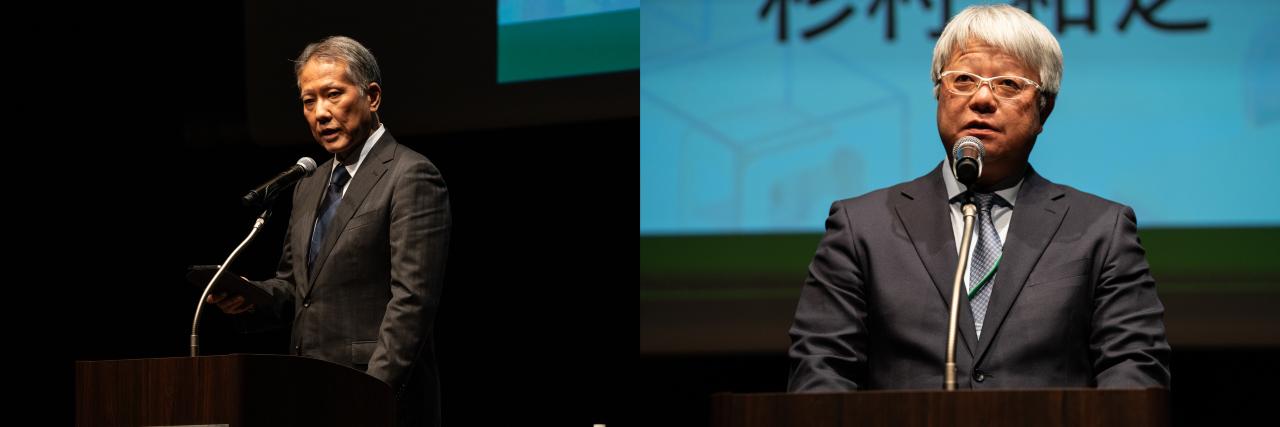
Left: Senior Vice-President Obara / Right: Managing Director Sugimura
In his closing remarks, Haruhiko Obara, Senior Vice-President and CTO of AIST, reflected on the discussions throughout the forum and noted that they had provided many valuable insights into the practical implementation of a CE. He noted that the research and development activities conducted by the lab have become increasingly concrete and refined year by year. Referring to the recognition the lab has received through external awards and international conferences, he expressed his expectations for its continued progress. He concluded by adding: “As AIST, we hope to drive innovation in Japan while continuing to grow together with companies, universities and public institutions.”
Kazuyuki Sugimura, Managing Director for Sustainability Innovation R&D at Hitachi, Ltd., also reflected on the 40 months since the establishment of the lab. He highlighted the progress that has been made in advancing implementation-oriented initiatives aimed at realizing a circular society envisioned as an ideal future. Referring to the panel discussion, he noted that a number of important insights had emerged, including the potential for collaboration that leverages Japan’s relationship-oriented culture, the importance of making value visible and enabling data connectivity, the need for rule-making that supports economic rationality, and the importance of recognizing the multiple dimensions of value such as resource resilience and economic security. He concluded by outlining the lab’s future direction, saying: “We will incorporate the insights and opinions gained through this forum into the continuous improvement of the lab’s activities. Under a renewed organizational structure, we will further advance our research and development efforts toward the realization of a sustainable circular economy and society.” With these remarks, the forum came to a close.