Analyzing climate change regulations and facility data via AI agents to extract target prospects for green transformation
Hitachi has developed "Opportunity Seeking Technology", designed to support the identification of target prospects and the discovery of new business opportunities by accurately capturing rapid changes in the market environment, driven by factors such as the tightening of decarbonization policies and rising geopolitical risks. This AI agent-based technology works by combining and analyzing macro-level information, such as climate change laws and regulations, with micro-level information, such as facility specifications and operational conditions. Hitachi conducted an initial verification of the technology on cogeneration*1 systems, targeting coal-fired power plants in Southeast Asia. The test confirmed the ability of the proposed technology to extract target prospects for cogeneration proposals through the analysis of related regulatory data from the Climate Change Laws of the World Dataset*2 alongside power plant data from the Global Coal Plant Tracker*3. This technology reduces the burden on sales and business development teams by automating the cross-referencing of complex regulations against facility conditions. As a result, teams can easily extract target prospects for equipment upgrades and GX*4 solutions, such as cogeneration systems, backed by clear rationale, ultimately driving the discovery of new business opportunities.
Looking ahead, Hitachi will continue to refine this technology, aiming to expand its scope beyond the energy sector into mobility, industry, and other fields significantly affected by regulatory and market shifts, thereby contributing to global market resilience and sustainable corporate growth.
*1 Cogeneration system: A system that simultaneously generates and supplies electricity and heat from a single fuel source.
*2 Climate Change Laws of the World Dataset: https://climate-laws.org/
*3 Global Coal Plant Tracker: https://globalenergymonitor.org/projects/global-coal-plant-tracker
*4 GX: Short for Green Transformation. Initiatives aimed at balancing greenhouse gas (GHG) emissions reduction with economic growth by transitioning energy and industrial structures toward decarbonization.
Background and issues
In recent years, driven by the tightening of decarbonization policies and rising geopolitical risks, it has become essential for companies to identify new growth opportunities while adapting to rapid market shifts. Particularly in the energy and industrial sectors, upgrading existing equipment and reducing greenhouse gas (GHG) emissions are now urgent priorities driven by stricter environmental regulations.
However, the information required for sales and proposal activities covers a wide range, including laws and regulations that vary by country and region, equipment specifications, and operating conditions. Determining which equipment might be subject to regulatory compliance or renewal proposals requires cross-referencing numerous documents and datasets. Consequently, extracting target prospects is time-consuming, and narrowing down candidates without missing opportunities is challenging.
Furthermore, while AI is increasingly used to automate proposal tasks, the rationale behind AI outputs is often opaque, making transparency a significant hurdle.
Features of the technology developed to solve these issues
In response to these challenges, Hitachi developed "Opportunity Seeking Technology," an AI agent framework that supports business growth by linking and cross-analyzing complex regulations with specific facility conditions. This technology expands upon the Digital Observatory*5, an initiative originally established to identify societal risks and detect early warning signs through data observation to build market and supply chain resilience, broadening its operational scope to drive sustainable business growth.
The key features of the proposed technology are as follows:
1. Regulatory information extraction and structuring technology to reduce research time
An AI information extraction agent identifies passages related to equipment upgrades and retrofits from climate-related laws and regulations, converting them into structured data designed for AI processing. This eliminates the need for sales and business development teams to manually review vast, complex legal documents, allowing them to efficiently gather key insights required for proposal activities.
2. Data linkage technology to bridge the gap between macro and micro data
An opportunity analysis agent maps macro information, such as regulations extracted by the information extraction agent, to micro information, including plant-specific equipment characteristics and operational conditions, to extract and score potential target prospects. This enables users to evaluate market shifts alongside facility conditions, which previously had to be checked separately, making it easier to extract untapped prospects with high demand for GX and equipment upgrades.
3. Explainable report generation technology supporting reliable decision-making
A report agent presents evaluation results for each prospect alongside the specific regulatory passages and facility conditions that served as the basis for the judgment. Rather than accepting AI outputs as a "black box", users can verify which regulations and facility conditions were used to extract prospects, making it easier to proceed with evidence-based decision-making.
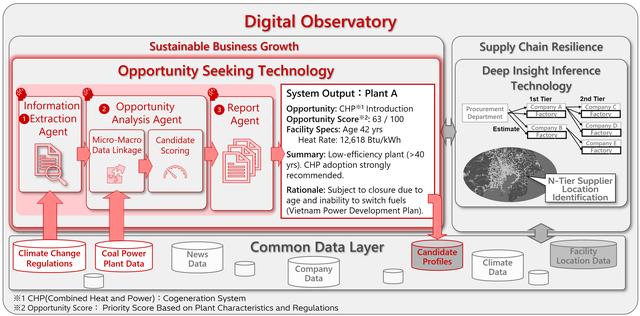
Figure 1 Positioning and overview of "Opportunity Seeking Technology" within the Digital Observatory
Confirmed results
In a preliminary validation research targeting coal-fired power plants in Southeast Asia, Hitachi confirmed that by cross-analyzing climate change regulations with power plant data, the technology effectively extracts high-priority prospects for cogeneration system proposals based on localized regulatory pressure and plant-specific characteristics.
Looking ahead
Moving forward, Hitachi will continue to advance this technology to capture market shifts from a more multifaceted perspective by expanding its analysis targets beyond regulations to include climate data, news data, and domain-specific data*6. Furthermore, as an AI technology enhanced by the domain knowledge behind Lumada 3.0, Hitachi aims to expand its application beyond the energy sector into mobility, industrial fields, and other domains heavily impacted by regulatory and external environment changes, thereby contributing to global market resilience and sustainable corporate growth.
A portion of these findings will be presented at the 24th International Conference on Practical Applications of Agents and Multi-Agent Systems (PAAMS 2026), to be held in Italy, October 21 to 23, 2026.
*6 Domain-specific data: Highly specialized, high-accuracy text and linguistic materials tailored to specific industries or fields such as healthcare, finance, and law.
For more information, use the inquiry form below to contact the Research & Development Group, Hitachi, Ltd. Please make sure to include the title of the article.
https://www8.hitachi.co.jp/inquiry/hitachi-ltd/hqrd/news/en/form.jsp