
Today’s manufacturing industry stands at a historic turning point where companies must redefine their business models themselves around the principles of a circular economy to survive. Traditionally, the key metrics of manufacturing have centered on optimizing the three elements of Quality, Cost, and Delivery—the “QCD” framework. However, global challenges such as climate change and resource depletion have already evolved into business risks that can directly affect corporate viability. In global markets, “QCD+E,” which adds “Environment” to the traditional QCD framework, is increasingly becoming a new standard. Efforts to adopt “eco-design,” which incorporates the reduction of a product’s environmental impact from the earliest stages of design, are gaining increasing traction across the manufacturing industry. In response to this trend, Hitachi Ltd. has developed an Eco-Design White Paper for designers and engineers across the Hitachi Group. We spoke about this initiative with Chief Researchers Kazuaki Naoe and Younjeong Hong of the Circular Industries Research Department, Production Engineering & MONOZUKURI Innovation Center, Sustainability Innovation R&D, Research & Development Group.
By Kazumichi Moriyama, Science Writer
Stricter Regulations Originating in Europe Emerge as New Competitive Dimension for Manufacturing Industry
Eco-design refers to a systematic approach that takes environmental considerations into account at the design and development stage, with the aim of reducing environmental impacts throughout the entire life cycle of products and services. International standards include the definition of “environmentally conscious design” in ISO/IEC 62430 (JIS Q 62430). In recent years, Europe has seen rapid progress toward institutionalizing this concept through legally binding requirements.
In 2019, the European Green Deal was unveiled as a comprehensive growth strategy aimed at achieving carbon neutrality by 2050 and building a sustainable society. As one of the measures for implementing the Circular Economy Action Plan, adopted in 2020 to put the Green Deal into practice, the Ecodesign for Sustainable Products Regulation (ESPR) entered into force in July 2024. The ESPR replaces the previous eco-design “directive” with a more legally binding “regulation” and significantly broadens its scope, establishing a framework that, in principle, covers almost all physical products, except those regulated under other EU legislation such as motor vehicles.
However, specific eco-design requirements do not apply uniformly and immediately to all products. Instead, based on working plans developed by the European Commission, delegated acts are to be adopted for specific product groups, with concrete requirements for durability, repairability, recyclability, resource efficiency, environmental impact, and other criteria introduced progressively. Furthermore, the Digital Product Passport (DPP), which enables the sharing of information about a product throughout its life cycle, is not introduced uniformly under the ESPR. Instead, delegated acts for individual product groups to determine whether a DPP is required, what information must be recorded, when the requirements will take effect, and other details.
Against this backdrop of evolving regulatory frameworks, major players in Europe are already working to shape environmental rules and foster a corporate culture centered on environmental performance. Environmental performance is shifting from a “goal to strive for” to a “prerequisite for market access.”
Eco-Design to Be Applied by 2030
Hitachi has set Circular Economy as one of the pillars of its Environmental Vision and, as part of its long-term goal Environmental Innovation 2050 leading up to 2050, aims to achieve Circular Transformation, which aims to maximize the value throughout the entire lifecycle of products and services. As part of this commitment, Hitachi aims to apply eco-design for all relevant product groups by 2030.
Approaching this goal from a research and development perspective is the Production Engineering & MONOZUKURI Innovation Center within Hitachi’s Research & Development Group, which we spoke with for this article. The center, which is conducting R&D on the circular economy, established the Hitachi-AIST Circular Economy Cooperative Research Laboratory in October 2022 jointly with the National Institute of Advanced Industrial Science and Technology (AIST), a national R&D agency in Japan. In Phase 1, which ran through March 2026, the initiative focused on developing a vision for the kind of future circular economy-based society we aim for, creating a roadmap for its realization, developing digital solutions, and formulating standardization strategies. Building on these results and insights, Phase 2 began in April 2026, with research now underway to strengthen resource resilience and achieve sustainable growth by expanding resource circulation.
What Is Eco-Design White Paper?
Dr. Naoe and his colleagues developed the Eco-Design White Paper, a practical guide for implementing eco-design, in collaboration with Hitachi European R&D Centre, Hitachi Rail, Hitachi Energy, and the MONOZUKURI Strategy Division, among other organizations. Especially, Hitachi Rail has been adopting eco-design principles for many years and is a pioneer in this field. The white paper is currently available only within the Hitachi Group. Drawing on examples of eco-design implementation by European companies, it provides practical guidance for systematically integrating eco-design into the design process across the Hitachi Group, with Life Cycle Assessment (LCA)* as a core framework.
*LCA represents an assessment of the environmental impacts of a product throughout its entire life cycle, from raw material extraction and manufacturing to distribution, use, and end of life.
The white paper is structured around three main elements: social context driving the need for eco-design, approaches to implementation, and insights derived from analyses of specific enforcement examples.
Specifically, it examines global environmental challenges, including the concept of planetary boundaries and the triple planetary crisis of climate change, biodiversity loss, and pollution. It also summarizes environmental policies and regulatory trends in Europe, North America, Japan, and other regions, demonstrating why eco-design is now becoming increasingly important to corporate competitiveness.
It then sorts out relevant standards, including those developed by ISO/IEC, and rules for applying related methodologies such as LCA. It also presents practical approaches to eco-design, emphasizing the importance of conducting LCA iteratively throughout the design process.
The white paper analyzes eco-design practices at European companies, including Hitachi Rail, a Hitachi Group company, and provides recommendations for the Group as a whole based on three common pillars: (1) establishing an organizational structure to promote eco-design, (2) setting goals that incorporate environmental considerations, and (3) using LCA during the design process.
Dr. Naoe and his colleagues say they developed the white paper based on the belief that “the key is to incorporate environmental considerations into the design process from the outset, and to refine designs through an iterative LCA process.”
The intended audience is product designers and engineers across the Hitachi Group. Rather than delving deeply into technical terminology, they explain, the white paper is designed to help readers understand why eco-design is necessary, what Hitachi is doing, and what engineers should do.
Three Applications to Leverage Eco-Design White Paper
Although the white paper is currently intended for internal use within the Hitachi Group, it has three main applications.
The first application is its use as educational material for individual business divisions. While the term “eco-design” is widely recognized, its meaning and practical details are often not clearly understood. The white paper is therefore being used for internal seminars and training programs.
The second application is to incorporate the insights gained from developing the white paper into the design to support technologies and tools developed by the Research & Development Group. The insights on how to implement eco-design will be applied to the development and enhancement of these design support technologies and tools.
For example, Hitachi’s Research & Development Group has a range of design support technologies and tools, including
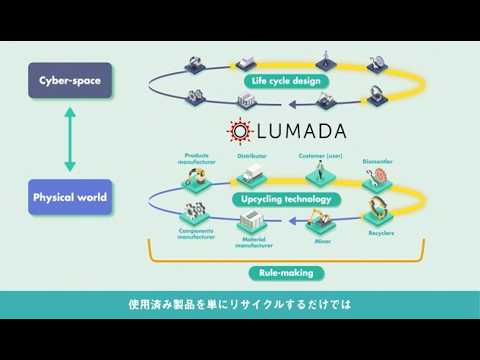
(1) the life cycle design navigator—a tool that comprehensively evaluates and simulates a product’s environmental performance and economic efficiency (cost) from the planning and design stages;
(Shin-ichi Taniguchi, Younjeong Hong, Hiroki Nakatsuchi, “Circular Economy Innovation” for Maximizing the Life Cycle Value of Resources, Procedia CIRP 140 (2026) 1253–1261)
(2) the design knowledge-structuring technology—a technology that uses generative AI to extract, from design documents, relationships among specifications required, design indicators (quality, performance, and environmental considerations), and design variables (such as materials and dimensions), enabling an overview of design constraints and potential solutions; and
(3) the high-speed performance evaluation technology—a technology that uses deep learning on conventional numerical simulation results to predict, approximately 50 times faster than conventional methods, product performance resulting from design changes, while addressing trade-offs among multiple KPIs.
In particular, the life cycle design navigator is a design DX tool that supports the selection of optimal designs by simultaneously and comprehensively quantifying the three factors of product performance, product cost (life cycle cost [LCC]), and environmental performance (life cycle assessment [LCA]) at the product planning and early design stages. It is expected to play a key role in realizing eco-design.
The effectiveness of this navigator has been demonstrated using a stick vacuum cleaner based on publicly available data. For example, in a scenario where recycled plastic is introduced into the cleaner’s handle, main body and hose to reduce environmental impact, life-cycle CO₂ emissions were reduced by 16% compared with the baseline product. Because recycled materials are difficult to recycle again, however, the indicator showing the circularity of resources decreased by 27%. In another scenario, where the motor and battery are replaced with reused products, if the reused products have 15% lower performance than new ones, power consumption decreased by 25%, but continuous operating time also fell by 20%. Furthermore, additional energy consumption required to compensate for the performance loss, together with the increased burden associated with collection, transportation, and remanufacturing processes, led to a 1% increase in life-cycle CO₂ emissions and a 37% increase in cost. As these results demonstrate, simultaneously achieving reductions in environmental impact, improvements in circularity, and cost savings is not straightforward, and different measures give rise to different trade-offs. The value of this navigator lies in its ability to quantitatively visualize such trade-offs at the early design stage and support decision-making during the planning and design phases.
The third application is participation in a global community focused on the industrial implementation of eco-design. One such forum is Working Group C3.25 (Ecodesign methods for the power system) established under CIGRE Study Committee C3 (Power system sustainability & environmental performance) and approved in July 2024. CIGRE stands for Conseil International des Grands Réseaux Electriques (International Council on Large Electric Systems). The working group, comprising 37 members from 20 countries, brings together a diverse range of stakeholders involved in the power system, including utilities, manufacturers, and researchers. Its objectives are to systematically organize approaches to eco-design for power systems, share best practices, and develop guidance on applying eco-design methodologies. Dr. Naoe participates as a member from Japan, and the group is currently working toward compiling a Technical Brochure (TB) in fiscal 2026 to provide technical guidance on the subject.
At CIGRE’s Paris Session in August 2026, the working group presented a tutorial providing a comprehensive overview of what eco-design for power systems should look like. Dr. Naoe commented: “This tutorial was the first initiative of its kind at CIGRE and represents a significant step toward implementing eco-design across the power industry.”
CIGRE also has a parallel working group developing a methodology for assessing the environmental impacts of transformers throughout their entire life cycle, reflecting growing momentum toward standardizing LCA in the field of power equipment and systems.
In other words, the concept of eco-design for power systems is becoming increasingly structured and defined. Rather than simply supplying products, companies will need to aim to provide products in accordance with the rules that define sustainable infrastructure.
How to Balance Environmental Value & Business Viability in QCD+E Era
Eco-design is evolving from a “defensive environmental measure” into a “proactive growth strategy” for the manufacturing industry. As noted at the outset, QCD—Quality, Cost, and Delivery—has traditionally been the key criteria in product development, but “Environment” is increasingly being added to the equations. Hitachi’s Eco-Design White Paper provides an internal framework for responding to this shift. Namely, it lays the foundation for embedding environmental considerations into the company’s design practices.
At the same time, the Eco-Design White Paper has served as a starting point for developing concrete design support tools such as the life cycle design navigator. It has also led to external technical contributions, including participation in international eco-design initiatives through CIGRE. Rather than simply responding to European regulations, Hitachi is connecting its eco-design efforts with both R&D outcomes and international discussions. This may be where the essence of Hitachi’s approach to eco-design lies.
Going forward, delegated acts under the ESPR will progressively establish specific requirements for individual product groups covering areas such as durability, repairability, resource efficiency, recyclability, and environmental impact. As these regulations take shape, how far will Hitachi’s internal eco-design framework develop into external thought leadership and contributions to industry standards? It will be worth watching developments in this connection.
Related Articles
“Circular Economy Innovation” for Maximizing the Life Cycle Value of Resources - 日立
youtu.be