News release overview
Hitachi develops edge AI technologies that boost frontline application of Lumada 3.0
Energy-efficient edge AI analyzing diverse sensor data in real time will contribute to stable equipment operation and social value creation
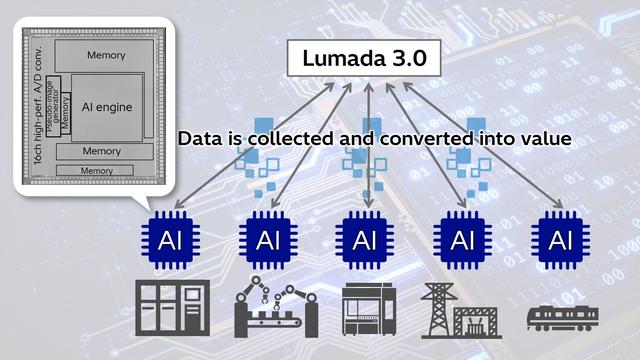
Figure 1. Anticipated applications of the developed technologies
Tokyo, October 14, 2025 - Hitachi, Ltd. (TSE: 6501; “Hitachi”) has developed edge AI*1 technologies for boosting frontline application of Lumada 3.0, aiming to solve customer problems and create value on the way to continuous growth. The technologies enable high-density integration, on one semiconductor chip, of the circuitry for processing data from sensors for images, sound, vibrations, and more, achieving an energy-efficient and compact package. In addition, using the design and prototyping platform provided by the Research Association for Advanced Systems (RaaS),*2 Hitachi has designed circuitry that succeeds in reducing power consumption to approximately 1/10 that of an AI semiconductor with similar processing speed. As a result, real-time data analysis by edge AI will be possible even in locations with constraints on power supply or installation space, which will contribute to more stable equipment operation, improved productivity, and more advanced quality control. Through collaborations with partner companies in the semiconductor manufacturing field and other such efforts, Hitachi plans to deploy these technologies in its own inspection equipment and visual inspection*3 solutions, aiming to enhance the value of digitalized assets. In such ways, these technologies will help users convert data collected in the worksite into value, contributing to the advancement of industrial fields and social infrastructure, their continuous growth, and the creation of social value (Figure 1). Moreover, by combining these frontline-optimized technologies with AI semiconductors such as GPUs*4 used in large-scale systems, Hitachi aims to provide an AI processing platform, broadly applicable from the cloud to worksites, that can help address a wide range of challenges that society faces.
*1 Artificial intelligence deployed directly in network terminal equipment (edge devices).
*2 An organization providing Research as a Service, making leading-edge semiconductor technology available for anyone to use.
*3 A process of inspecting the exterior of a product or part visually or by machine to check for scratches, soiling, deformation, and other defects.
*4 Graphics processing units: Processors capable of graphical processing or AI operation processing.