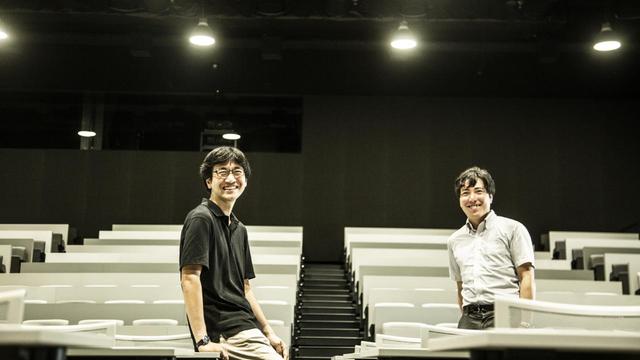
We talked to Senior Researcher Yosuke Tanabe and Researcher Hisatoshi Kimura of the Next Research Space Project, who have been involved in the development of SSA and structured radio wave technologies, about the background of their research and the future application of these technologies in society.
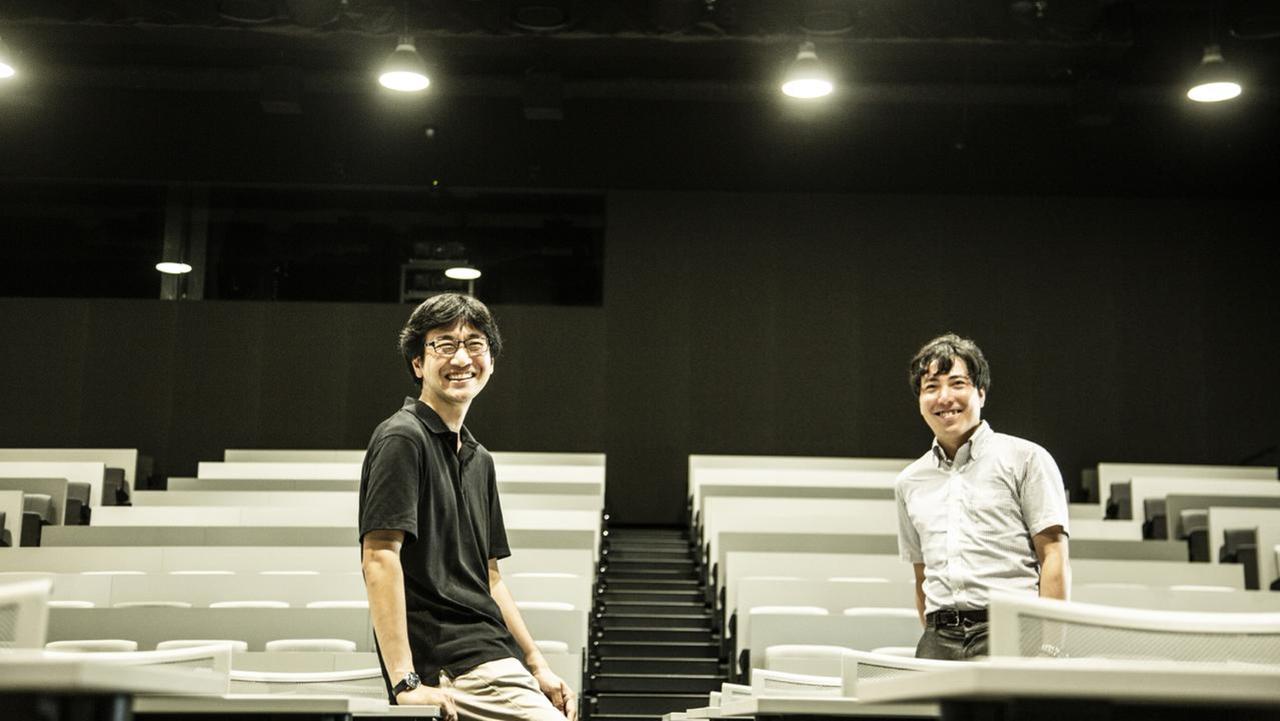
An acoustic researcher and a space radiation researcher meet at Hitachi
Tanabe: Sound has always fascinated me. At university, I joined the department of acoustic design, where I majored in acoustic design, obtaining my doctorate. My core research involved identifying how airflow forms vortices as the vocal folds vibrate and how these vortices interact with the vocal folds to produce the human voice. At the time, I wasn’t thinking about how this research might be useful to society—I was simply pursuing my curiosity about sound and voice. Considering my specialty, I applied to research institutes where I could conduct core research related to voice, but I wasn’t able to secure a position. Around this time, my academic advisor suggested to me, “You could research acoustics at Hitachi.” Since Hitachi welcomed Ph.D. holders and offered the opportunity to pursue acoustics research, I applied for a research position, joining the company in 2007.
Yosuke TANABE, Chief Researcher, Space Project, Next Research, Research & Development Group, Hitachi, Ltd.
I was initially assigned to the Mechanical Engineering Research Laboratory in Katsuta, Ibaraki Prefecture (now part of the Research & Development Group), where my first project involved reducing noise in construction machinery such as hydraulic excavators. After that, I continued research related to acoustic environments, such as noise reduction in automotive equipment and railway cars. Over time, my interest expanded from sound to the environment itself, and I was particularly intrigued by the field of natural capital accounting—a discipline that involves observing the Earth from space to identify the economic value of natural resources such as forests, soil, water, air, flora, fauna, and minerals. Around this time, Hitachi began seeking internal researchers to engage in space-related R&D. I applied without hesitation, and that brought me into my current research.
Kimura: I completed a master’s degree in applied physics, where my research focused on evaluating the performance of instruments for detecting cosmic radiation installed on the Exposed Facility of the Japanese Experiment Module aboard the International Space Station. I was fascinated by the scale of the research and the international cooperation involved in operating the instruments. When I began looking for a post-degree job, I wasn’t specifically focused on space, and I had aspirations of working in the energy field—particularly power generation using renewable energy, which was attracting attention at the time. I was looking for a job that would contribute to the infrastructure supporting people’s lives, and so I felt that getting involved in electricity—as a necessity deeply rooted in everyday life—would valuable, especially in terms of renewable energy, in a resource-limited country like Japan.
Hisatoshi KIMURA, Senior Researcher, Space Project, Next Research, Research & Development Group, Hitachi, Ltd.
While looking at potential employers, I found that Hitachi was the only company that designed and manufactured its own wind turbines, and so I made the decision to join Hitachi in 2015. I started by working on the electrical design of wind power plants, including system design for high-voltage incoming panels and switchgear panels. Later, when the company shifted its business strategy, I began looking for new challenges. It was around this time that I came across an internal recruitment effort seeking researchers for a study related to space-based solar power generation. As the field combined my experience in power generation with my long-standing interest in space, I decided to apply. That’s how I came to work with Tanabe.
From space-based solar power to understanding the space environment
Tanabe: As Kimura mentioned, our space-related R&D efforts initially focused on space-based solar power generation. The idea was to deploy solar panels in outer space and transmit the electricity generated from sunlight back to Earth in the form of radio waves. To achieve this, we studied thin-film satellites that could be folded compactly during launch and then unfolded in space to generate electricity. However, realizing this system would take many years to develop, we began thinking whether our thin-film deployment technology could be applied to other research areas, which led to the idea of space observation. We envisioned using satellites with thin films to observe radio waves and help understand space situations.
Kimura: One of the major challenges in space today is congestion. An increasing number of satellites and other objects are being launched into orbit, raising concerns about overcrowding. To address this, we began research aimed at better understanding the space situations using satellites launched into orbit. Traditional space situational awareness (SSA) technology relies on ground-based radar and optical telescopes, which limits observation to only one specific region within a narrow field of view. However, we believe that if we could instead conduct SSA from satellites in orbit, we would be able to map the surrounding situations in all directions. Thus, our concept was to develop a satellite capable of omnidirectional observation. By deploying a small co-satellite near an important satellite that requires protection from other satellites or debris (unwanted human-made objects such as satellite or rocket fragments), we aimed to conduct continuous monitoring in all directions and detect potential hazards.
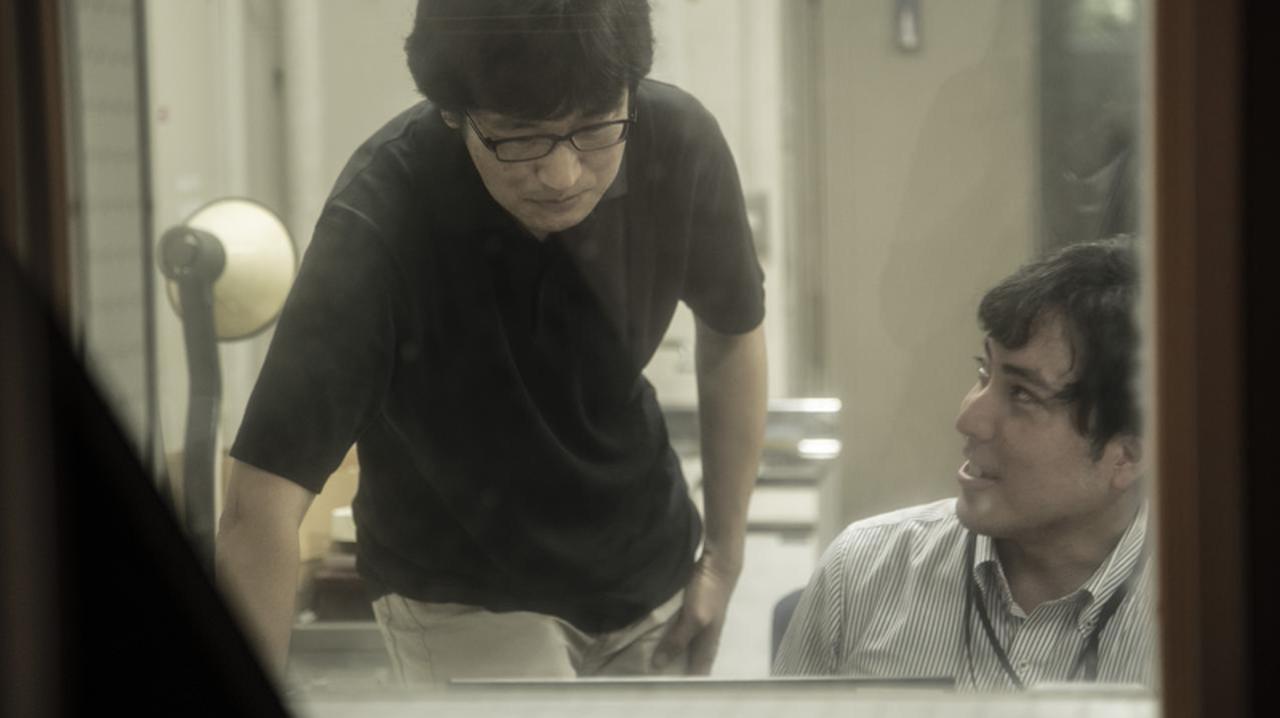
Tanabe: Beyond this, we also considered having autonomous satellites conduct SSA. If functional satellites could perform SSA themselves, this would allow them to detect obstacles and take evasive action.
Kimura: Some research papers report that, in certain cases, satellites can take evasive action when debris approaches. Even debris as small as one centimeter in diameter travels at speeds of several kilometers per second, causing severe damage to anything it collides with. Furthermore, debris generated by such collisions in turn increases the amount of debris in space, so the ability to avoid collisions via SSA performed by satellites themselves offers significant societal value.
Tanabe: At this stage, high-density satellite deployment is achieved by arranging satellites at specific orbital altitudes. However, three-dimensional constellations, which are satellite networks arranged spatially in multiple layers, are also being proposed. As the number of satellites continues to grow and their movements become increasingly complex, the need for technology that can observe surroundings from all directions and allow satellites to move autonomously will become critical. If spacecraft can monitor their surroundings in real time and in all directions, that would represent a completely new approach to SSA, freeing us from the limits of conventional ground-based observation.
Deploying thin films in space using tensegrity structures
Tanabe: To achieve omnidirectional observation from a launched satellite, antennas must be deployed in all directions around the satellite. These antennas need to be compact during launch and then expand outward in all directions once in space. To achieve this, we came up with the idea of using a special structure called a tensegrity structure.
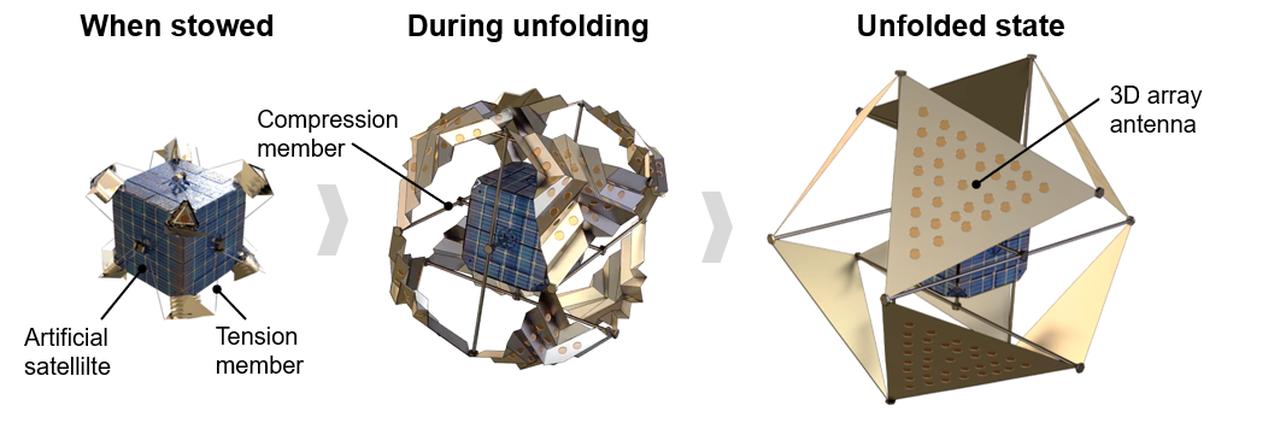
Three-dimensional array antenna adopting tensegrity structure (illustrative image)
The tensegrity structure, which was conceived by Buckminster Fuller (1895–1983), the visionary architect known for “Spaceship Earth,” combines tension elements and compression elements to allow a membrane to be stretched in all directions. I had known about this structure since my university days, and when we needed compact, lightweight antenna structure deployable around spacecraft, I thought, “This is it!” and adapted it for our research project.
Kimura: Satellites employ a method in which solar panels are folded for launch and then unfolded in space. However, these panels are rigid and heavy. For SSA applications, where antennas must extend in all directions, weight reduction is critical, so we decided to use thin films instead.
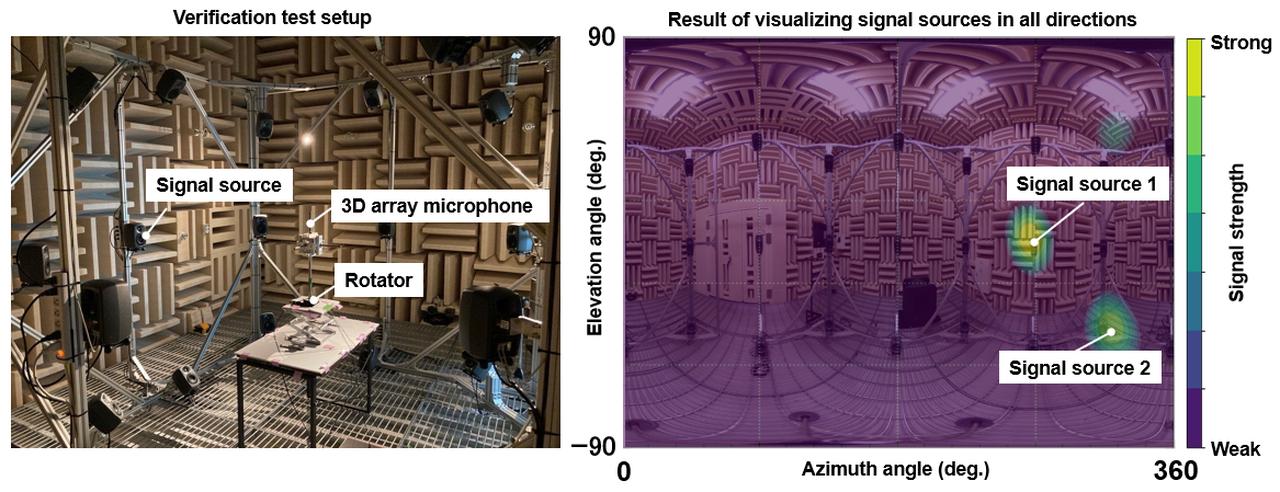
Tanabe: We demonstrated omnidirectional spatial sensing with a tensegrity-structured antenna using acoustic waves. As radio waves and acoustic waves follow similar physical principles, we were able to use lower frequency acoustic waves to simulate the behavior of a certain frequency of radio waves. As the research I conducted on the human voice when I was a student incorporated analogies between electromagnetism and acoustics, I decided to start verifying the theory by evaluating it using acoustic waves.
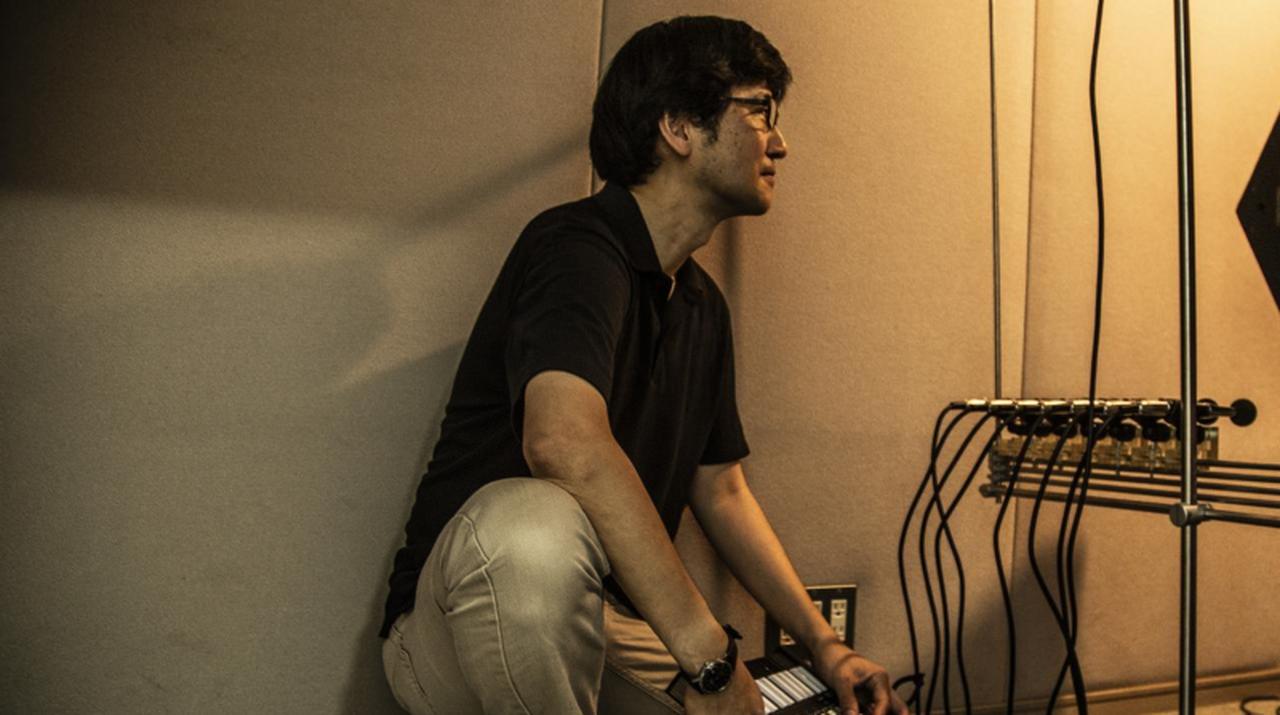
By using acoustic waves with a microphone array based on a tensegrity structure to demonstrate omnidirectional spatial awareness, we confirmed that the microphone array could draw on the received acoustic waves to detect and map the position of objects in the surrounding area accurately across a full 360 degrees horizontally and 180 degrees vertically. This demonstrated that omnidirectional spatial recognition is possible with sound waves—and, by extension, with radio waves as well.

Principle verification of a rotational radio interferometry method for localizing signal sources in three dimensions
Kimura: Based on this acoustic demonstration, I am currently conducting experiments using actual radio waves. As Tanabe mentioned, we learned that it was possible to use acoustic waves to detect objects in all directions. We will conduct tests to confirm how this model behaves in the actual radio wave frequency range we plan to use. Tests with radio waves are challenging because they involve high frequencies, making them more susceptible to the influence of the experimental environment and equipment conditions. It is therefore more difficult to obtain clean data compared to tests with acoustic waves. We aim to address each of these impacts one by one to demonstrate omnidirectional spatial awareness using radio waves as well.
Tanabe: Although we were able to confirm three-dimensional spatial awareness using tensegrity structures, it's also true that the direction of our research is shifting. When using a tensegrity-structured antenna to perceive a three-dimensional space, the device detects the presence of obstacles by measuring radio waves received from elsewhere. This represents a passive approach to radio wave measurement. Recently, however, our research has been shifting toward active measurement methods, where the antenna itself emits radio waves and then detects the waves reflected back from the target object. We believe this approach will provide a greater wealth of information than passive methods.
Using special structured radio waves to understand the state of space-time
Tanabe: We have focused our research on a special type of active wave known as a “structured radio wave.” By freely configuring emitted structured radio waves in terms of polarization state, phase, frequency, and spatial waveform, we can use their reflected signals to determine the state of the target—an approach similar to radar. Our research focus has expanded from space situational awareness to using sensing data from space to observe Earth.
The structured radio waves we are working to develop are formed by superimposing radio waves with vortex wavefronts. Compared with conventional radar imaging methods used to observe the Earth, which produce two-dimensional images, structured radio waves can potentially provide distortion-free three-dimensional imaging. Because the vortex wavefront rapidly diffuses as it propagates through the atmosphere, it is highly sensitive to atmospheric conditions. By analyzing the degree of diffusion, we can derive spatial information about the atmosphere, enabling us to assess weather and climate variations in three dimensions. Of course, the higher sensitivity also increases the difficulty of transmitting and receiving the reflected waves. We still have many hurdles to overcome, including how to transmit and receive signals effectively, how to process these signals, and how to get good information from them. Despite the challenges, it’s exciting to tackle such a new and promising project.

Comparison of conventional plane waves (on the left) and structured radio waves newly developed by Hitachi (on the right) (Green: wavefront; arrows: electric field vector; color map on the right side: positive/negative amplitudes for the electric field).
Kimura: Thus far, there have been a variety of methods used to observe Earth from space. When we decided to use structured radio waves for Earth observation at Hitachi and considered what our strengths were, we realized that there was the potential for creating new value by acquiring new information and combining it with Hitachi’s wealth of infrastructure knowledge. For example, as radio waves have spatial distribution, we could use this information to determine the velocity of moving objects across the observed plane and, from 3D data, even their direction of movement. In 2025, we successfully demonstrated the principle of structured radio waves.
Previously, power generation systems handled frequencies of several tens of hertz, but the scale of this project is completely different, requiring systems that can handle frequencies in the billions of hertz (GHz)—and the behavior is completely different, too. We’re currently conducting experiments and analyzing the data. Many challenges cannot be solved through electrical engineering knowledge alone—for example, understanding atmospheric interference requires understanding on the statistical side, too. Although we use commercially available equipment, we are currently studying the theoretical aspects and signal processing, and there is a constant need to acquire new knowledge as we proceed.
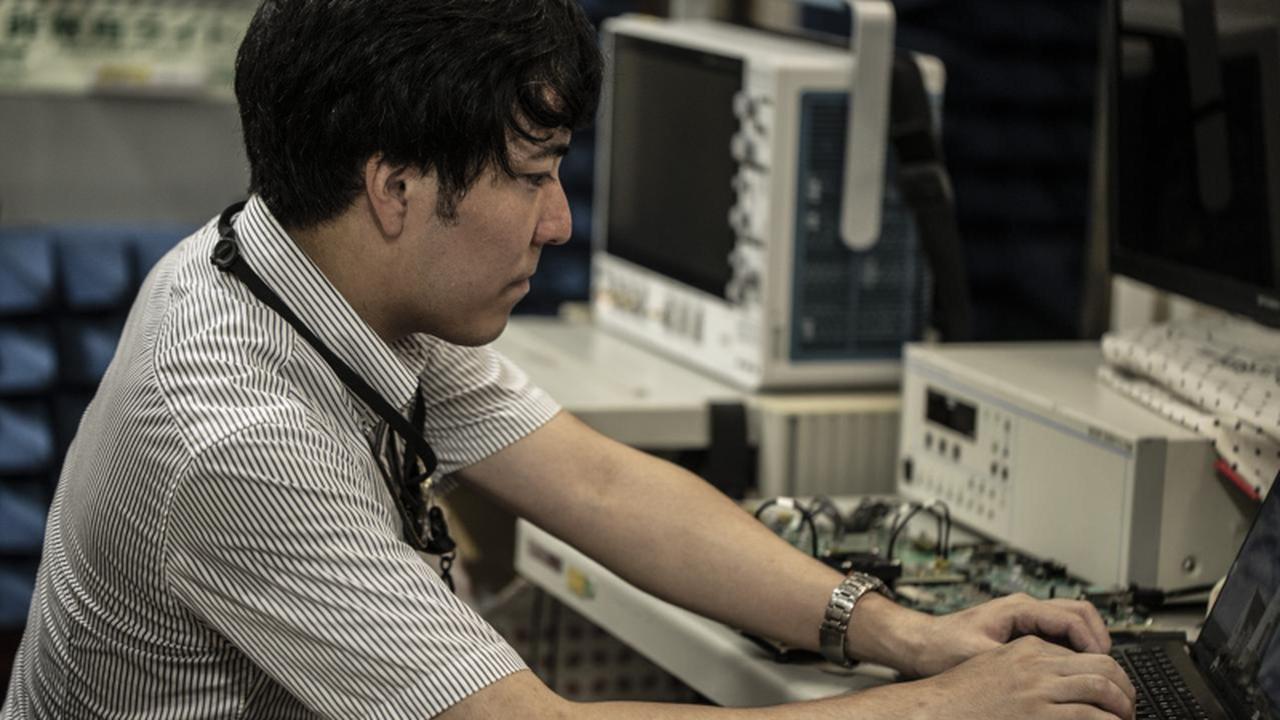
Tanabe: Like Kimura, in order to achieve sensing using radio waves, I had to study a lot of new areas. Even when you build a theory and think you've achieved it in a simulation, unexpected phenomena often occur when you conduct actual experiments. This is why experimental verification is crucial, and I will continue to do so step by step with Kimura and the rest of the team.
Aiming for applications in monitoring urban infrastructure and the environment
Kimura: The main areas where we envision applying structured radio waves are the monitoring of urban infrastructure and the environment. As Japan’s working population declines, inspecting and maintaining urban infrastructure will becoming increasingly challenging. I believe that using space-based monitoring to collect wide-area data would allow us to identify aging infrastructure at an early stage to ensure a safer, more secure living environment. In addition, in the fight against global warming, we have traditionally relied on predictions based on past data. However, utilizing structured radio waves would allow us to conduct environmental monitoring based on real-time data from space, which would enable dynamic forecasting of environmental conditions. I hope this technology can help build a society that can adapt flexibly to the ever-changing environment.
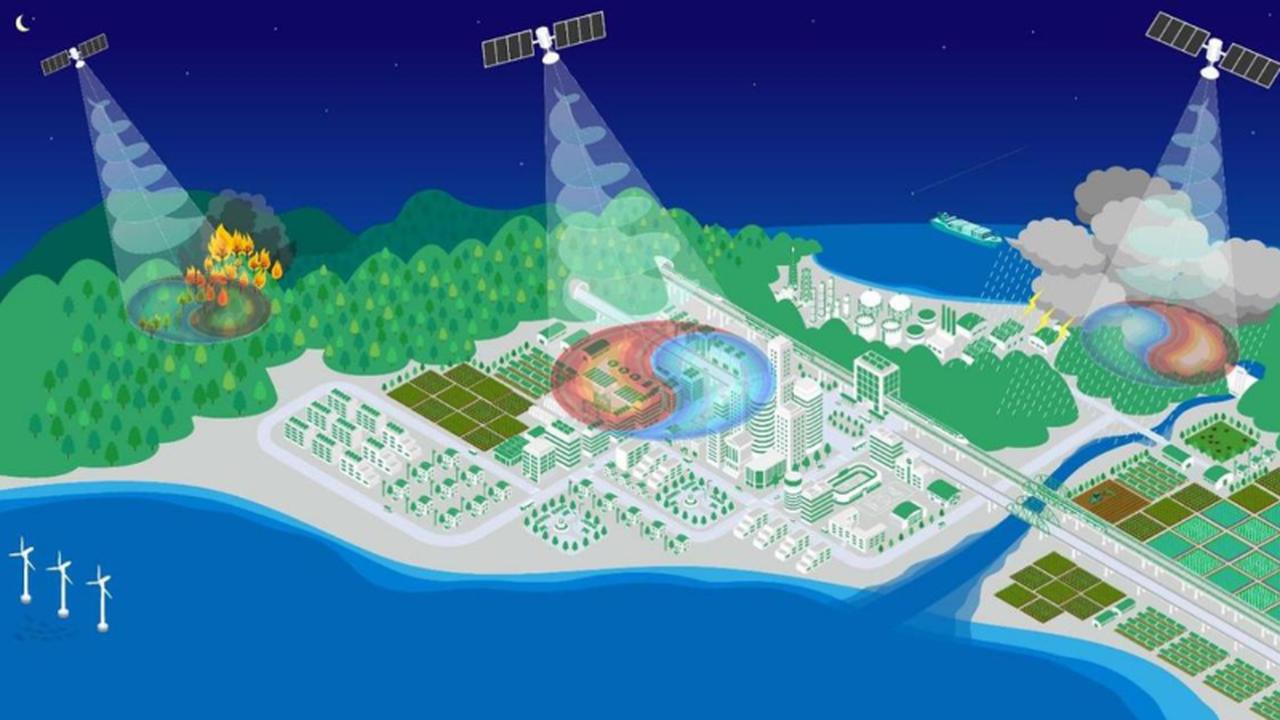
An illustration of Earth observation using structured radio waves
Tanabe: By employing structured radio waves, we can introduce a new dimension—spatial information. Until now, radio waves have been used to exchange information via parameters such as frequency, amplitude, phase, and vertical or horizontal polarization. Adding spatial structure as another dimension allows us to expand the possibilities further. For example, in communications, incorporating spatial information using structured radio waves could lead to increased data transmission capacity; in sensing, utilizing previously unidentified information could expand the scope of activities.
Radio waves have a spatial structure, reflecting and interfering within a given space. Analyzing spatial information of the waves can allow us to obtain a more sophisticated understanding of the environment. While the vortex patterns we currently use are one type of spatial mode, there are also many others. We believe that by incorporating more of these spatial modes into structured radio waves, we can further expand the range of spatial sensing.
Kimura: In our current project, we are conducting joint research with a range of organizations, particularly JAXA (Japan Aerospace Exploration Agency) and The University of Tokyo. Although Hitachi has experts in a variety of fields, space is a relatively new business domain for us, so there is significant value in collaborating with external partners.
Tanabe: Hitachi actually did have a dedicated Space Technology Division in the past, but with all the time that has passed since this organization disbanded, there are fewer members with expertise in space. It felt like we were starting from scratch in our current department, but thanks to the guidance and support of outstanding research institutions and experts in the field, we’ve been able to present our findings at academic conferences.
Kimura:With this support, we’re aiming to conduct space-based demonstrations in seven years. We’re hoping to reach a stage where we can say, “Linking the properties of structured radio waves with sensing can achieve something exciting.”
Tanabe: Before embarking on space-based demonstration, we plan to start by conducting tests using aircraft. By combining ground-based experiments and aerial verification, we hope to propose effective methods for using and processing structured radio waves. We aim to publish our findings as soon as possible, discuss potential applications with our research partners, and explore how this technology can deliver value to society.
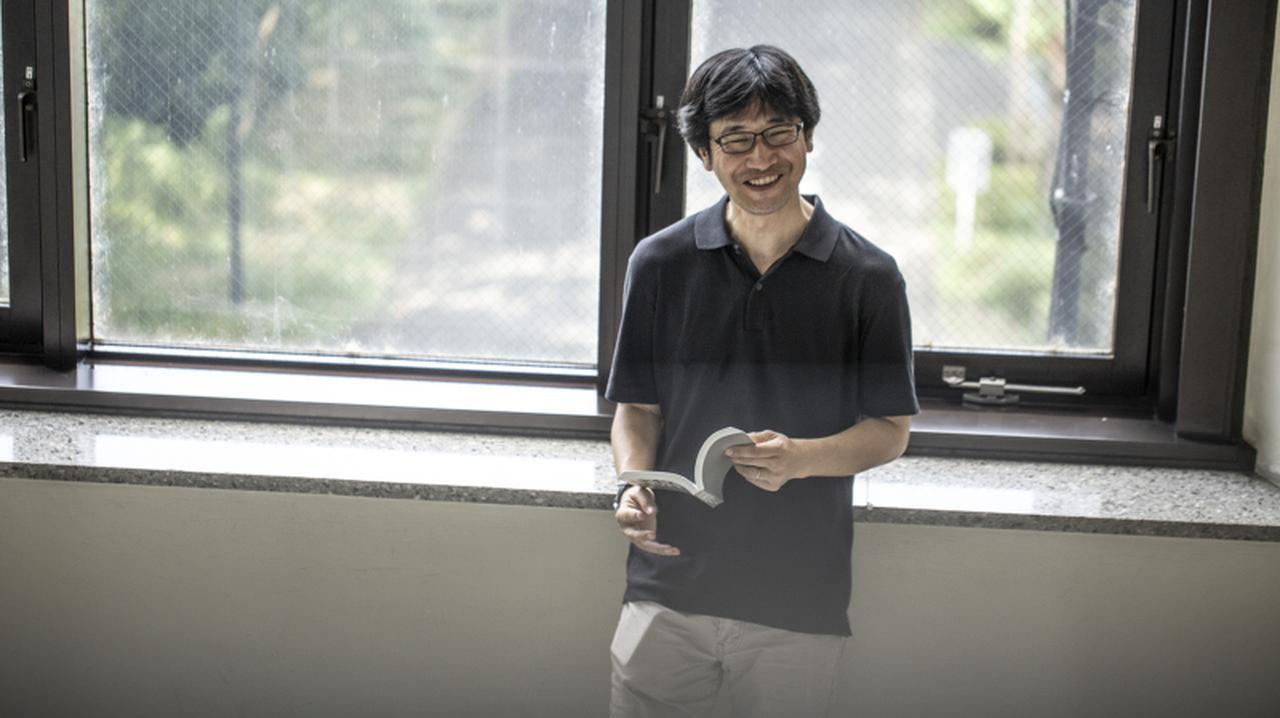
Yosuke TANABE
Chief Researcher
Space Project, Next Research
Research & Development Group, Hitachi, Ltd.
A book that inspired ongoing thought on the true meaning of quality
Zen and the Art of Motorcycle Maintenance by Robert M. Pirsig, a story that fuses travelogue and philosophical reflection, details the journey of a father and son across the US on a motorcycle as they explore the essence of “quality.” As they repair the motorcycle and revisit memories along the way, they ponder the conflict between rationality and sensibility and the nature of “quality” that brings harmony between the two opposites. A friend recommended the book to me when I was a student, and I still reread it from time to time because it continually challenges me to think about what quality truly means. Since my student days, when I studied both art and engineering, I’ve been drawn to how the book treats the fusion of the two disciplines as a central theme. Just as the book resonated with me, I find a real sense of joy in the pursuit of quality through state-of-the-art research and development.
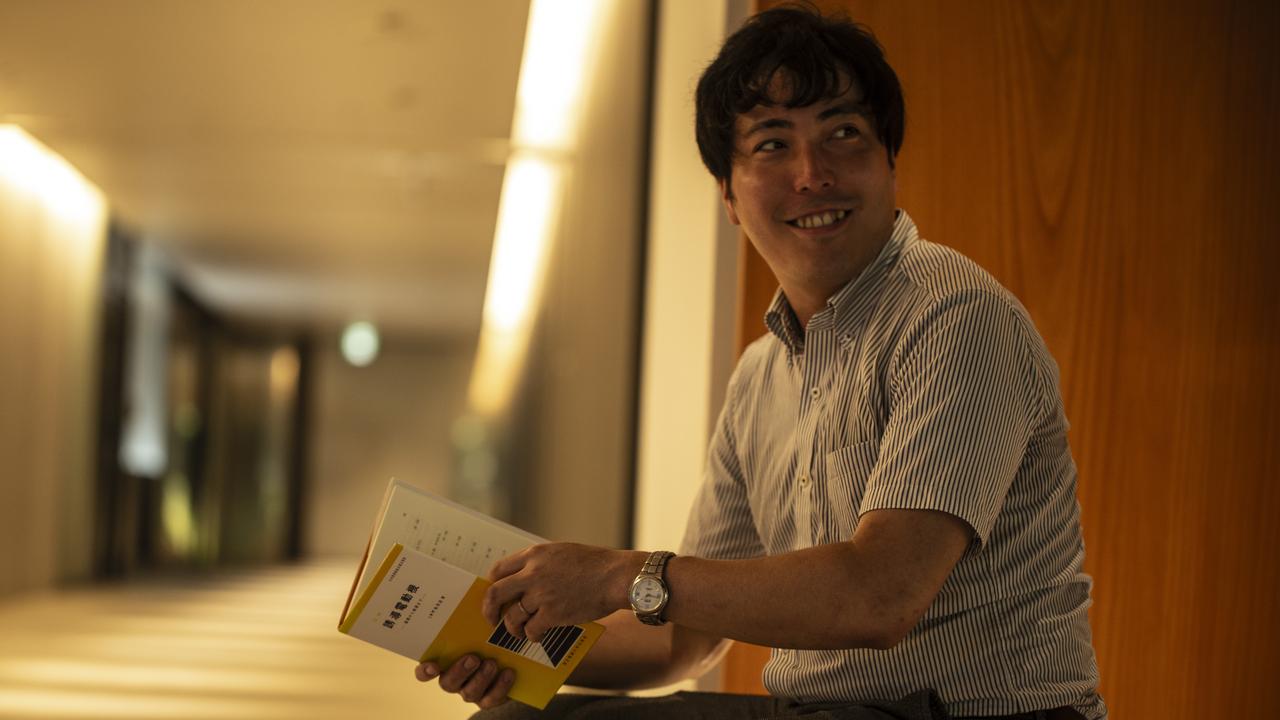
Hisatoshi KIMURA
Senior Researcher
Space Project, Next Research
Research & Development Group, Hitachi, Ltd.
Lifelong learning about manufacturing
A book that left a lasting impression on me was An Illustrated Guide to Induction Motors: From Fundamentals to Control by Shigehiko Tsuboshima (Tokyo Denki University Press), which was an extremely useful guide for understanding generators and motors. When I was training at an induction motor assembly plant, my supervisor was reading this book. Although there’s a clear division of roles among researchers, designers, and manufacturing staff at Hitachi, seeing my supervisor pour himself into that book showed me that staff on the manufacturing floor are also constantly striving to improve their technical knowledge just like designers are. I was so impressed by this strong sense of responsibility, people truly understanding their roles as professionals who shape the final product. Another source of inspiration is the YouTube channel Fusha Tsukuri Kobo (Windmill Workshop), which was launched by one of my former supervisors. The channel documents his personal project of building a wind turbine for power generation, with detailed videos on the electrical and mechanical structures involved, at a level comparable to what a full departmental section at Hitachi would do. He’s pursuing the project as a side business under a program offered by Hitachi, and seeing him continue to learn inspires me and reminds me that colleagues like him are what makes Hitachi such a great place.