Two papers presented at leading international software engineering conference ASE 2025
Hitachi has developed technologies aimed at making physical artificial intelligence (AI)*1 a reality by integrating control engineering,*2 AI, and software engineering*3 to improve control software in the automotive and logistics sectors. In the automotive sector, Hitachi has enabled test scripts*4 for actual hardware to be automatically generated by incorporating controller hardware–specific application programming interface (API)*5 information into generative AI. This new technology, which had been difficult to achieve, reduced integration testing man-hours by 43%.*6 In the logistics sector, meanwhile, Hitachi has improved both the reusability of control software for autonomous robotics and the efficiency of frontline work by analyzing environmental conditions and variation points in frontline operations in advance and reflecting these factors in architecture design.*7 These technologies will help bring about sustainable societal infrastructure by improving control software development efficiency and reducing frontline workload.
In addition, both research findings were simultaneously accepted for presentation at ASE 2025,*8 a leading international software engineering conference (added to the program in September 2025 and presented in November 2025).
*1 Physical artificial intelligence (AI): Technologies that connect AI capabilities with real-world objects and movements, enabling AI to perform tasks such as seeing and moving in the physical world via sensors, actuators, and other devices.
*2 Control engineering: The discipline of designing and operating machines and systems to ensure they function correctly, safely, and stably in accordance with their intended purposes.
*3 Software engineering: A framework of technologies and knowledge for systematically and efficiently developing programs that run on computers (i.e., software).
*4 Test scripts: Programs that describe a sequence of operational procedures and verification steps created to automatically check whether software or systems are functioning correctly.
*5 Application programming interface (API): A set of rules and mechanisms designed to enable smooth information exchange and use of functions between different software or services.
*6 Evaluation results from a pilot project. Results were compared to the man-hours required for manual execution.
*7 Architecture design: The technical process of planning and designing the general overall structure of software or systems by defining the roles of individual components and how they interact in order to ensure safe and efficient operation.
*8 40th IEEE/ACM International Conference on Automated Software Engineering. A prestigious international academic conference where researchers and engineers from around the world present and discuss technologies and research findings related to the automation of software development and design. The conference has received the highest rank of A* (top 7.65%) in the International CORE Conference Ranking (ICORE), which ranks international conferences in the information technology field.
Background and issues
Advances in digitalization and automation have led to rapid increases in the complexity and diversity of systems in societal infrastructure and industrial workplaces. Accordingly, there is a need for flexible responses to site-specific specifications and operating conditions in order to accommodate diverse equipment, environments, and business processes. At the same time, as the adoption of AI and autonomous systems accelerates, accurately reflecting frontline expertise and hardware-specific information in software to achieve highly reliable automation thus represents a key challenge. In this context, Hitachi is working to develop new technologies that can flexibly and efficiently respond to the diversity and variability of workplace environments.
Features of the technologies and solutions developed to address these challenges
To address the diverse workplace challenges described above, Hitachi has developed technologies that integrate control engineering, AI, and software engineering in order to realize physical AI.
Case 1 (automotive sector): AI-based technology that utilizes hardware API information to automatically generate test scripts*9
Hitachi and Astemo, Ltd. have jointly developed an AI-based technology that generates tests for in-vehicle systems. By incorporating controller hardware–specific API information and frontline expertise into generative AI (large language models combined with retrieval-augmented generation), the technology, based on test case specifications written in natural language, automatically generates integration test scripts for actual hardware that reflect frontline knowledge. This approach streamlines the creation of test scripts, which was previously a labor-intensive process, achieving a 43% reduction in man-hours in a pilot project involving integration testing of multi-core electronic control units (ECUs). The technology can flexibly accommodate hardware configurations specific to each worksite, enabling reliable use of AI in the field.
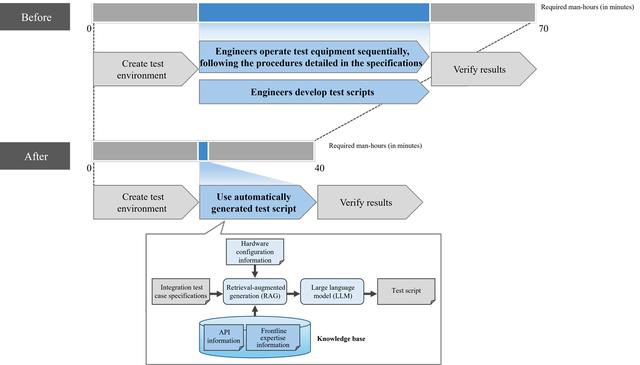
Figure 1: Overview and benefits of the proposed method
Case 2 (logistics sector): Technology that enhances the reusability of control software for autonomous robotics through variability management*10
Hitachi has developed variability management technology that enables highly flexible software-based control. This technology preemptively analyzes diverse variation points in products, environments, and work processes at factories, logistics centers, and other worksites and organizes them into a functional model. By modularizing robot control software and implementing the results as nodes operating on a robot operating system (ROS),*11 the technology enables a swift response to new products or changes in picking and placing requirements, thereby enhancing software reusability. Interviews with field engineers and robot operators, along with verification tests, confirmed that the technology enhances the efficiency of system configuration tasks.
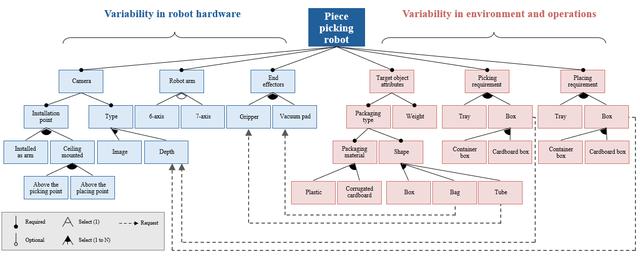
Figure 2: Variability model for autonomous robotics in logistics operations
*10 https://conf.researchr.org/details/ase-2025/ase-2025-journal-first-track/19/Managing-the-variability-of-a-logistics-robotic-system
*11 Robot operating system (ROS): A common software platform for robots in use worldwide, enabling the efficient management of robot motion and control, sensor information, and other factors.
Looking ahead
These technologies will help bring about sustainable societal infrastructure by improving the efficiency of control software development and reducing the burden on frontline personnel. Achieving greater responsiveness and labor savings in the workplace will also help address challenges such as declining workforce resources and diversifying societal needs. Going forward, Hitachi will continue working to develop and apply technologies that integrate control engineering, AI, and software engineering in order to realize physical AI across a wide range of social infrastructure sectors, including automotive and logistics, with the aim of finding solutions to societal challenges and creating new value.
For more information, use the inquiry form below to contact the Research & Development Group, Hitachi, Ltd. Please make sure to include the title of the article.
https://www8.hitachi.co.jp/inquiry/hitachi-ltd/hqrd/news/en/form.jsp