Analyzing AI’s impacts across environmental, social, and economic systems, and proposing a global governance framework for sustainability transitions
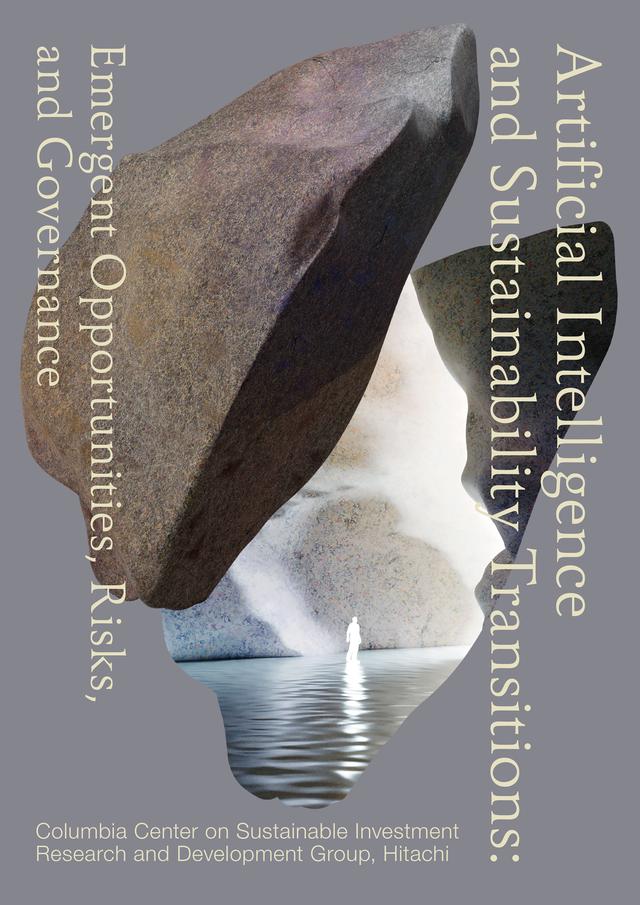
Figure 1: Cover of the Joint Research Report
Hitachi has announced the publication of a joint research report, “Artificial Intelligence and Sustainability Transitions: Emergent Opportunities, Risks, and Governance”*1 developed in collaboration with the Columbia Center on Sustainable Investment (CCSI)*2 at Columbia University’s Climate School. The report provides a comprehensive analysis of how artificial intelligence (AI) is reshaping sustainability transitions and offers strategic insights for aligning technological advancement with long-term societal and environmental goals.
The report examines the impact of AI across five critical domains for sustainable development: the planetary environment, energy systems, industry and labor, finance, democracy and societal resilience. It analyzes both the opportunities and risks of AI and proposes an integrated governance framework alongside a phased global roadmap to align AI development with long-term societal and planetary well-being. A Japanese language edition of the report will be released later.
The report characterizes AI as a general-purpose technology with the potential to drive profound societal change while also introducing complex and systemic risks. It emphasizes that the outcome of AI is not predetermined but will depend on how the technology is designed, deployed, and governed.
Through its Social Innovation Business, Hitachi leverages data and digital technologies via Lumada to address customer and societal challenges. As AI deployment accelerates across industries, the company is advancing initiatives that promote innovation while addressing associated risks. By strengthening responsible AI deployment and governance, Hitachi aims to help realize a harmonized society where environmental sustainability, human well-being, and economic growth are mutually reinforced.
*1 Full report: “Artificial Intelligence and Sustainability Transitions: Emergent Opportunities, Risks, and Governance”, Press Release: “AI's promise requires innovation in governance ― not in technology alone””
*2 Columbia Center on Sustainable Investment
*3 Lumada: Hitachi's advanced digital solutions, services, and technologies for turning data into insights to drive digital innovation.
Background
AI is advancing rapidly against a background of global challenges including climate change, resource constraints, and geopolitical instability. In particular, generative AI is transforming how data is used and decisions are made across sectors. While AI has significant potential to advance sustainability transitions, it also introduces new challenges, including increased energy demand, labor market disruption, and growing systemic risks. In addition, the “black box” nature of advanced AI systems raises critical concerns regarding transparency and accountability.
At the same time, international discussions on AI governance are gaining momentum. Initiatives such as the United Nations’ Independent International Scientific Panel on Artificial Intelligence (IISP‑AI) *4 aim to establish a shared scientific understanding of AI’s capabilities and risks. However, integrated analyses that connect AI development with sustainability transitions across multiple domains remain limited. This joint research seeks to address that gap by providing a cross-sectoral perspective on AI’s impact on sustainability.
*4. Independent International Scientific Panel on Artificial Intelligence, the first independent international scientific panel on AI, established by a United Nations General Assembly resolution in August 2025.
Overview of the Report
This joint research forms part of Hitachi’s “Transitions Research,” which explores pathways toward a sustainable future. The key findings are summarized as follows:
1. Cross-domain analysis of AI’s impact on sustainability
The report analyzes AI’s influence across five domains: the planetary environment, energy systems, industry and labor, finance, and democracy and societal resilience. It highlights AI’s potential to enhance environmental monitoring, optimize system efficiency, and support decision-making, while emphasizing the importance of adopting a systems-level perspective that captures dynamics across domains.
2. AI creates both opportunities and risks
AI is identified as a general-purpose technology that presents both significant opportunities and complex risks. While it can contribute to renewable energy integration, environmental monitoring, and productivity gains, it may also introduce environmental pressures, inequalities in access, misinformation, and broader systemic risks. The report emphasizes that governance will be the key determinant of these outcomes.
3. Governance as the central mechanism
The report identifies governance as the central mechanism for shaping AI’s societal impact. It proposes a three-layer governance framework consisting of sector-specific regulations, cross-cutting safeguards such as transparency and human oversight, and a global framework to coordinate national policies and address cross-border risks.
4. Phased roadmap for global AI governance
The research proposes a three-stage approach to build effective AI governance, comprising the establishment of a shared scientific baseline, the implementation of an interim safety framework, and the development of an international governance framework. This approach provides a pathway for aligning AI with long-term sustainability goals.
5. Analysis based on literature and expert insights
The analysis is grounded in a systematic review of existing literature, as well as interviews with experts from organizations including the United Nations University, the International Labour Organization, University College London, the University of Oxford, and the University of Waterloo. This approach strengthens the comprehensiveness and interdisciplinarity of the analysis.
Looking ahead
Hitachi will continue to leverage the insights generated through this collaboration to advance initiatives that utilize AI to support sustainability transitions. In parallel, the company will also deepen partnerships to strengthen responsible AI governance and implementation. Through these efforts, Hitachi aims to contribute to the evolution of resilient infrastructure systems across environmental, energy, industrial, financial, and public domains.
Related Content
To enhance access to the report and deepen engagement with its content, two companion videos have been produced. A three‑minute “trailer‑style video” highlights the key questions addressed by the research, while an approximately one‑hour “audio-concept video” features music to support deeper understanding and reflection on the report’s themes.
Trailer video:

AI and Sustainability Transitions | Introduction - Hitachi
www.youtube.comAudio concept video:

AI and Sustainability Transitions | Audio Companion - Hitachi
www.youtube.comAbout Lumada:
Trademark Notice
All company names and product names are the trademarks or registered trademarks of their respective companies.
About CCSI
The Columbia Center on Sustainable Investment (CCSI), a center of the Columbia Climate School at Columbia University, is a leading applied research center and forum dedicated to the study, practice, and discussion of sustainable international investment. Our mission is to develop and disseminate practical approaches and solutions, as well as to analyze topical policy-oriented issues, in order to maximize the impact of international investment for sustainable development. The Center undertakes its mission through
interdisciplinary research, advisory projects, multi stakeholder dialogue, educational programs, and the development of resources and tools.
For more information, use the inquiry form below to contact the Research & Development Group, Hitachi, Ltd. Please make sure to include the title of the article.
https://www8.hitachi.co.jp/inquiry/hitachi-ltd/hqrd/news/en/form.jsp