Contributing to sustainable future urban mobility through technologies for safe and efficient management of multiple autonomous vehicles
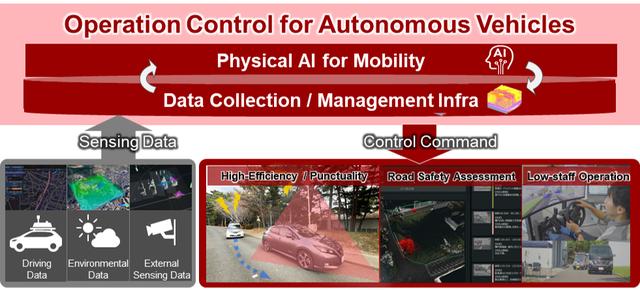
Figure 1. Overview of the autonomous vehicle operation control system
Hitachi has developed an operation control system for autonomous vehicles by integrating physical AI for mobility with a data collection and management platform technology, leveraging expertise cultivated through its long-standing involvement in businesses supporting social infrastructure. The development of the technology addresses social issues such as shortages of local drivers and growing numbers of people with limited mobility. To advance the social implementation of autonomous vehicle transportation services, an operation control system ensuring the safe and efficient management of multiple vehicles is essential. However, several technical challenges remain; examples include automatic adjustments of operating schedules to maintain punctuality, rapid situation assessment and response to unexpected events, and labor-saving operations and maintenance, including detecting anomalies on the road and monitoring vehicles remotely. This system, which Hitachi developed to address these issues, automatically generates operating schedule proposals based on real-time AI analysis and reflects them in operation control, enabling highly efficient and punctual operations. In addition, utilizing digital twin technology and AI for remote monitoring support helps achieve both safety evaluations of driving environments and reduced operational workload through minimal staffing. In late March 2026, a demonstration using an autonomous bus route at Keio University Shonan Fujisawa Campus as a real-world test field confirmed the system’s effectiveness. Based on these results, Hitachi will continue its medium- to long-term R&D and aims to implement the system in real-world settings while also linking the data collection/management infrastructure technology with broader social infrastructure. As part of this effort, based on the grand design of the “Next-generation future city co-creation project” that it promotes with Hitachi City,*1 Hitachi will work toward implementing the technology in Hitachi City’s public transportation network, contributing to the realization of sustainable urban mobility.
Background and issues
In local transportation, driver shortages and an aging workforce are making it increasingly difficult to maintain service. Declining populations have also led to a decrease in passenger numbers, resulting in route reductions and service discontinuation. As a result, rebuilding sustainable mobility options for residents has become a pressing issue. With this in mind, industry, government, and academia are advancing technological developments toward achieving the practical application of autonomous vehicle-based transportation services.*2 To this end, another critical element besides vehicle driving technology is the establishment of efficient operational frameworks. For example, local bus services typically operate dozens to around 100 vehicles across far-reaching areas and numerous routes, requiring systems capable of supporting comprehensive operation and management. However, operating autonomous vehicles at this scale involves challenges such as automatic adjustments of operating schedules in response to delays and changing traffic conditions, immediate response to unexpected events based on vehicle and environmental data, and operational frameworks that enable efficient monitoring with minimal personnel. As a result, current transportation services have yet to fully establish mechanisms for stable and efficient centralized management of multiple vehicles.
Features of the technology developed to solve these issues
To solve these challenges, Hitachi has developed a new operation control system for autonomous vehicles. In developing this system, it leverages the expertise and AI it has cultivated through its business supporting social infrastructure-specifically, the ability to optimize the overall system by adapting to the individual on-site conditions across various equipment and systems. The system supports operation of multiple vehicles by integrating the following three technologies:
1. Dynamic operation management for highly efficient and punctual services
By combining AI with optimization and forecasting technologies developed in the social infrastructure field, the system plans vehicle speeds in real time and sends instructions to control speed. This enables efficient operations that account for latest delay information and overall traffic conditions, reducing the risk of operation stoppages and delays while improving service quality at the same time.
2. Digital twin for driving environments with impact prediction AI for safe operations
This technology integrates a digital twin that reproduces real-world vehicles and road environments in 3D—while visualizing daily changes, as well—together with an AI that predicts the impact of those changes on autonomous driving. It enables risk avoidance by detecting changes that could disrupt operations and reduces the costs required for inspection and maintenance of the driving environment.
3. AI-assisted remote monitoring for operations with minimal personnel
Through AI-based scene analysis, the system gauges the need for support from remote operators or on-site personnel, facilitating decision-making and operations. By enabling transportation operators to efficiently monitor and maintain vehicles with fewer staff, the system improves overall operational efficiency and ensures smooth operations.
Demonstrated results
In late March 2026, a demonstration experiment took place at Keio University’s Shonan Fujisawa Campus. Representing a fundamental test on the path to multi-vehicle operations in the future, the experiment focused on efficient operation control for a single vehicle and evaluated the effectiveness of dynamic operation management, digital twin-based driving environment evaluations, and AI-based remote support. Specifically, in dynamic operation management, the results showed that even when temporary delays occurred, it was possible to minimize their impact on subsequent operations. Under the test route and timetable conditions set within the campus, the system was able to revise operating schedules in real time based on current driving conditions, even when delays occurred due to passenger boarding/disembarking or pedestrian crossing. For driving environment evaluations using a digital twin, the combination of 3D reconstruction/evaluation of the campus environment with AI-based analysis of surrounding conditions enabled the detection of environmental changes that could disrupt operations, such as road construction and parked vehicles, confirming the technology’s effectiveness. Furthermore, in AI-based remote support, analysis of autonomous-vehicle driving conditions demonstrated the ability to determine the need for human intervention by remote operators or on-site support personnel at approximately 90% accuracy.
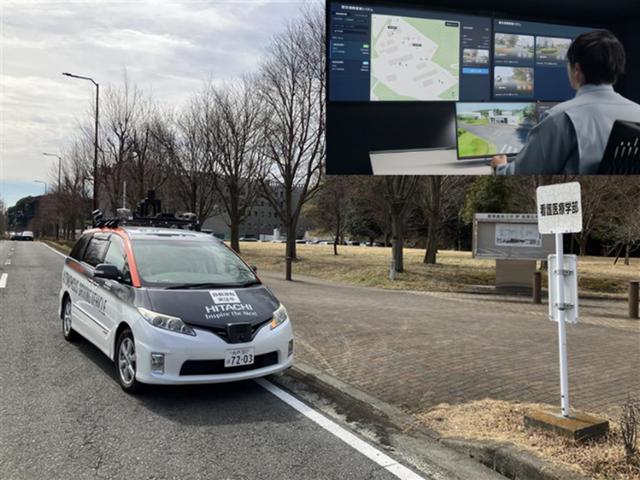
Figure 2. Demonstration experiment using an autonomous vehicle
Looking ahead
Going forward, Hitachi will expand beyond university-based demonstrations and progressively advance R&D toward demonstrations in Hitachi City, aiming for real societal implementation by fiscal year 2030. In particular, based on the results of this demonstration, the system will expand into multi-vehicle integrated operation management while accelerating development in platforms for collecting and managing data on driving environments. In addition, through co-creation with local governments and transportation operators, Hitachi plans to expand applications beyond buses to on-demand transportation, drones, and other mobility solutions to help drive data integration for operation and maintenance across social infrastructure as a whole. The knowledge that these initiatives provide for operation control will also play a role as one of the technologies supporting the further growth of Lumada 3.0. Hitachi will also reflect the insights in the physical AI integrated model “Integrated World Infrastructure Model (IWIM)”—which underpins “HMAX by Hitachi,” a next-generation solution suite that uses AI to innovate social infrastructure—thereby contributing to enhanced safety and continuous innovation in social infrastructure.
About Lumada
About HMAX
Trademark notice
All company names and product names mentioned are trademarks or registered trademarks of their respective companies.
For more information, use the inquiry form below to contact the Research & Development Group, Hitachi, Ltd. Please make sure to include the title of the article.
https://www8.hitachi.co.jp/inquiry/hitachi-ltd/hqrd/news/en/form.jsp