Hitachi India (HIL) Research & Development Centre partnered with Manipal Institute of Technology Bengaluru, part of the Manipal Academy of Higher Education, India (MIT Bengaluru), to organize VISISONICS AI’26 Hackathon as part of its broader strategy to strengthen academia-industry collaboration.
The VISISONICS AI’26 Hackathon was held on 6 & 7 April 2026 at the MIT Bengaluru campus. This 24-hour national-level hackathon brought together more than 200 participants including students, researchers, and industry professionals to innovate in artificial intelligence (AI) and emerging technologies.
The initiative served as a platform for fostering innovation in AI and emerging technologies. HIL R&D played a key role in mentoring participants, providing technical problem statements, and assessing the maturity of ideas to ensure alignment with the hackathon's goals.
Opening address
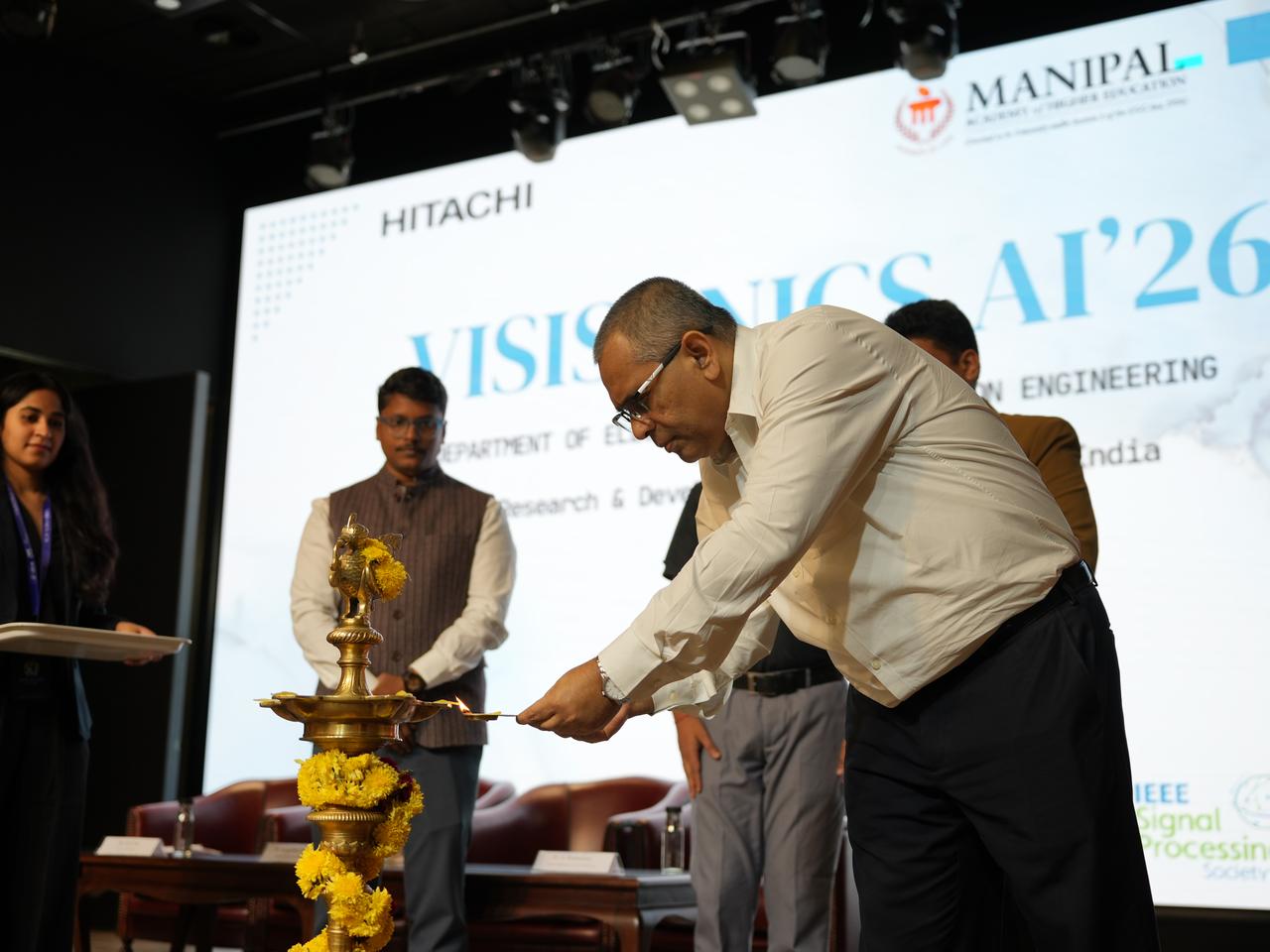
Opening the VISISONICS AI’26 Hackathon
The event started with a lamp-lighting ceremony and a welcome address by S. Ramaswamy, Head of the Department of Electronics and Communication Engineering at MIT Bengaluru, followed by an address by Dr. Iven Jose, Director of the institute. During the inaugural session, the speakers delivered insightful talks on AI and related technologies, emphasizing how students can strengthen their learning to become industry ready.
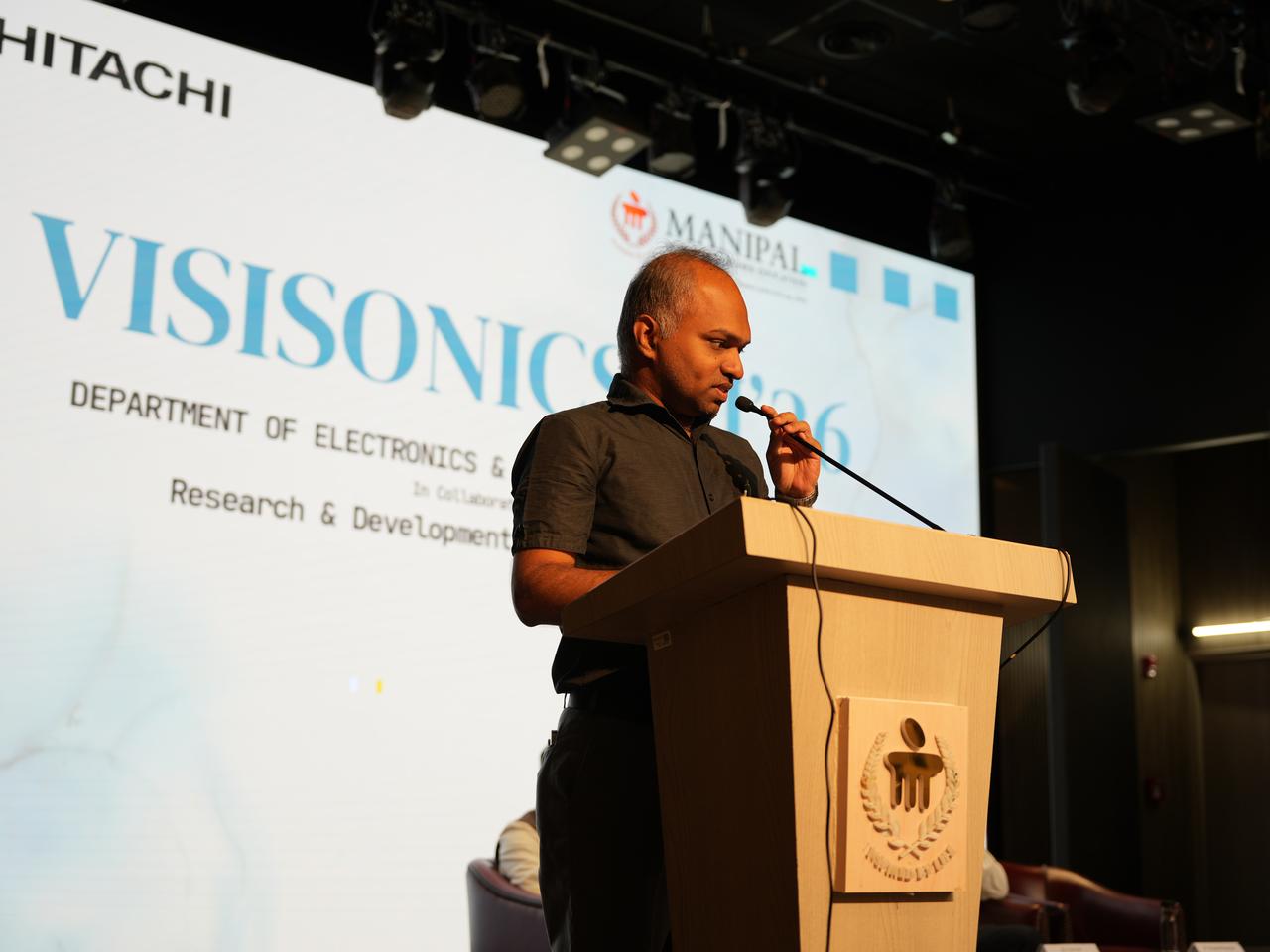
S. Ramaswamy of MIT Bengaluru delivering the welcome address
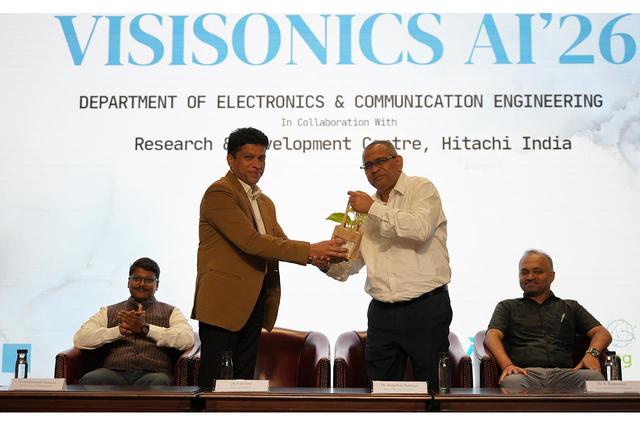
Dr. Iven Jose highlighted that the hackathon, conducted in collaboration with HIL R&D, would benefit participants by engaging them in solving real-world problem statements within a 24-hour timeframe.
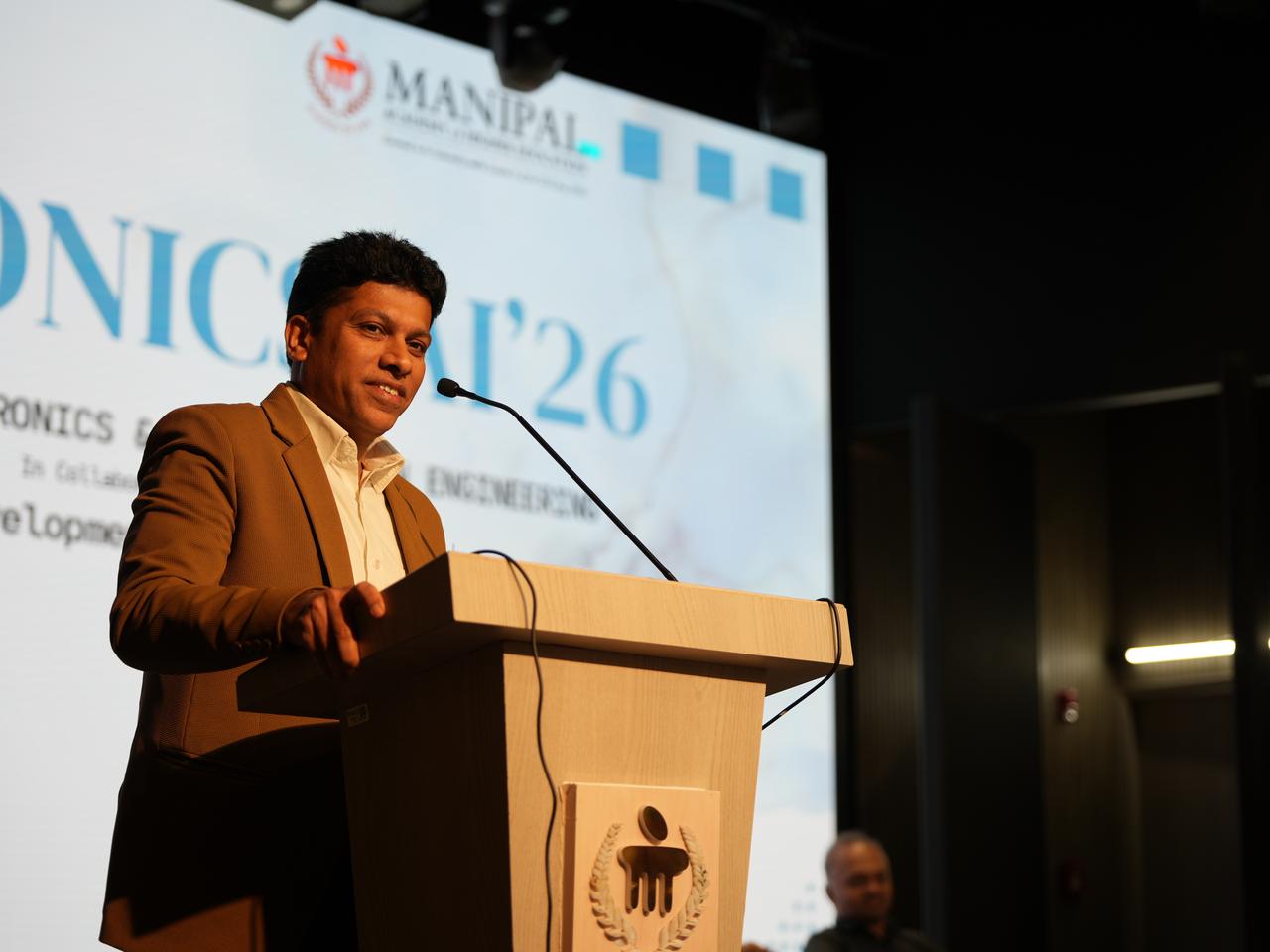
Dr. Iven Jose, Director of MIT Bengaluru, addressing participants
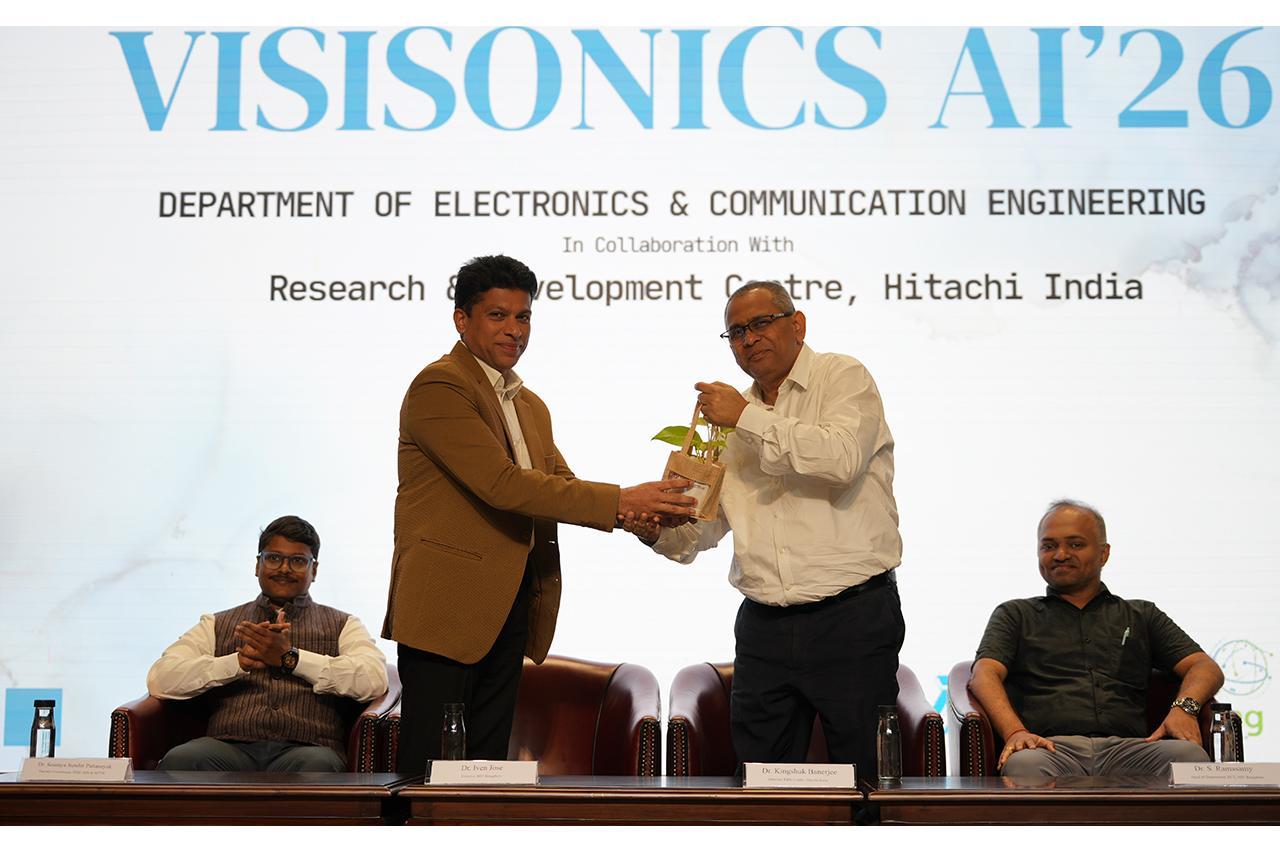
The event featured a keynote address on the future of AI in industry by Dr. Kingshuk Banerjee, Director of the HIL R&D. Dr. Banerjee began with an overview of Hitachi’s global footprint and its legacy of innovation. His address then turned to the transformative power of AI and data-driven systems, illustrating how these technologies are being integrated to solve complex industrial challenges. Furthermore, he concluded that the future of industry relies on a synergy between technical agility and sustainable practices.
He also emphasized how artificial intelligence is transforming the world across various domains such as fintech, cybersecurity, computer vision. Overall, the session gave participants a glimpse into real-world applications of emerging technologies.
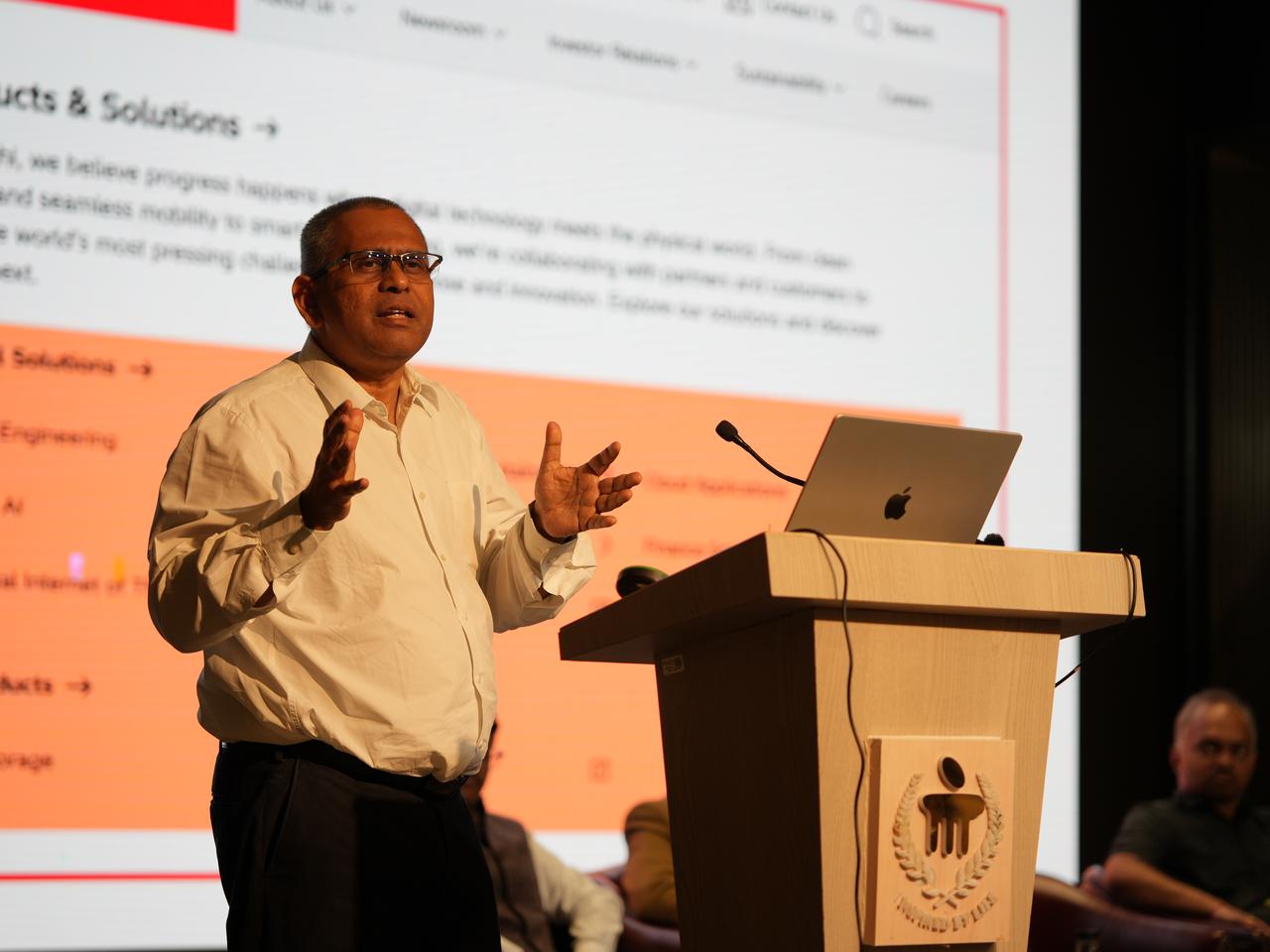
Dr. Kingshuk Banerjee, Director of HIL R&D Centre, delivering the keynote address
The 24-hour Innovation Sprint
The 24-Hour Innovation Sprint was a hackathon designed to develop practical AI-driven solutions for emerging challenges in Industry 5.0 and to help bridge the gap between digital data and physical action in industrial settings.
Participants were organized into teams of 2 to 3 members. They were briefed on the social issues outlined below, and each team was assigned one of the following five problem statements based on those issues. Then, they were given just 24 hours to develop a solution.
Throughout the event, industry experts from Hitachi India R&D and faculty from MIT Bengaluru provided guidance to the students.
Social Issues:
As industries evolve towards Industry 5.0, a range of new challenges is emerging across industrial environments. These include safety blind spots, complex power quality monitoring, cybersecurity threats in operational technology, efficient video understanding, and advanced speech recognition technologies.
Such issues have a significant impact on productivity, safety, and communication.
Problem statements:
1. The Immersive Industry 5.0 Navigator
2. GridSense AI
3. AI-assisted OT Security Monitoring
4. Find-it-by-Action (FIBA AI)
5. Speech-based Intent & Emotion Recognition
Hitachi India R&D was responsible for evaluating the maturity of ideas, ensuring that the developed prototypes were not just theoretical exercises but were aligned with real-world industrial goals.
Beyond the competition, Hitachi India R&D offered direct internship opportunities to the top three participants creating a clear pathway from academia to professional industrial research.
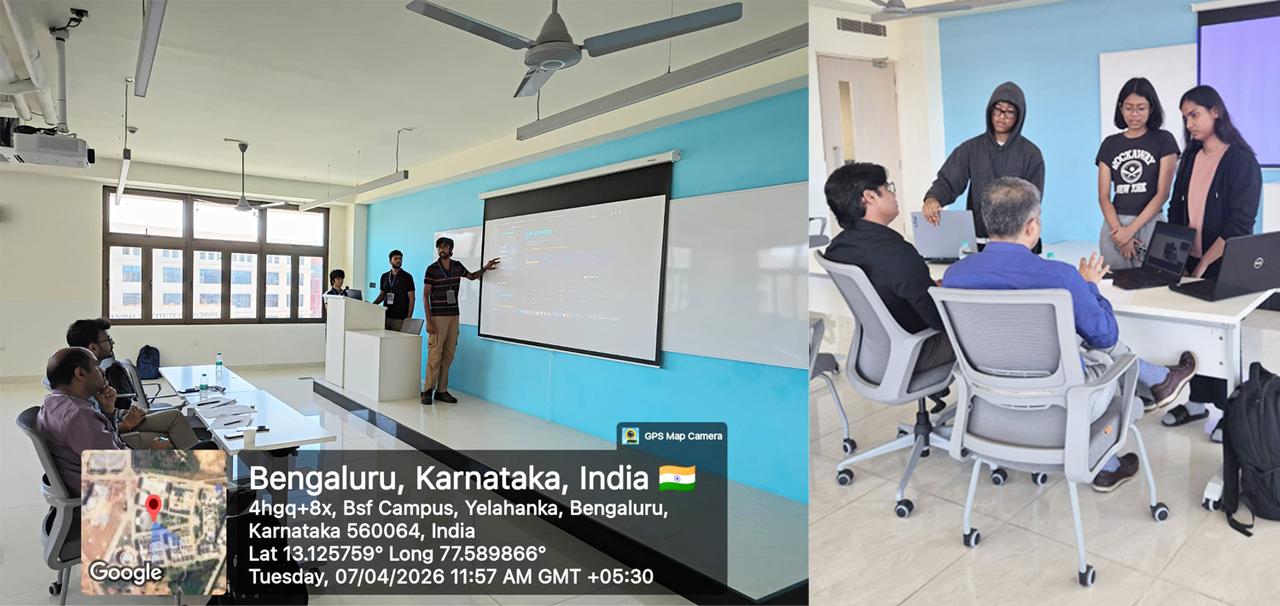
Participants discussing with HIL R&D members
Conclusion and future outlook
The event saw enthusiastic participation and positive audience reactions, reflecting strong interest and engagement in AI-driven innovation. Participants appreciated the hands-on mentorship and industry exposure, while industry experts praised the innovative ideas and practical solutions. Organizers noted the high level of engagement and enthusiasm, with plans to expand the hackathon in future editions.
The VISISONICS AI’26 Hackathon provided a platform for students and researchers to collaborate with industry experts and to encouraged practical problem-solving through real-world challenges. The event successfully fostered innovation and collaboration in AI, showcased young talent and strengthened academia-industry partnerships. It also set a benchmark for future technology-driven competitions in India.
Hitachi India R&D will further develop and deploy prototypes in real industrial settings, while expanding the scope of the hackathon to address emerging AI challenges. In addition, it will strengthen internship opportunities and deepen collaboration with industry partners.