Testing confirms 56% ion transmission efficiency at a gas flow rate of 5L/min, helping enhance the operational stability of testing systems
Hitachi and Hitachi High-Tech have developed a conjugated octupole-quadrupole ion guide*1 (“8–4 pole ion guide”) for clinical mass spectrometry with the aim of achieving stable measurement of low-molecular-weight compounds present at low concentrations in blood, such as hormones and pharmaceuticals, as well as the stable, reliable operation of analytical instruments that testing centers and large hospitals require.
In mass spectrometry of liquid samples such as blood, the amount of ions that can be injected through the instrument’s inlet has a significant impact on sensitivity. While enlarging the inlet makes it possible to inject more ions, it also generates a strong gas stream that can disturb ion trajectories, preventing some ions from reaching the interior of the instrument. A larger inlet also makes it easier for neutral molecules*2 and charged droplets*3 to enter the instrument. The newly developed technology uses an electric field to separate ions from the gas stream and focus them at a location less affected by airflow, enabling efficient introduction of target ions into the instrument. Evaluation results confirmed an ion transmission efficiency*4 of 56% at a gas flow rate of 5 liters per minute, demonstrating the successful separation of ions from charged droplets. The system was also confirmed to be capable of detecting testosterone*5 at a low concentration of 1 picogram*6 per milliliter. This is expected to prevent a decline in sensitivity and help reduce operational risks that may result in repeat testing or instrument downtime.
A portion of these research findings will be presented at the 74th ASMS Conference on Mass Spectrometry and Allied Topics, to be held in San Diego, California, USA, from May 31 to June 4, 2026.
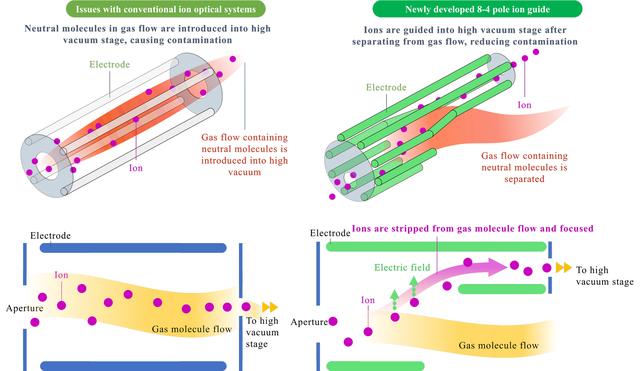
Figure 1: Overview of the 8-4 pole ion guide
*1 Conjugated octupole-quadrupole ion guide: A component that consists of an octupole region and a quadrupole region to guide and transport ions using electric fields.
*2 Neutral molecules: Molecules that carry no electrical charge.
*3 Charged droplets: Microscopic liquid droplets that carry an electrical charge.
*4 Ion transmission efficiency: The percentage of ions entering the inlet that pass through the aperture leading to the next vacuum stage.
*5 Testosterone: A type of hormone.
*6 Picogram: A unit of mass equal to one trillionth of a gram.
Background and issues
Accurate measurement of low-molecular-weight compounds, such as hormones and pharmaceuticals, is important in assessing patient conditions and determining appropriate treatment strategies. Mass spectrometry can detect these types of compounds with high selectivity by ionizing analytes and measuring them according to their mass-to-charge ratios.
To reliably measure low-concentration compounds in mass spectrometry of liquid samples such as blood, one means of introducing more ions into the mass spectrometer involves increasing the size of the instrument inlet. However, a larger inlet generates a stronger gas stream, which can disturb ion trajectory and reduce the amount of ions that reach the interior of the instrument. In addition, contaminants such as neutral molecules and charged droplets can enter the instrument more easily, leading to a decline in sensitivity due to the contamination of the instrument’s interior.
Features of the technology developed
To address these challenges, Hitachi and Hitachi High-Tech developed an 8-4 pole ion guide that can inject ions into the instrument while minimizing the effect of strong gas streams and suppressing the entry of contaminants. The key features of the technology are as follows:
1. Electric field control that improves ion capture under strong gas-flow conditions
In the octupole region, electric fields are used to separate ions from the gas stream and guide them toward the next region. This suppresses ion loss caused by dispersion in strong gas flows and facilitates injection of the ions for measurement into the instrument, even when a larger inlet generates increased gas flows.
2. An octupole-quadrupole connection structure that minimizes disruption to the ion flow
A connecting region with continuously changing electrode geometry was constructed between the octupole region*7 and the quadrupole region.*8 This enables smooth transfer of ions between the two regions, reducing transport losses. By suppressing disturbances to ion trajectories at the boundary between regions, this structure supports stable ion transmission.
3. Configuration that focuses ions away from the gas stream before injecting them into the high vacuum stage
The quadrupole region is positioned away from the gas stream, where ions are focused by electric fields before injection into the instrument. This configuration makes it more difficult for neutral molecules and charged droplets to enter the instrument, helping prevent contamination. The technology supports stable measurement during long-term operation by reducing infiltration by contaminants that can lead to a decline in sensitivity.
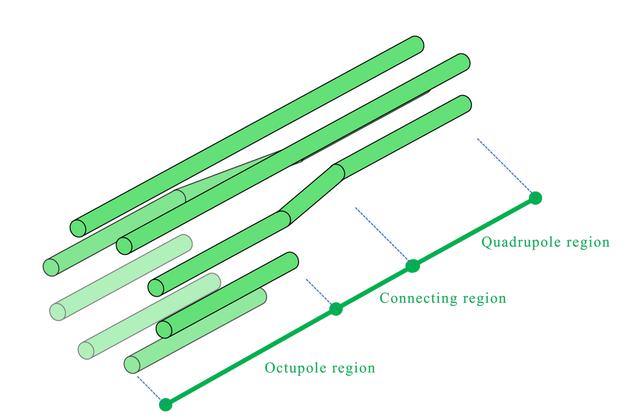
Figure 2 : Structure of the 8-4 pole ion guide
*7 Octupole region: Region in which an electric field generated by octupole electrodes separates ions from the gas stream and guides them to the next region.
*8 Quadrupole region: Region in which an electric field generated by quadrupole electrodes focuses ions and injects them into the instrument.
Confirmed results
Under a gas flow rate of 5 liters per minute, an ion current of 1.8 nanoamperes was measured at the ion guide inlet, while an ion current of 1.0 nanoampere was measured after passing through the aperture*9 (inner diameter: 2.0 millimeters) leading to the next vacuum stage within the instrument. This corresponds to an ion transmission efficiency of 56%,*10 demonstrating that target ions can be efficiently injected into the instrument even under a strong gas stream.
Tests also confirmed that it was possible to detect testosterone at a low concentration of 1 picogram per milliliter. Furthermore, the separation of ions from charged droplets was confirmed, indicating that suppressing the flow of contaminants into the vacuum system contributes to maintaining high sensitivity over extended periods of operation.
*9 Aperture: An opening that connects to the next vacuum stage within the instrument.
*10 Sample conditions: tributylamine at 4 µM; acetonitrile; flow rate of 5 microliters per minute.
Looking ahead
Going forward, Hitachi and Hitachi High-Tech will collaborate with medical institutions, research organizations, and partner companies to analyze operational data from instruments incorporating the technology using Hitachi’s Lumada platform. These analyses will aim to facilitate long-term stability assessments under clinical operating conditions, such as by evaluating changes in sensitivity and instances of repeat testing. The two companies will also take steps to expand design guidelines that support stable operation in clinical testing environments and help improve the reliability of in vitro diagnostics. Hitachi will continue working to improve the healthcare quality and the well-being of people worldwide by developing technologies that enhance the reliability and operational stability of in vitro diagnostic testing.
For more information, use the inquiry form below to contact the Research & Development Group, Hitachi, Ltd. Please make sure to include the title of the article.
https://www8.hitachi.co.jp/inquiry/hitachi-ltd/hqrd/news/en/form.jsp