On May 20, 2026, Hitachi, Ltd. hosted “Hitachi Physical AI Day” at The Prince Park Tower Tokyo.
Through a series of presentations, exhibits, and demonstrations, Hitachi Research & Development Group showcased the latest trends in robotics powered by physical AI. We also introduced the Integrated World Infrastructure Model (IWIM), an intelligent foundation model designed to support the deployment of physical AI in social infrastructure, and Frontline Coordinator - Naivy, an AI agent.
This article presents solutions to various challenges associated with the use of physical AI, together with specific examples.
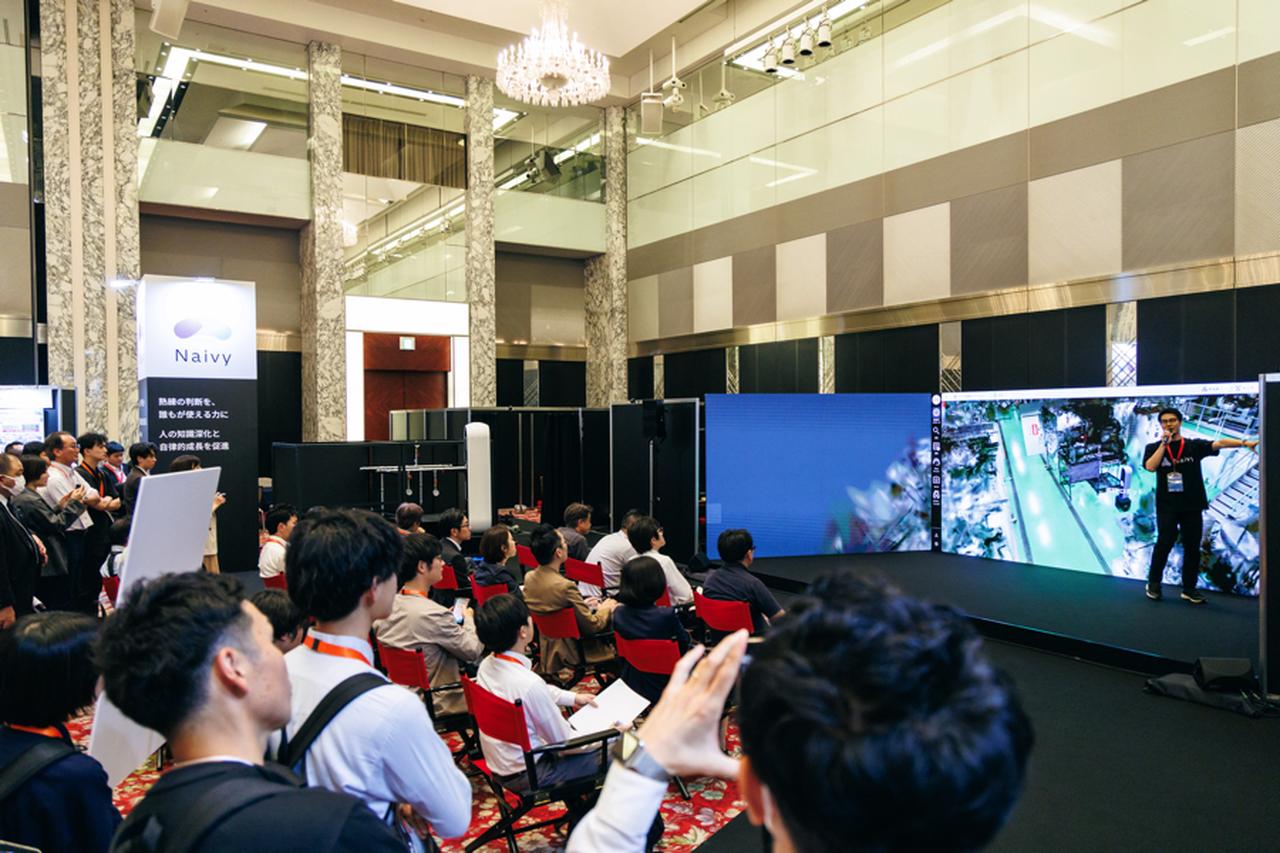
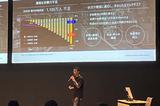
A large audience gathered at the venue to learn about the latest developments in physical AI.
Toward Physical AI That Can Be Used in Real-World Operations
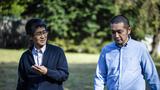
At the breakout session, “The Latest Trends in Robotics Powered by Physical AI for Automating Complex Tasks,” Mariko Mizuochi, Senior Manager of the Robotics Research Department at the Mobility & Automation Innovation Center, Research & Development Group, and Hiroyuki Yamada, Manager in the same department, took the stage as speakers. They discussed physical AI, which is attracting attention as the next major trend following perception AI, generative AI, and agentic AI. They also described the emerging era in which AI understands the physical world and acts autonomously, as well as Hitachi’s initiatives to help make that future a reality.
Although expectations are rising for robots to supplement the human workforce amid severe labor shortages, improving robot productivity remains a major challenge. Mizuochi explained that addressing this challenge requires robots to achieve both speed and accuracy while also reducing power consumption and operating costs.
To meet these requirements, we are pursuing a proprietary approach that combines low-power operation enabled by compact AI models based on deep predictive learning with improved proficiency through task-specific continual learning.
While adopting compact AI models that reduce both the number of parameters and the required computational workload, we have developed technology that selects the optimal action from multiple candidates, thereby achieving high accuracy while limiting power consumption. In addition, just as people improve their skills through repeated practice, robots can repeatedly learn from their own actions and continue evolving toward more effective movements. This is expected to enable robots to improve their proficiency autonomously. Yamada explained that combining these two technologies could improve AI productivity per unit of inference energy by a factor of 20 to 100.
The session also presented specific examples, including cable-routing work and exterior inspections of railway vehicles, demonstrating the potential of physical AI to automate complex tasks. Looking ahead, the speakers described plans to deploy these technologies across a wide range of industries and drive innovation in social infrastructure by optimizing entire systems.
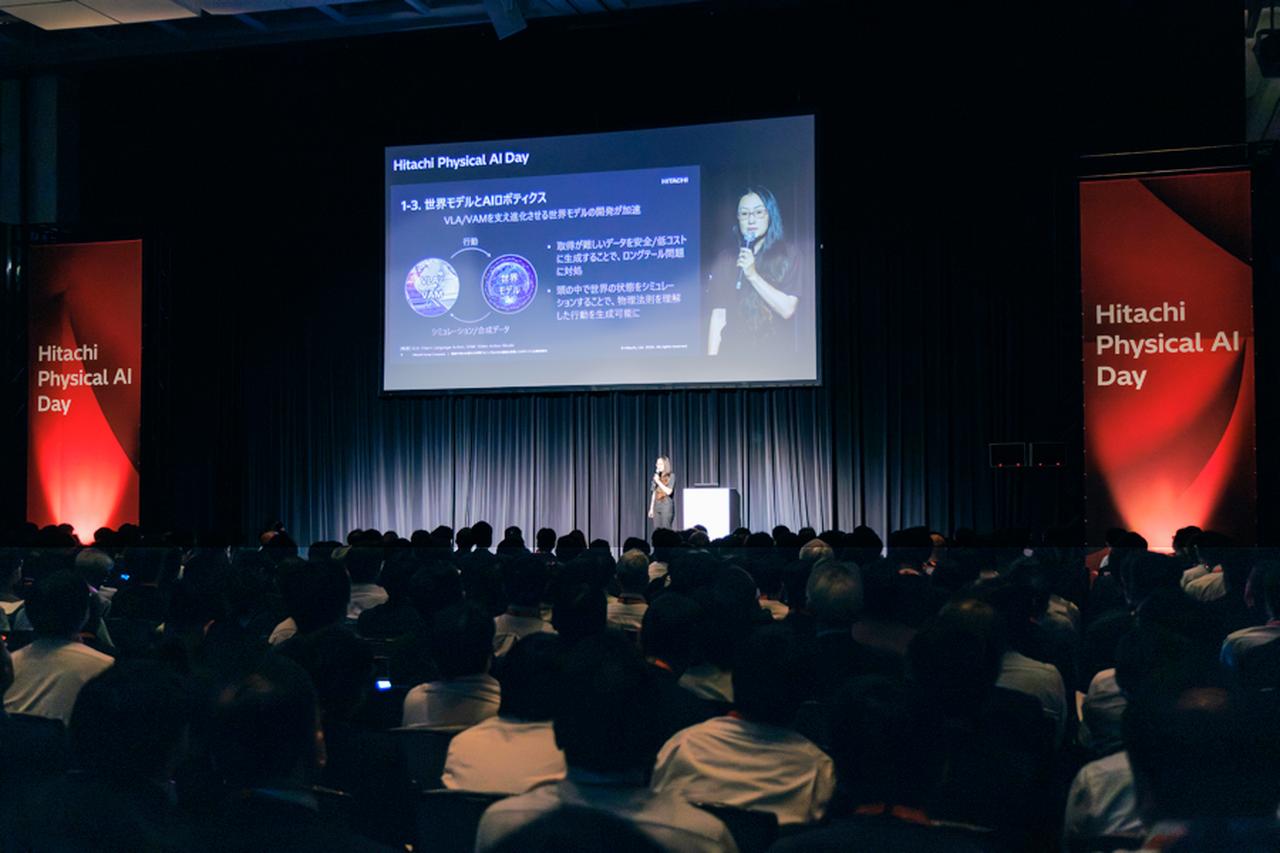
The session venue was filled with attendees showing strong interest in Hitachi’s physical AI technologies.
IWIM: Enabling the Deployment of Physical AI in Social Infrastructure
During the breakout session, “IWIM: An Intelligent Foundation Model for Social Infrastructure in the Physical AI Era,” Takahiro Ogura, Department Manager of the Industry Automation Research Department, Research & Development Group, introduced Hitachi’s Integrated World Infrastructure Model, or IWIM.
While AI continues to open up new possibilities, hallucinations and a lack of transparency in the reasoning behind AI decisions pose significant challenges in the social infrastructure domain. Such issues could have serious societal consequences, including widespread power outages, railway vehicle accidents, and large-scale production of defective products at factories. We are developing IWIM to address these challenges.
Ogura explained the challenges involved in applying physical AI to social infrastructure, outlined Hitachi’s initiatives to address them, and presented the Group’s vision for the future.
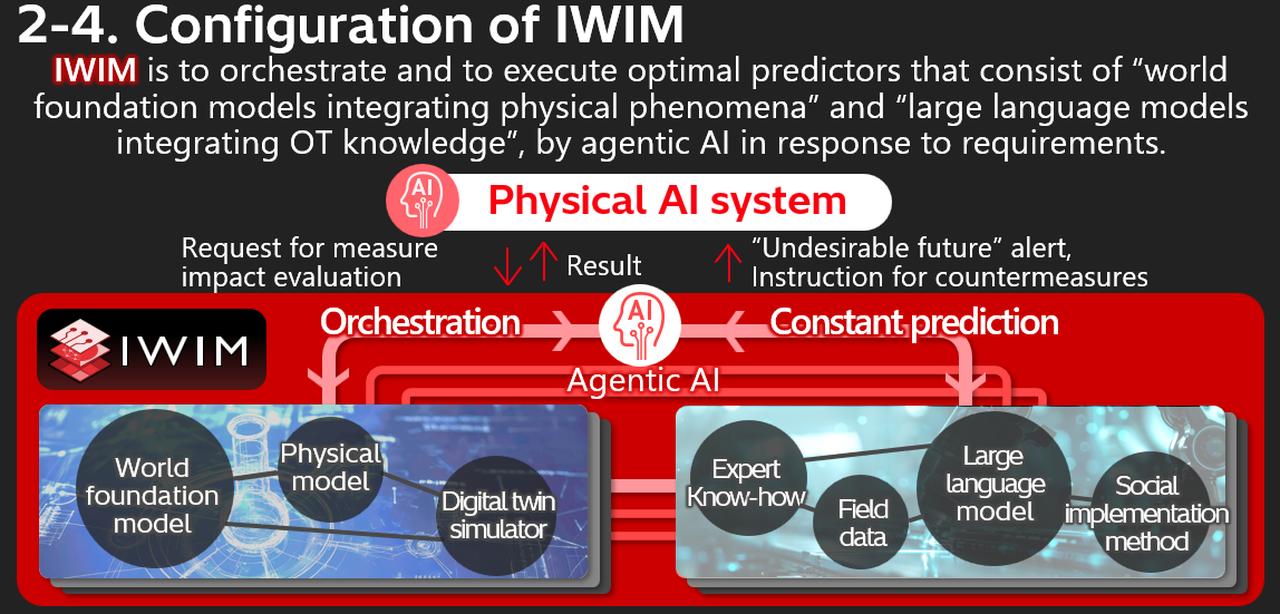
IWIM models the knowledge Hitachi has accumulated through more than 110 years of supporting social infrastructure. It is designed to facilitate the development and operation of safe, highly reliable, and efficient social infrastructure systems built for the use of AI.
At its core, IWIM consists of two components. The first is a set of world foundation models that integrates physical phenomena by combining physical models with digital twin simulators. The second is a set of large language models that integrates operational technology knowledge, including product knowledge related to social infrastructure, the expertise of experienced operations and maintenance personnel, and manuals. Agentic AI automatically orchestrates these models according to the relevant target and conditions. It evaluates the impact of proposed measures and sends alerts or response instructions to physical AI systems when it identifies an undesirable future scenario. In addition, agentic AI can orchestrate models optimized for individual domains such as energy and mobility. This is expected to support solutions to social challenges spanning multiple domains, including initiatives connecting data centers and energy through the concept of integrating watts and bits, as well as wide-area infrastructure control spanning both the energy and mobility domains.
In the latter half of the session, Ogura presented specific examples of IWIM applications and the role it can play, including reducing the time required to formulate grid connection plans in the energy sector by 80 percent. Looking ahead, he explained that we intend to use IWIM to accelerate the development and operation of products and OT/IT systems that harness physical AI to make social infrastructure even safer, more reliable, and more efficient.
Frontline Coordinator - Naivy: An AI Agent Connecting Human, AI, and Robots
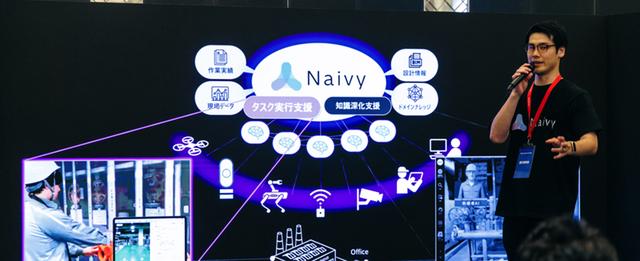
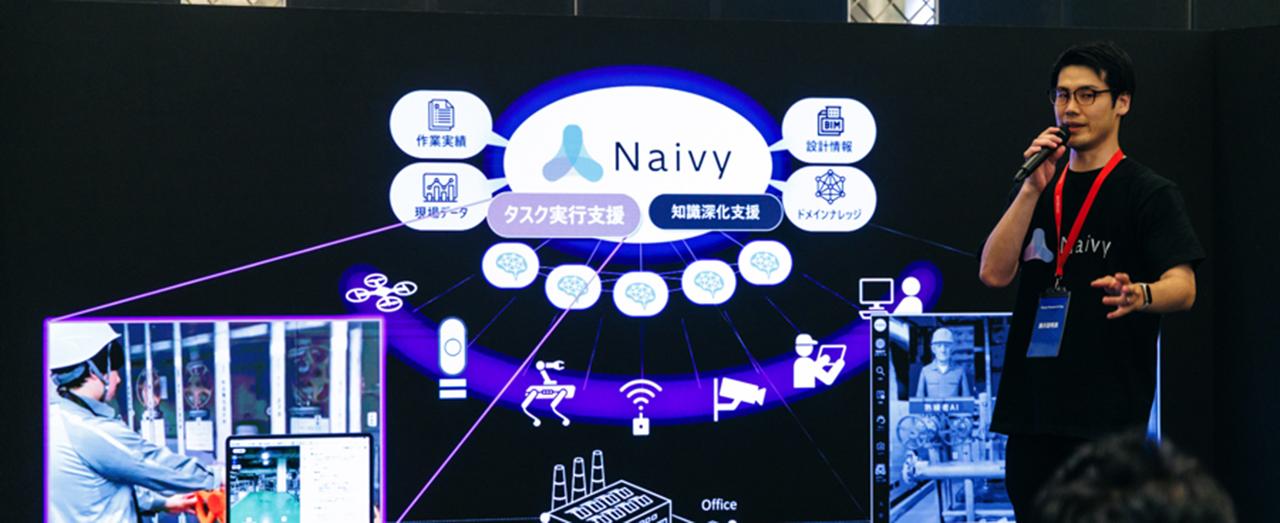
In the exhibition area, we introduced Naivy*1, a next-generation AI agent.
Naivy connects human, AI, and robots and provides the information needed at operational sites at the appropriate time. In industrial settings, workers must make decisions by linking events occurring in front of them with knowledge gained through experience. However, passing down this knowledge has become increasingly difficult because of a shortage of experienced personnel. To address this issue, Naivy supports task execution by using the knowledge and data accumulated at operational sites. It also helps workers retain knowledge by guiding them through post-task reviews. Rather than replacing people, Naivy is designed to support their development and help them build expertise through dialogue.
Naivy has already begun to be applied in actual operations. While responding to customer needs, we will continue advancing its research and development, with a focus on how quickly less-experienced workers can acquire expertise and which tasks AI can execute.
*1 "Naivy" is a product/service name used in Japan.
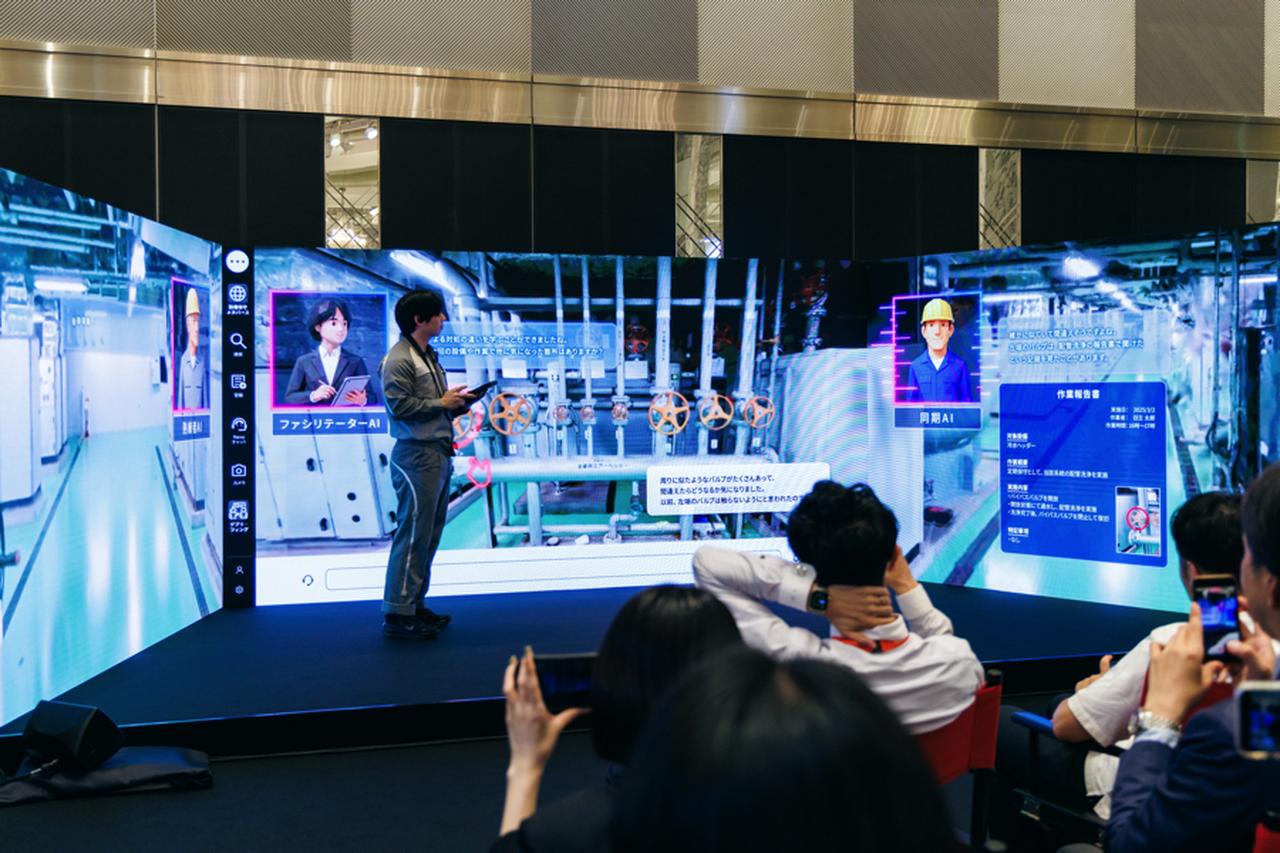
A demonstration in which a worker deepens their knowledge through dialogue with Naivy.
Toward the Real-World Deployment of Physical AI
The exhibition area also featured a range of technologies supporting the real-world deployment of physical AI. One exhibit presented robotics powered by physical AI, related to the session introduced earlier in this article. In the demonstration, a robotic arm grasped cables, which are difficult to handle because their shapes change easily, and inserted them into clips and connectors. The exhibit demonstrated technology that improves both task accuracy and speed through continual learning.
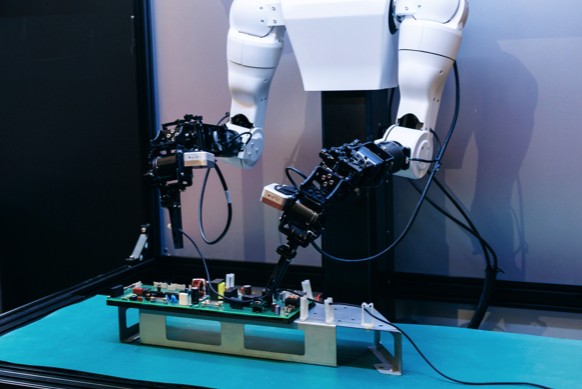
A demonstration of a robotic arm performing cable-routing work.
The exhibition also presented a solution concept for enhancing the operation of an entire data center by applying HMAX by Hitachi, a portfolio of next-generation solutions that use AI to transform social infrastructure. Data centers contain not only IT equipment such as GPUs, but also a wide range of facilities, including cooling and power supply systems. The exhibit showed an approach that integrates data from these systems and combines Hitachi’s OT expertise with AI. By controlling AI workloads—processing loads generated by activities such as AI training and inference—the approach helps prevent heat-related degradation in GPU performance. At the same time, it reduces the power consumed by water-cooling systems, thereby improving overall data center productivity. We are currently developing technologies for data collection and optimization. Going forward, we aim to expand the range of use cases through actual operation and deploy the solution across a variety of data centers.
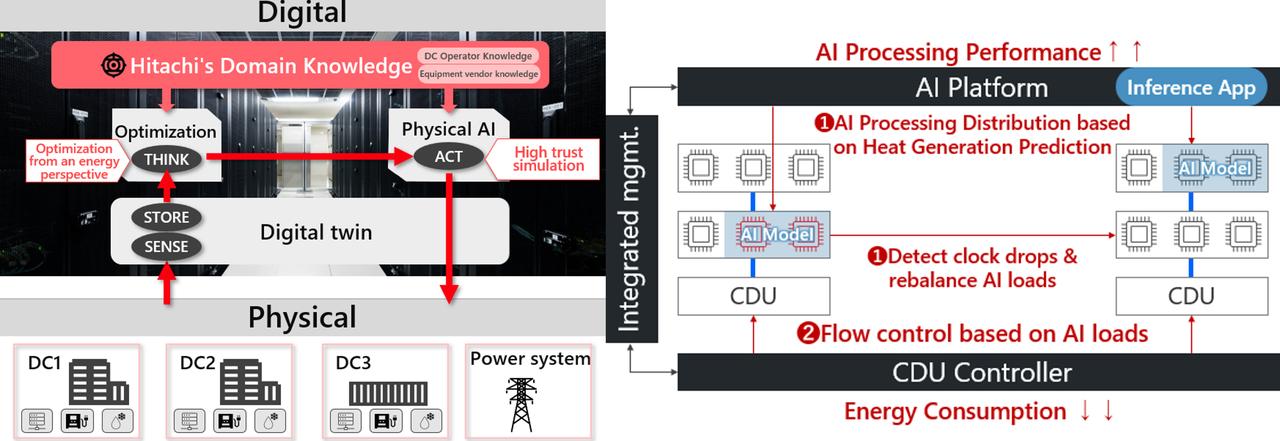
Explanatory materials displayed at the exhibition.
We also introduced MA-ATRIX*2 (Maturity Assessment & AI TRansformation IndeX; Generative AI Adaptation Roadmap), a diagnostic service that visualizes the extent to which companies are using AI. MA-ATRIX is an assessment framework that evaluates the maturity of an organization’s AI use across seven assessment dimensions and seven maturity levels. It supports phased business transformation by helping organizations identify their next actions and formulate road maps. The framework was designed based on a wide variety of use cases related to AI and digital transformation developed by Hitachi. It can therefore be used by a broad range of organizations, from companies that have only recently begun introducing AI to those seeking to achieve more advanced applications. The service is currently being expanded while accumulating examples from actual implementations. Going forward, we will analyze diagnostic data to identify more effective approaches and successful patterns for utilizing AI. MA-ATRIX is expected to serve as a compass for corporate transformation by reducing rework and unnecessary trial and error associated with AI adoption and by helping companies advance their transformation more efficiently.
*2 MA-ATRIX is a trademark pending registration by Hitachi, Ltd. in Japan.
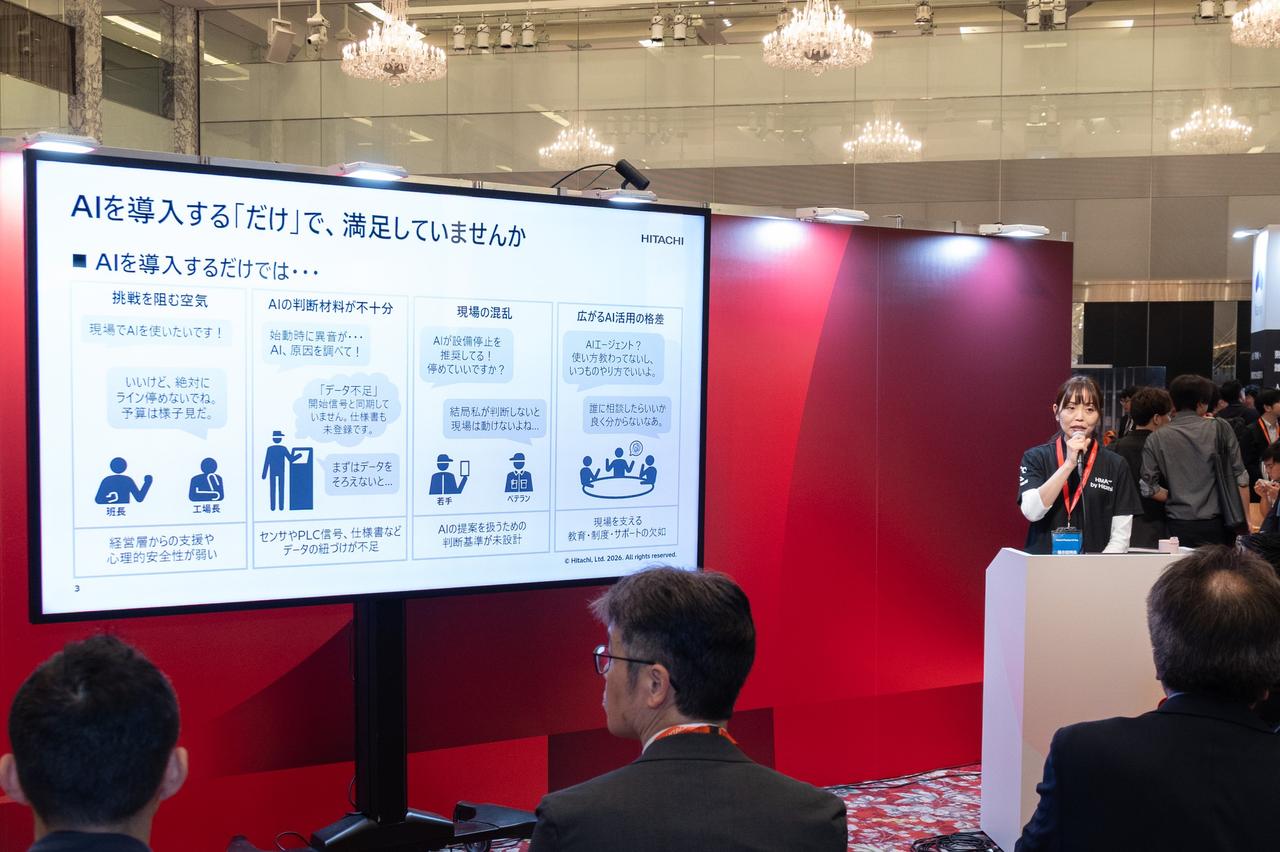
MA-ATRIX was also presented at a mini theater in the exhibition area, where it attracted considerable attention.
Throughout the event, we emphasized its focus not on competing solely in terms of the performance of AI or robots themselves, but on pursuing AI that can be used in real-world operations and deployed throughout society. We also presented practical solutions to specific challenges encountered in the field, including improving the efficiency and performance of physical AI, optimizing data center operations, ensuring safe and highly reliable control of social infrastructure, and helping companies make effective use of AI. Going forward, the Research & Development Group will continue combining its technological capabilities with knowledge cultivated at operational sites. By steadily translating these strengths into real-world applications, we aim to help address a wide range of social challenges affecting industry, infrastructure, and people’s daily lives.