Achieved via continuous microwave drive and phase modulation; findings published in leading journal npj Quantum Information
Hitachi has developed a new control scheme for silicon-based qubits (the computational units of quantum computers), a technology that it has been developing*1 in partnership with Institute of Science Tokyo (hereafter “Science Tokyo”). This new technology combines continuous microwave drive with phase modulation. By extending the time quantum states remain stable and improving the precision of fundamental quantum gate operations (gate fidelity), Hitachi demonstrated a gate fidelity of 99.1%—even in industry-standard natural silicon, which is susceptible to noise. These results have been published in npj Quantum Information, a leading international journal in the field of quantum information science.*2
A common challenge with silicon, a widely used semiconductor material, is that trace amounts of the 29Si isotope*3 present in the material cause noise that disturbs quantum states, destabilizing qubits. The new technology developed by Hitachi addresses this problem by engineering the microwave waveform used to manipulate qubits, creating a noise-resilient state, and enabling stable quantum operations. This technology also has the potential to reduce control overhead during high-density qubit integration by mitigating variations in qubit characteristics, thereby reducing the need for individual fine-tuning.
This achievement represents an important step toward the realization of large-scale quantum computers. Hitachi will continue working with domestic and international partners, including Science Tokyo and RIKEN, to accelerate development toward the cloud-based release of a silicon quantum computer in 2027. By making quantum computing technology available to society, Hitachi aims to help realize a sustainable social infrastructure and transform industry.
*1. Hitachi develops new qubit control method to stabilize and extend lifetimes by a hundred-fold and more, accelerating development of quantum computers (June 17, 2024)
Hitachi develops new control technologies contributing to scalability and stable operations of a silicon quantum computer (October 8, 2025)
*2. T. Kuno, et al. "Robust spin qubit control in a natural Si-MOS quantum dot using phase modulation" npj Quantum Information 12, 39 (2026).
*3. Isotope: Two or more forms of the same element that differ in atomic weight due to different numbers of neutrons in their nuclei. Silicon has three naturally occurring isotopes: 28Si, 29Si, and 30Si.
Background of the Technology and Related Challenges
Bringing quantum computers into practical use hinges on technology that enables stable integration and operation of large numbers of qubits. Silicon-based qubits are attracting attention as a scalable platform due to the ability to leverage existing semiconductor fabrication processes. However, natural silicon contains trace amounts of the 29Si isotope, which generates noise that destabilizes quantum states, shortening qubit lifetime. Although approaches using isotopically purified silicon with reduced 29Si concentration have been explored, challenges remain in securing material and achieving mass production.
Hitachi had previously studied the concatenated continuous drive (CCD) technique, which continuously applies microwave drive to enhance resilience against noise. With this latest technological development, Hitachi demonstrated that phase modulation of the microwave drive makes it possible to maintain quantum states for extended periods and achieve stable quantum operations—even with natural silicon materials.
Features of the developed technology
In the newly developed method, qubits are continuously driven by microwave field to create a noise-resilient state known as a “dressed state.” Furthermore, by applying time-dependent phase modulation to the microwave drive, the method creates an additional layer of stabilization, or “double-dressed state.” This “continuous drive plus phase modulation” scheme averages out the influence of external noise, suppressing the accumulation of errors. As a result, qubits are less sensitive not only to noise arising from 29Si isotopes but also to control noise such as small fluctuations in microwave amplitude, allowing them to maintain stable quantum states for extended durations (Figure 1). In addition, precise control of phase modulation enables the fundamental operations required for quantum computing to be executed with high precision (gate fidelity).
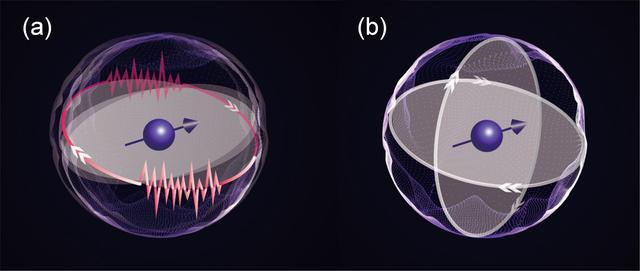
Figure 1: Comparison of qubit control schemes
(a) Conventional approach: Quantum states in natural silicon are susceptible to disruption by noise.
(b) Newly developed method: Quantum states are stabilized by continuous microwave drive and phase modulation.
Demonstrated benefits
Evaluation of this method’s effectiveness confirmed the following benefits:
(1) Significant improvement in quantum state coherence time
Ramsey coherence time*4 improved from 0.14 µs to 40.7 µs, an approximately 280-fold increase.
(2) High-quality spin control
Q factor*5, which indicates the stability of spin rotations, improved from 2.2 to 25.0.
These results confirm that the technology contributes to high-quality quantum operations that are resilient against environmental noise.
(3) High-fidelity quantum operations
Single-qubit gate fidelity improved from 95% to 99.1%.
As this technology enables high-precision control of qubits using industry-standard silicon, it offers significant advantages in mass production capability and scalability. In addition, its high resilience against external noise and device-to-device variability allows it to absorb unavoidable control variations that occur when large numbers of qubits are integrated. It therefore holds strong promise as a foundational technology for future large-scale silicon quantum computers.
*4. Measurement of coherence time via Ramsey method: A technique used to assess how long a quantum state remains stable. A longer coherence time allows for more precise control of qubits.
*5. Q factor: A metric indicating the stability of qubit operations over time. A higher value corresponds to the ability to perform a greater number of operations stably.
Future outlook
Hitachi is advancing its research and development in “NEXT” domain fields in order to address increasingly complex societal challenges in the future and create new value. In cooperation with RIKEN and other global and domestic partners, Hitachi will continue working toward the practical implementation of quantum technology. In particular, Hitachi will promote industry-academia-government collaboration and international standardization efforts toward the planned cloud-based release of a silicon quantum computer in 2027, with the aim of expanding the practical application of quantum computing and addressing societal and industrial challenges. Hitachi will contribute to the building of sustainable social platforms and industrial transformation through quantum technology.
Acknowledgements
This research was supported by a grant under the Japan Science and Technology Agency (JST) Moonshot Research and Development Program Goal 6, “Realization of a fault-tolerant universal quantum computer that will revolutionize economy, industry, and security by 2050” (Program Director KITAGAWA Masahiro), for the R&D Project “Large-scale Silicon Quantum Computer” (Project Manager MIZUNO Hiroyuki; grant number JPMJMS2065). Some of the results have also benefited from joint research with RIKEN, the Hitachi Cambridge Laboratory, and The University of Tokyo.
For more information, use the inquiry form below to contact the Research & Development Group, Hitachi, Ltd. Please make sure to include the title of the article.
https://www8.hitachi.co.jp/inquiry/hitachi-ltd/hqrd/news/en/form.jsp