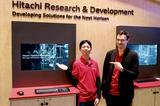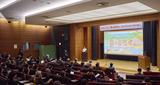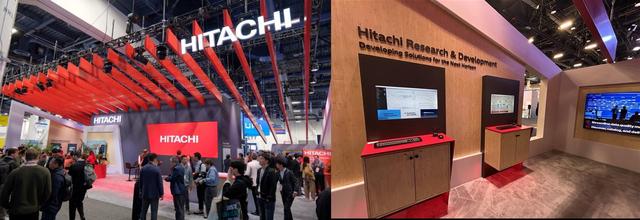
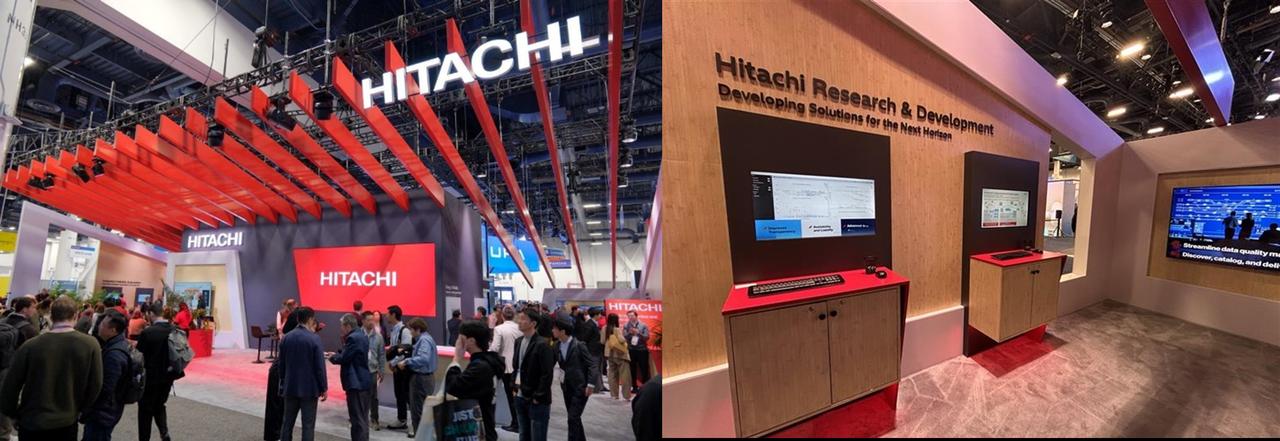
At CES earlier this year, we shared our vision for Physical AI, the message was not about distant futures. It was about practical problem-solving—how AI can be trusted, deployed, and scaled in the real world, where infrastructure, factories, and people operate under physical and operational constraints.
Our efforts did not promise bold speculation, but rather demonstrated something harder—AI systems already being used, tested, and refined in live environments.
Across energy, manufacturing, logistics, and frontline operations, a common theme emerged: AI must be grounded in physics, context, and human expertise to be useful at scale.
Reliable AI Starts with Physics, Not Just Data
As generative AI spreads into critical domains, reliability has become the defining question. Hitachi’s response is physics-informed AI—models that embed physical laws directly into learning and inference.
In energy systems, this approach is already shortening processes that once took months. Grid connection studies that previously required long, manual reviews can now be completed in minutes, without sacrificing accuracy. Because the AI understands the physical behavior of power systems, it can reject impossible conditions rather than confidently producing incorrect results.
The implication is larger than speed. Decision-making itself changes. When AI outputs are physically consistent, they can support not only operations but also planning and investment—helping utilities decide where to place sensors, how to strengthen networks, and how to scale for new demand such as data centers.
From Automation to Adaptation in Manufacturing and Logistics
Traditional automation assumes stable conditions. Reality does not.
We focus on autonomous systems that evolve—systems that detect early signs of trouble, test countermeasures in digital twins, and deploy solutions only after safety and effectiveness are verified. This closes the loop between sensing, reasoning, and action.
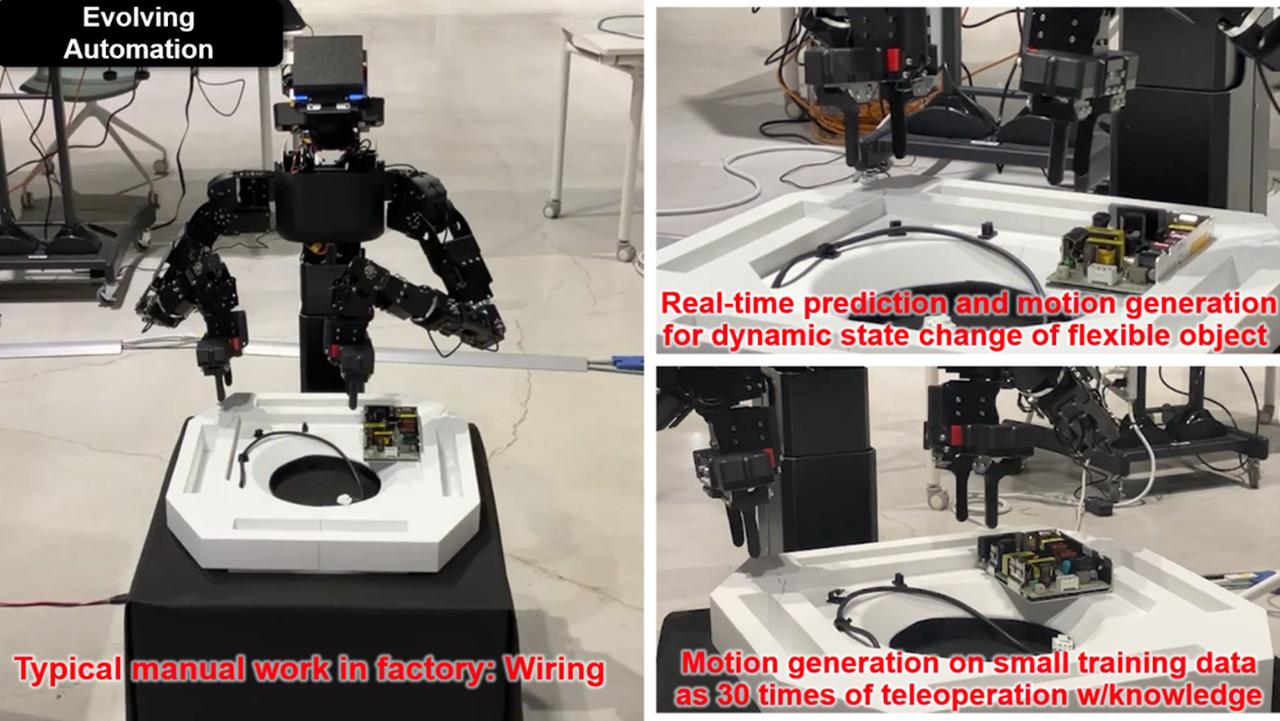
Caption: An AI robot reproduces skilled human movements to handle flexible cables.
In manufacturing, this enables production lines that adapt before disruptions occur. In logistics, it allows fleets of heterogeneous robots—from different vendors and with different capabilities—to operate as a coordinated whole. AI predicts congestion, reallocates tasks, and adjusts routes dynamically.
The same thinking extends to decarbonization. Shared charging infrastructure and intelligent energy management allow electric logistics fleets to scale efficiently, balancing operational reliability with energy cost and emissions.
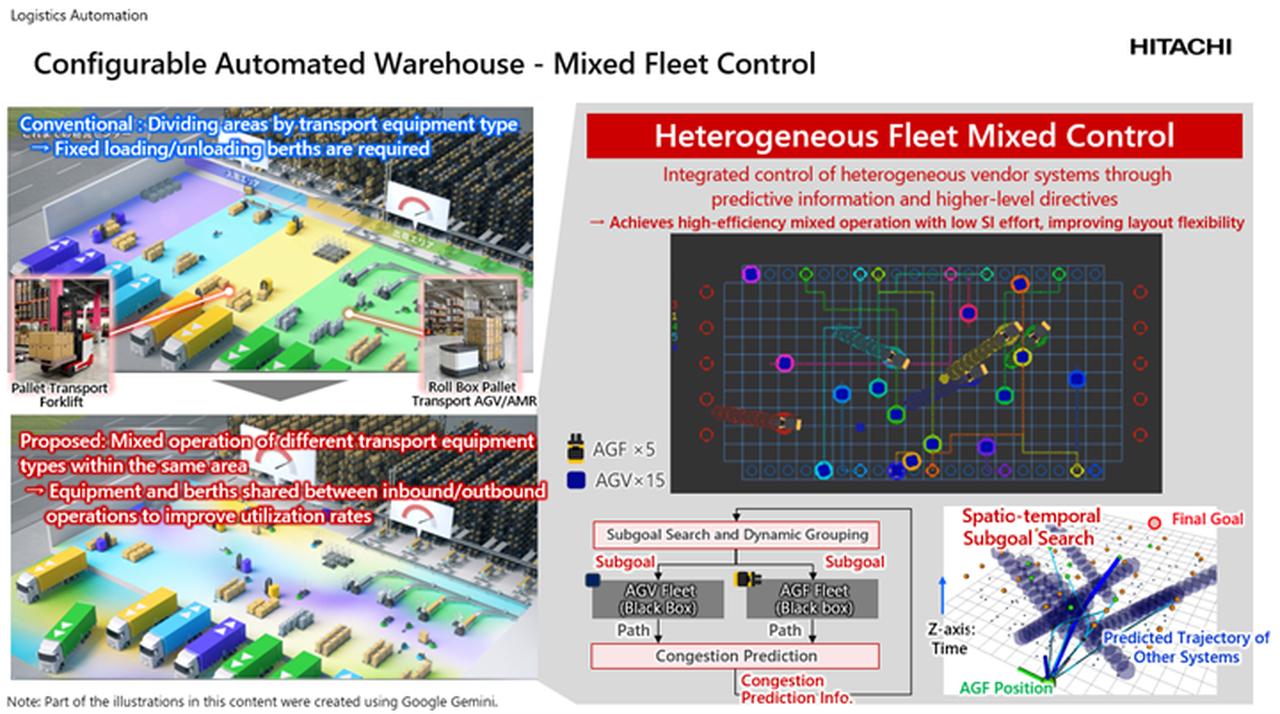
Caption: AI unifies automated guided vehicles (AGV) and autonomous mobile robots (AMR) into a single system.
Preserving Skills and Supporting Workers on the Frontline
One of the hardest challenges facing industry is not automation, but knowledge transfer. Skilled workers are retiring. Sites are distributed. Expertise is unevenly available.
Hitachi’s answer is not to remove people from the loop, but to support them with AI agents that understand operational context. These agents combine decades of operational technology knowledge with real-time data, extended reality, and natural interaction.
In practice, this means less-experienced workers can be guided through complex tasks, remote experts can intervene without being physically present, and tacit knowledge—intuition, timing, “feel”—can be shared rather than lost. Early deployments have already shown measurable improvements in task performance.
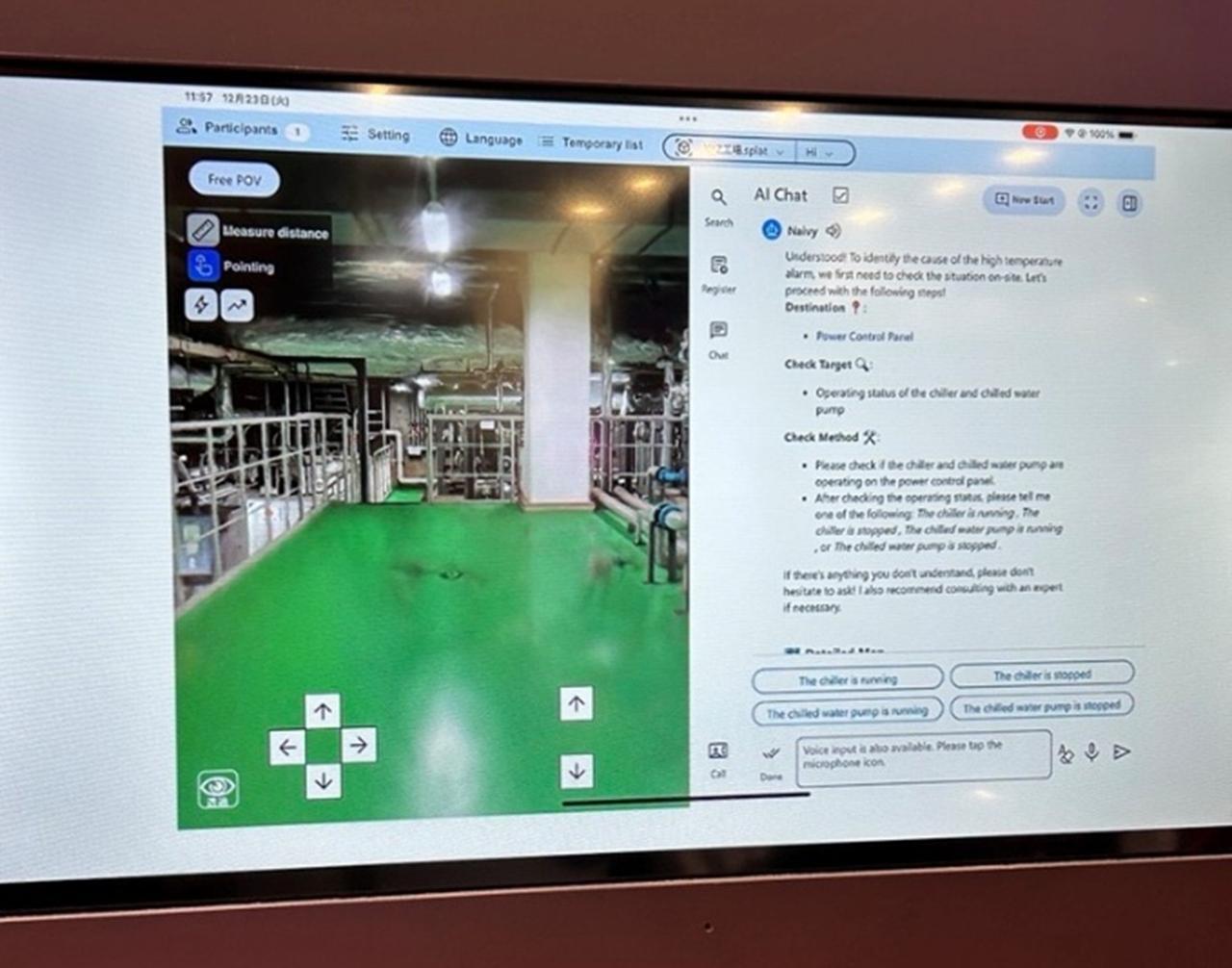
Caption: The Frontline Navigator’s metaverse allows remote experts to guide less experienced workers through complex tasks.
Trusted Knowledge at the Worksite: The Industrial Avatar
A key extension of this human-centric approach is the Industrial Avatar, a next-generation AI consultant designed for on-site use.
Think of it as conversing with an expert who can instantly retrieve accurate answers from thousands of pages of manuals and technical documents. The avatar is powered by advanced Retrieval Augmented Generation (RAG) technology, combining search and reasoning to deliver dependable responses.
During demonstrations, when asked questions such as “What technologies are being presented?”, the avatar paused briefly—“Let me think about that…”—and then produced a clear, accurate summary based solely on curated internal materials. This behavior is intentional.
Unlike general-purpose AI that searches the open web, the Industrial Avatar retrieves information only from trusted, pre-loaded sources. This prevents hallucinations and ensures the level of reliability required for use in operational environments.
Just as important, the avatar understands intent. Rather than listing facts, it summarizes key points, adapts its responses to the question being asked, and invites further dialogue—creating a more natural, productive interaction.
Looking ahead, this capability will continue to evolve. Future versions are expected to compare and summarize multiple documents and even demonstrate tasks physically, further closing the gap between knowledge and action.

Caption: The RAG Avatar provides an accurate, natural response based on domain-specific data.
Grounded Technology for a Physical World
What connects these efforts is not a single technology, but a philosophy.
We are treating Physical AI as a discipline that must respect physics, adapt to changing environments, and amplify human capability. The result is not speculative AI, but infrastructure-grade systems designed for reliability, safety, and long-term use.
The brief glimpse shared earlier this year showed what is possible. The more important story is what comes next: scaling these approaches beyond demonstrations and into the fabric of energy systems, factories, logistics networks, and frontline work.
The future taking shape here is not one where AI replaces people—but one where people and technology evolve together, grounded firmly in the realities of the physical world.