Hitachi’s Research & Development Group has been working to develop high-efficiency motors using amorphous metal for many years. In addition to developing an axial-gap motor structure that differs from the conventional radial-gap type and commercializing the design for air compressors, Hitachi has continued to research technologies aimed at utilizing amorphous metal in radial-gap motors to improve both speed and efficiency. We spoke with Unit Manager and Chief Researcher Hirooki Tokoi and Senior Researcher Keisuke Takeuchi from the Connective Drive Systems Research Department, Green & Connective Innovation Center about the objectives behind the development of this amorphous motor and their future goals.
Attracted by Hitachi’s immersive research environment
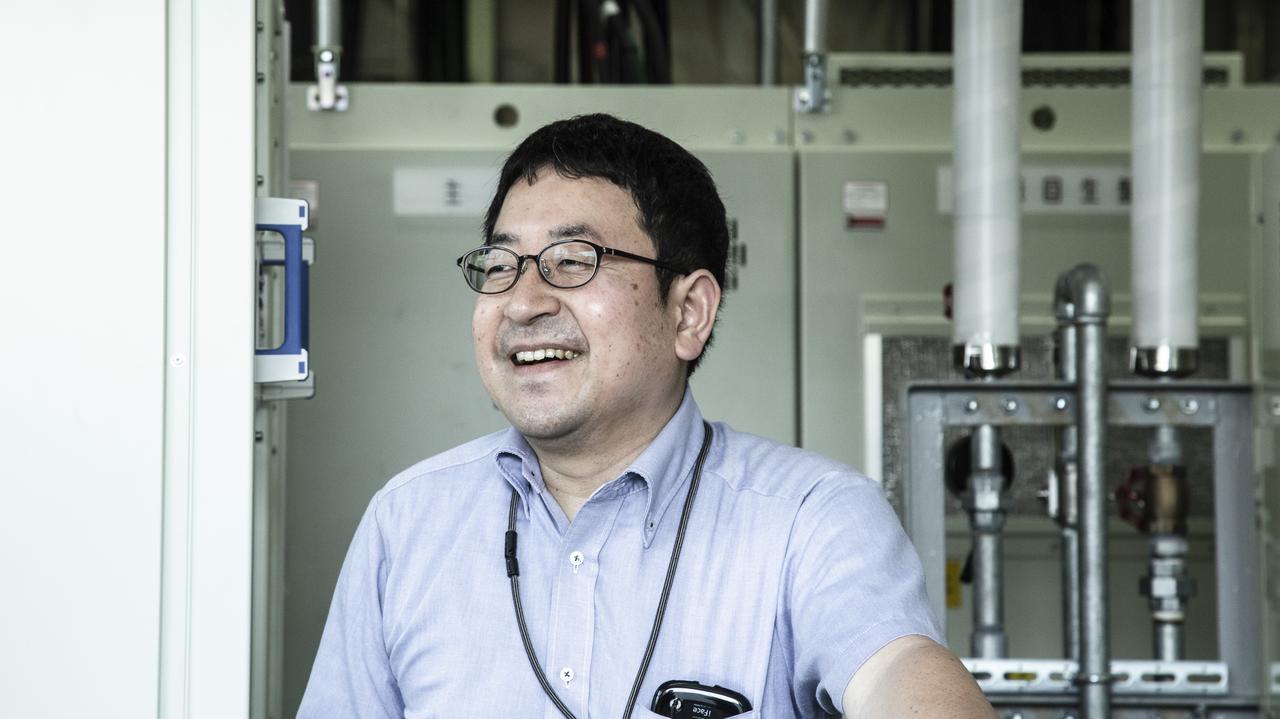
Hirooki TOKOI, Connective Drive Systems Research Department, Green & Connective Innovation Center, Sustainability Innovation R&D, Research & Development Group, Hitachi, Ltd.
Tokoi: I majored in electrical engineering at university, where I studied in a laboratory that focused primarily on plasma research. I was particularly interested in materials like carbon nanotubes, which were attracting more and more attention at the time, and did most of my research on experimental equipment for plasma chemical vapor deposition (CVD) used to create carbon-based materials. I realized that the research process of formulating a hypothesis, verifying it, and making improvements was fun and came naturally to me, so I felt that a career in research would be a good fit. I joined Hitachi in 2005, attracted by the good things I had heard about how the work environment allows researchers to immerse themselves in the research process. Another reason I chose Hitachi was that the company was pursuing research themes related to plasma simulation at the time.
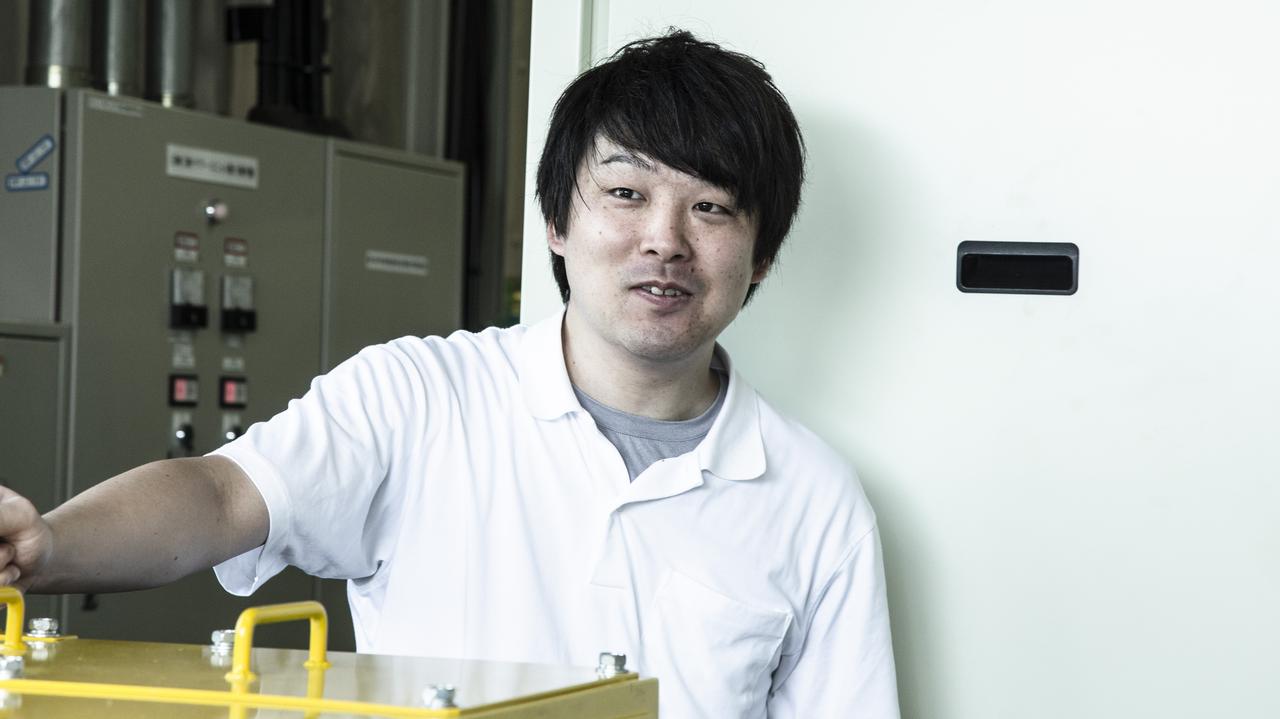
Keisuke TAKEUCHI, Connective Drive Systems Research Department, Green & Connective Innovation Center, Sustainability Innovation R&D, Research & Development Group, Hitachi, Ltd.
Takeuchi: I was an electrical and electronic engineering major in college and had actually been studying motors since I was a student, so I’ve been at it for quite a while. Although you can measure electrical energy with instruments, you can’t observe it visually from the outside. What I like about motors is that you can immediately see the results when large amounts of power are applied. When I was conducting research as a student, electric vehicles (EVs) with high-output motors were drawing considerable attention, and that technology was something I started taking an interest in. When I got to looking for a post-university job, I learned that Hitachi was recruiting motor researchers. Excited by the opportunity, I decided to join the company in 2019.
The path to researching industrial amorphous motors
Tokoi: Although I joined Hitachi intending to work on plasma research, I only studied plasma for about six months. I kept going with my research, focusing on using simulation as a core technology to help enhance product performance. I worked in a diverse range of product fields—after working on plasma, I studied simulations for things like the thermal CVD of gallium nitride.
It was around my third year at Hitachi that I got involved in motors. Initially, I only helped with improvements in motor performance from a simulation perspective, but I gradually became more involved in electromagnetic field analysis of actual motors, an area that has since become my main focus. The history of motors goes back more than 100 years—in fact, the first product Hitachi developed was a five-horsepower motor. As motor design methods were already well established and the field involved many specialized engineering terms, I honestly found it hard to get interested at first. However, after working more with the technology, I soon realized that motors are a surprisingly cutting-edge field. I’d probably call myself a real motor enthusiast now.
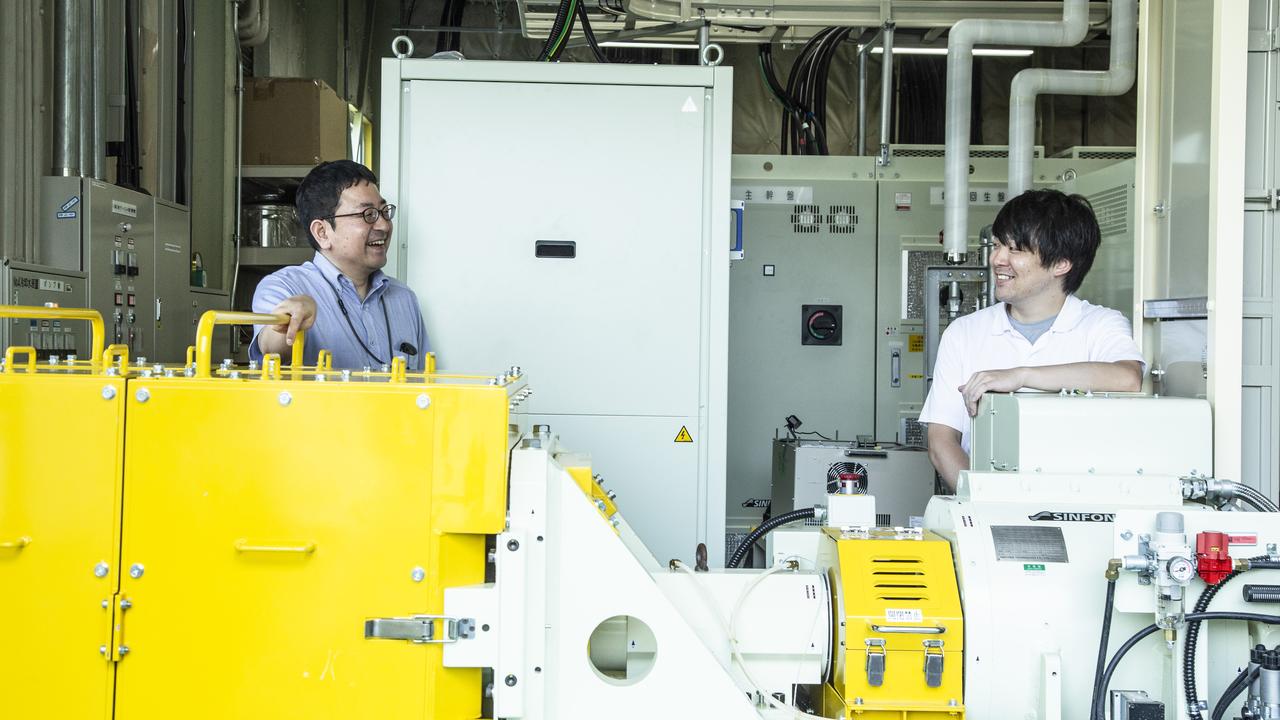
Takeuchi: The work I did during my first year at Hitachi was on motors for EVs, where I learned how the actual research process worked by assisting senior researchers over a series of projects. I then moved on to research on motors for household stick vacuum cleaners, which are handheld and need to be compact and lightweight. Our approach to achieving a compact and lightweight design through higher-speed rotation aligned with current trends in motor technology, and the experience helped me learn the fundamentals of motor research. Household appliances also have short development cycles, with multiple product launches every year, so even a few years’ experience provided valuable insight into the commercialization process.
When making small motors about the size of a 500-yen coin, I would wind the internal coils myself. Being able to build prototypes with my own hands and verify results with actual hardware rather than just simulations was a valuable experience for me.
A quest to bring ultrahigh-efficiency amorphous motors into widespread use
Tokoi: I currently lead a unit that researches motor hardware, and I’ve worked with Takeuchi for around three years. Driven by the need to enhance the efficiency of industrial equipment, we are researching ways to create more efficient industrial motors using amorphous metal, which lacks a crystalline structure. Ultimately, the aim is to utilize the technology in real-world applications.
In Japan, 55 percent of annual electricity consumption is from motor-driven equipment. Industrial utility motors that power equipment in factories, such as air compressors, pumps, and fans, account for a big part of that. With carbon neutrality becoming a growing priority for society, Hitachi has been working to improve the efficiency of industrial motors for some time.
Enhancing motor efficiency involves reducing energy loss. The core of a motor’s magnetic circuit (the path of magnetic flux) is typically made of electrical steel sheets, an approach that leads to significant “iron loss”—a form of energy loss. The basic concept behind our research is to improve efficiency by utilizing amorphous metal, which has properties that significantly reduce iron loss, in the motor’s core.
In regular motors, electrical steel sheets typically about 0.35 millimeters thick are punched by a press and stacked to form the motor core. In contrast, amorphous metal can be made as thin as 0.025 millimeters—roughly one-tenth the thickness—significantly reducing eddy currents generated when magnetic flux passes through the iron core. That makes it possible to cut iron loss to approximately one-tenth that of electrical steel sheets. However, amorphous metal is hard and brittle, making it difficult to form into shapes via press stamping.
Most conventional motors use a radial-gap structure, where a tubular stator surrounds a cylindrical rotor. Because the radial-gap design has a complex iron core structure, it has proven difficult to replicate with amorphous metal because of how hard it is to form by punching with a press. In 2017, Hitachi addressed this challenge by successfully applying amorphous metal to an axial-gap motor, which has a relatively simple iron core structure with a disk-shaped rotor and a tubular stator opposite each other along the axial direction.
The amorphous motor Hitachi commercialized was used in scroll air compressors that operate at relatively low-speed rotation. However, the company also began development of a radial-gap type with the goal of creating amorphous motors capable of handling the higher output and higher-speed rotation that screw air compressors require. By giving amorphous motors a wider range of applications, these development efforts aim to reduce industrial motor power consumption—a key to making carbon neutrality a reality.
Target: Overcoming the technological challenges of oil-free screw air compressors
Tokoi: When we were developing a radial-gap amorphous motor, we set a target of developing a motor for use in oil-free screw air compressors. Air compressors, used at plants for material transport and tasks like painting and processing, account for 20 to 30 percent of plant power consumption. There are two types of air compressors: oil-injected and oil-free. Oil-injected air compressors use oil in the screw rotor, a component that compresses air, for cooling and sealing, while oil-free air compressors achieve compression through ultrahigh-speed rotation, without using oil. This requires high-speed motors capable of exceeding 20,000 rotations per minute (rpm), making it an extremely challenging field from an engineering perspective. However, by tackling such a difficult application, we aim to open the door to utilizing this technology in other areas.
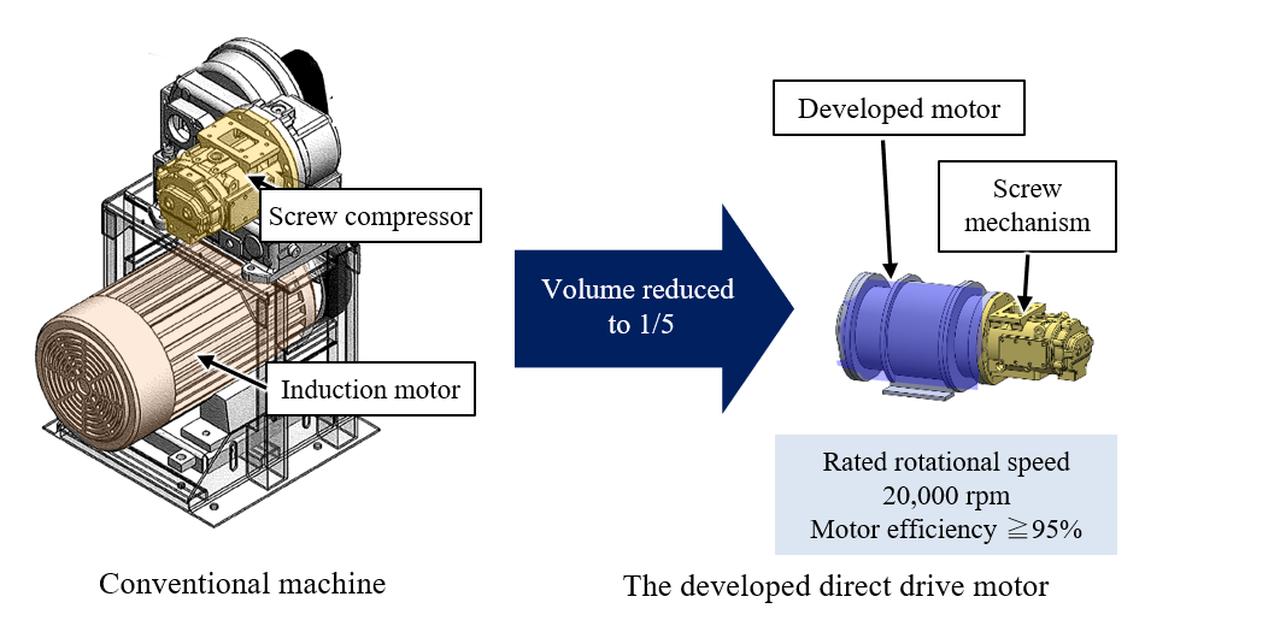
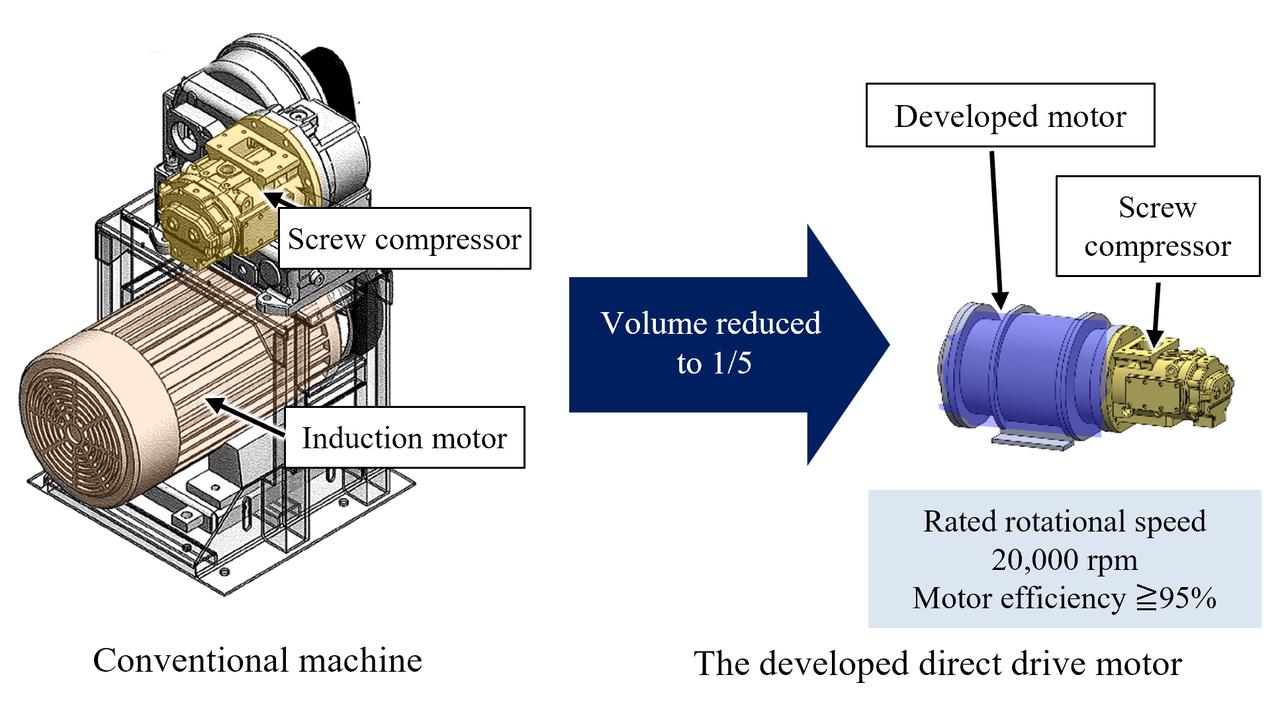
Conventional oil-free air compressors typically use a motor operating at around 3,000 rpm with a gearbox to increase the rotational speed. In contrast, the goal of our development is to increase the speed of motor itself. If we can use the motor to directly drive the air end, which compresses air, at the required high rotational speed of 24,000 rpm, we can make the motor design more compact and the overall system more efficient. In 2024, we completed a radial-gap amorphous motor capable of driving an oil-free air compressor at 20,000 rpm or faster, and we have started doing operational tests with an eye to practical implementation. At the same time, we successfully reduced the air compressor size to just one-fifth of conventional ones.
Combining results from multiple research projects to develop an amorphous motor with high-speed rotation
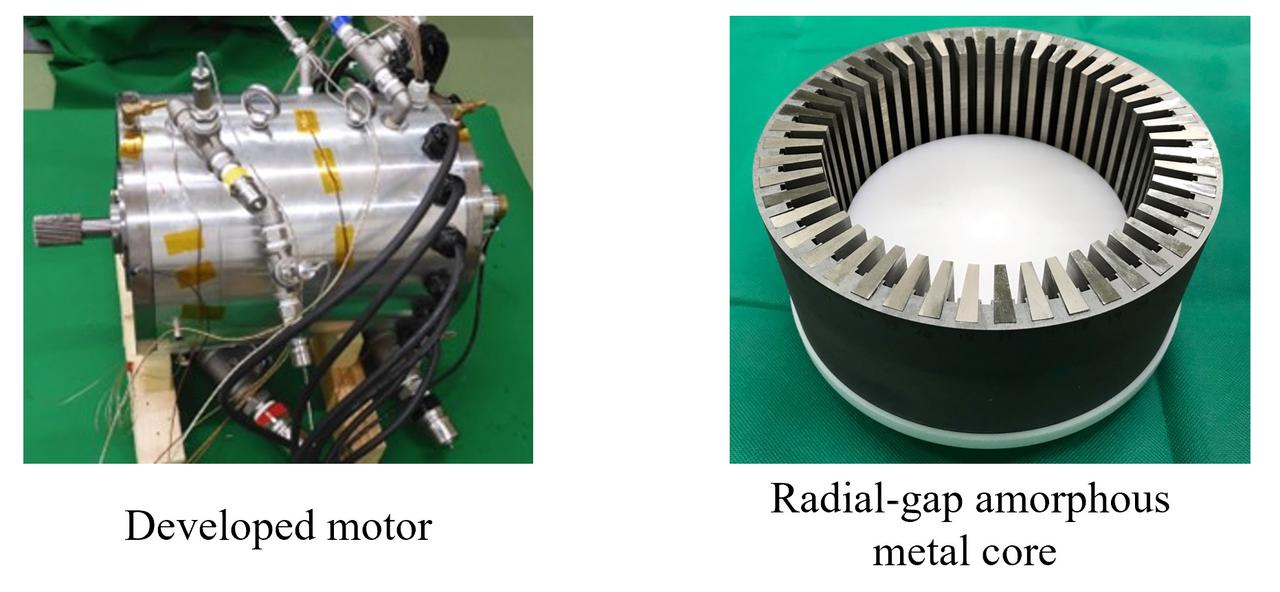
Tokoi: To develop a radial-gap amorphous motor, we had to combine multiple technologies. One part of that was adopting a segmented structure that uses amorphous metal in only certain areas of the motor. The tubular stator surrounding the rotor has multiple teeth for winding the coil. Although you can form electrical steel stators by punching complex shapes with teeth, the process is difficult with amorphous metal, as the material is hard to work with.
We therefore applied amorphous metal only to the teeth where the magnetic flux from the rotor concentrates and iron loss is significant, using electrical steel sheets in other parts. This segmented structure ensures both manufacturability and low energy loss.
In addition to using amorphous metal for the teeth, we developed a variety of other technologies, including designing the electrical circuit to reduce losses associated with the high-frequency drive that generates ultrahigh-speed rotation, optimizing the strength of the rotor and shaft designs, and making improvements to the copper coils wound around the stator.
Takeuchi: I was primarily involved in designing the components critical for high-speed rotors. During ultrahigh-speed rotation, stress from the centrifugal force generated concentrates in the rotor, so I worked to design a form that would disperse the concentration. In addition, coincidence and resonance between the rotation shaft’s resonant frequency and rotational frequency can cause deformation, which requires designs that optimize the shaft length, bearing types, and spacing to prevent that resonance from occurring. To account for multiple potential resonance patterns, I worked to ensure that the resonance frequency of the shaft was higher than the range of rotational frequencies used.
Tokoi: These issues are not significant in motors operating at a few thousand rpm. But to promote the adoption of amorphous motors, we needed to address the fundamental mechanical challenges head-on. Our team originally specialized in magnetic circuits, but with Takeuchi joining us as an expert in shaft system design, we were able to move forward in solving these challenges.
Takeuchi: My past experience developing vacuum cleaner motors operating at ultrahigh-speed rotation of around 100,000 rpm also came in handy for these designs. To reduce heat generated by friction in the bearings, we adopted oil jet lubrication with high heat-dissipation performance. When the motor rotates at high speeds, weak oil jets are blown away by airflow. Therefore, we worked to optimize the jet angle, velocity, and nozzle position, refining our design through repeated testing with actual hardware to give us valuable insights.
Combining team members’ expertise to break new ground in industrial motor energy efficiency
Tokoi: The reliability of the design is also critical. Industrial motors require much longer operating lifetimes—10 times or more that of EV motors in some cases. To meet these requirements, we conducted elemental technology development for both the rotor and stator sections.
Takeuchi: At high-speed rotation, it becomes increasingly difficult for the device design to meet lifespan requirements. Even a slight imbalance in the mass of the rotor leads to uneven power due to centrifugal force. However, by carefully studying the relationship between the rotor’s balance precision and lifespan, employing rotor bearings with a high load capacity, and assessing other factors, we were able to develop a radial-gap amorphous motor with reliable, long-life performance.
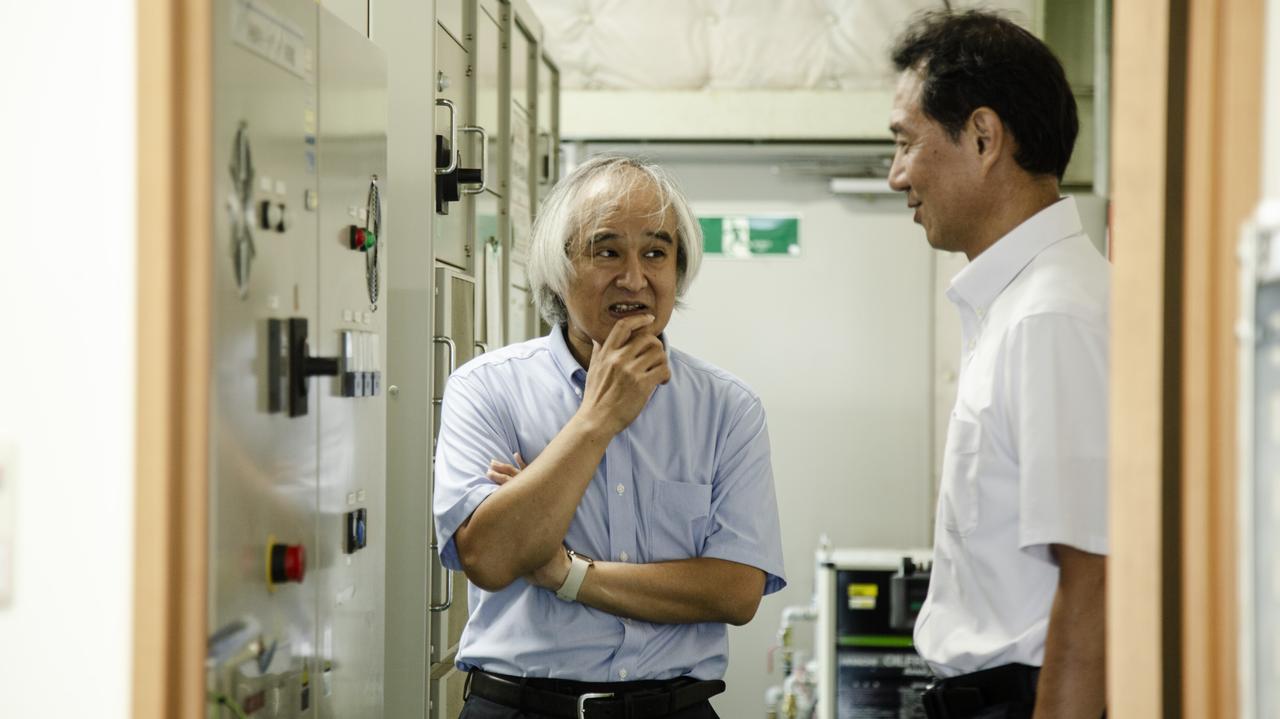
Tokoi: What made it all possible was the combined effort of the entire team. In addition to the expertise of Takeuchi, who handled the shaft support, other structural aspects, and cooling design that enabled ultrahigh-speed rotation, many other team members played invaluable roles, including calculating magnetic circuit torque and energy loss, designing the iron core, coils, and magnets, coordinating with the business divisions and studying mass production, establishing manufacturing methods such as electrical insulation and the integration of coils and cores, and developing control technologies to enable stable motor drive at high speeds. Our team holds weekly online meetings to share progress in our respective areas and address any challenges. Having experts in so many different fields is one of Hitachi’s biggest strengths.
The radial-gap amorphous motor we developed accomplishes our original goal of enhancing the efficiency of industrial motors to contribute to carbon neutrality. Motor efficiency is defined by International Electrotechnical Commission (IEC) standards. In Japan, the standard specified by Japanese Industrial Standards (JIS) corresponds to the IEC’s IE3 efficiency class, while Europe is transitioning to IE4—an even higher level of efficiency. Hitachi’s radial-gap amorphous motor goes a step further by, achieving IE5-level efficiency. While other companies are beginning to offer IE5-class motors, what sets our motor apart is its ability to achieve IE5 standards at ultrahigh-speed rotation. High-frequency drive systems typically result in significant energy loss, making it extremely challenging to suppress heat generation and energy loss while achieving IE5-level efficiency. What makes this motor stand out is its combination of high speed and high efficiency. This achievement earned Hitachi the New Energy and Industrial Technology Development Organization (NEDO) Energy Conservation Technology Development Award (Executive Director’s Prize) in 2024.
Takeuchi: Developing this amorphous motor required expertise in not only electromagnetics but also mechanical and materials engineering. At the outset of the project, we lacked knowledge in certain areas, such as determining what kind of testing equipment to use and how to evaluate the results. At Hitachi’s Research & Development Group, there are always experts with complementary knowledge around and willing to offer support. I really appreciate being able to draw on diverse expertise and integrate it into new technologies as a unified Hitachi team.
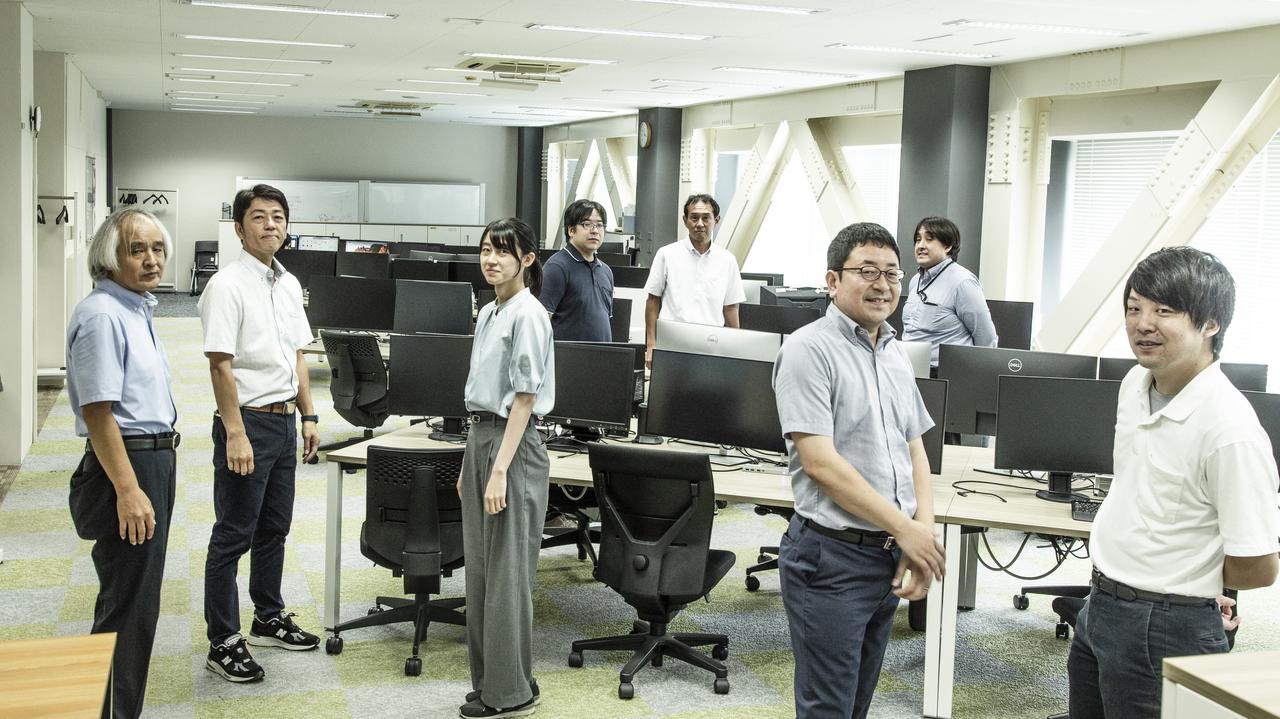
Members involved in the development of Hitachi’s radial-gap amorphous motor
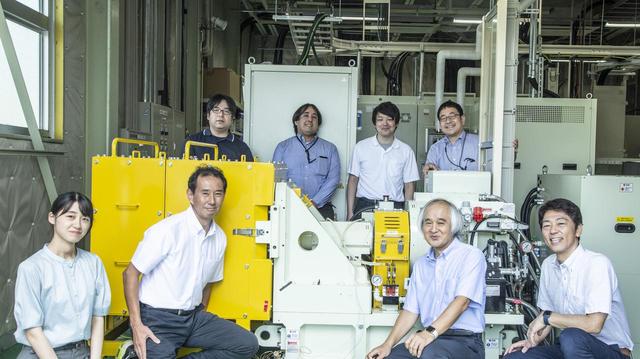
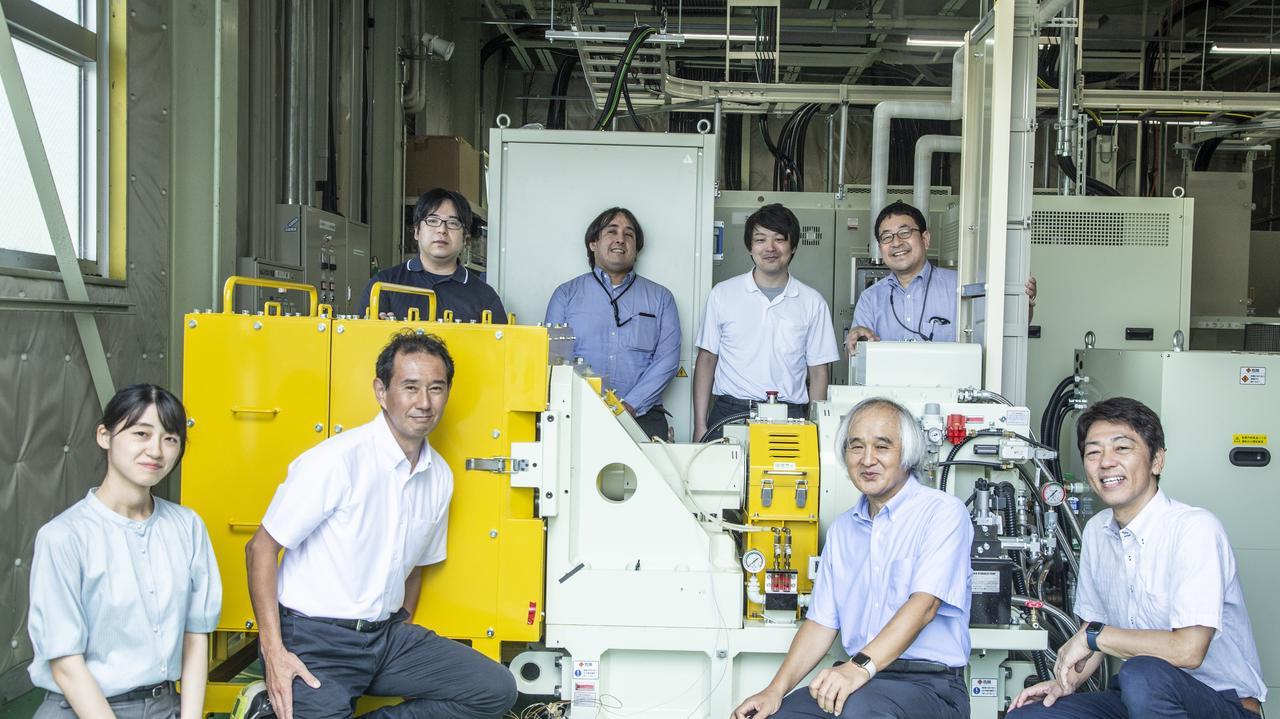
From left: Kazuaki TOBARI, Kenji IKEDA, Yuiko NOMURA, Yu HASEGAWA, Yuji ENOMOTO, Hirooki TOKOI, Remi MUKOUSE, Keisuke TAKEUCHI
Tokoi: Hitachi has a broad product portfolio, offering many opportunities for involvement in a wide range of research themes–even for people working at R&D sites. The opportunity to work with different people and gain diverse experience is one of the best parts of working at Hitachi. In this project, our focus was on how to make ultrahigh-efficiency amorphous motors applicable in real-world settings. We set our sights on developing an amorphous motor for oil-free air compressors, which posed an enormous challenge from a technological perspective. Despite the hurdles involved, we successfully developed a motor for the target application. For our next step, we aim to commercialize this technology as a product.
Takeuchi: Once we’ve finished developing commercial radial-gap amorphous motors for oil-free air compressors, we expect to see them go into use on a significantly bigger scale. We hope that by promoting the adoption of such high-efficiency amorphous motors, Hitachi’s technology will contribute to reducing CO2 emissions and achieving carbon neutrality.
Acknowledgement: This article is based on results obtained from a project subsidized by the New Energy and Industrial Technology Development Organization (NEDO).

Hirooki TOKOI
Unit Manager and Chief Researcher
Connective Drive Systems Research Department,
Green & Connective Innovation Center, Sustainability Innovation R&D,
Research & Development Group, Hitachi, Ltd.
Avoiding tunnel vision in the digital age
I’m the type of person who rarely rereads a book after I have finished it. Still, I think it’s important to obtain information from print media, so I make a point of reading newspapers and maps to gain a broader perspective. With advances in digital technology, devices like smartphones and car navigation systems have made life more convenient by recommending content that fits our specific interests—but we also have fewer opportunities to come into contact with different perspectives. The ability to understand abstract concepts is essential for developing higher-level abstract thinking skills. Although I would ideally read the newspaper every day, but I normally combine a week’s worth of reading at a time during train rides, gaps in my schedule during business trips, or waits at the doctor’s office. Although fewer and fewer people read newspapers in print today, I continue to do so—although it might be a bit old-fashioned–to help me maintain a broad perspective and open mind in my research.

Keisuke TAKEUCHI
Senior Researcher
Connective Drive Systems Research Department,
Green & Connective Innovation Center, Sustainability Innovation R&D,
Research & Development Group, Hitachi, Ltd.
Reminding myself that even geniuses have limits to what they can achieve alone
I often rewatch the film The Imitation Game (directed by Morten Tyldum). Released in 2014, it tells the story of Alan Turing, the British mathematician and computer scientist who successfully cracked German military codes during World War II. Although Turing was a solitary genius who forged ahead with his research leaving his team members behind, when he hit a wall or reached his limits, it was ultimately teamwork that made breakthroughs possible. Seeing that even someone as brilliant as Turing had limits to what he could achieve alone drives home the importance of working as a team–as developing a commercially viable motor alone is not possible, either.
(Photo by Kiyono Hattori)