News release overview
Hitachi develops Physical AI technology that learns and optimizes its own motion behavior on-site to automate complex tasks
Applicable across a variety of workplaces, including manufacturing, equipment maintenance, and logistics, and achieves practical on-site speed and quality for tasks previously difficult to automate
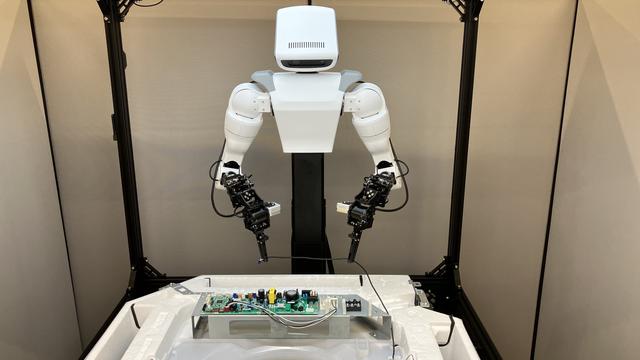
Figure 1. Operation of a Physical AI robot
Tokyo, March 23, 2026 Hitachi, Ltd. (TSE 6501, “Hitachi”) is globally advancing its “HMAX by Hitachi” (“HMAX”) suite of next-generation solutions, which leverage AI to transform social infrastructure, under the One Hitachi initiative. Through this effort, Hitachi aims to bring about industrial sites where people, AI, and robots evolve together, maximize value creation, and drive innovation in social infrastructure. As part of this initiative, Hitachi has developed physical AI technology that autonomously learns on-site and enhances the speed and quality of operations while continuously optimizing its own motion behavior.
Robots equipped with this technology continuously learn from behavioral data and task-related know-how generated in real-world environments, enabling them to evolve in response to changes in on-site conditions and task requirements. In addition, by utilizing sensor data for vision and force/tactile sensing, the robots precisely control the magnitude and direction of force applied when interacting with objects. This enables the automation of complex tasks requiring delicate handling of flexible materials, such as wire-harness assembly. The technology has the potential for use across a wide range of industrial settings, including manufacturing, equipment maintenance, and logistics, and makes tasks that were previously difficult to automate possible to perform at practical on-site levels of speed and quality.
This technology represents one of the core underpinnings “Integrated World Infrastructure Model (IWIM),” *1. promoted by Hitachi within the HMAX framework of solutions that embody Lumada 3.0. Going forward, Hitachi will continue to integrate domain knowledge cultivated from real-world operations into AI and leverage strengths in its physical AI, which enables end-to-end deployment from design and implementation through to operational improvement, to enhance productivity and support business growth for customers’ industrial sites on a global scale.
*1 Integrated World Infrastructure Model (IWIM): A model announced by Hitachi in November 2025 to support the development of physical AI and HMAX. By integrating AI technologies with the knowledge and methodologies Hitachi has accumulated in the social infrastructure domain, Integrated World Infrastructure Model (IWIM) enables accurate understanding, reasoning, and response to real-world phenomena. This establishes an AI foundation capable of continuous, autonomous evolution in the field, including functions such as prediction, planning, and control of the phenomena (e.g., autonomously evolving manufacturing automation).