A shared passion for building things
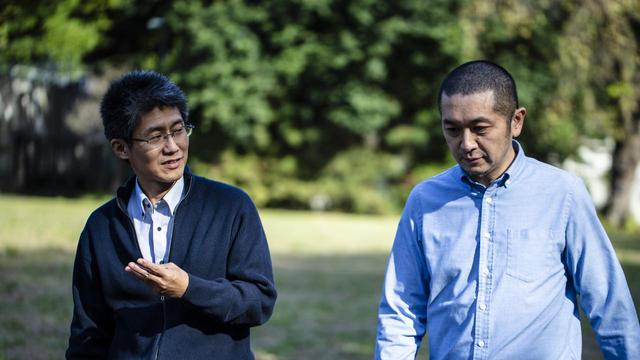
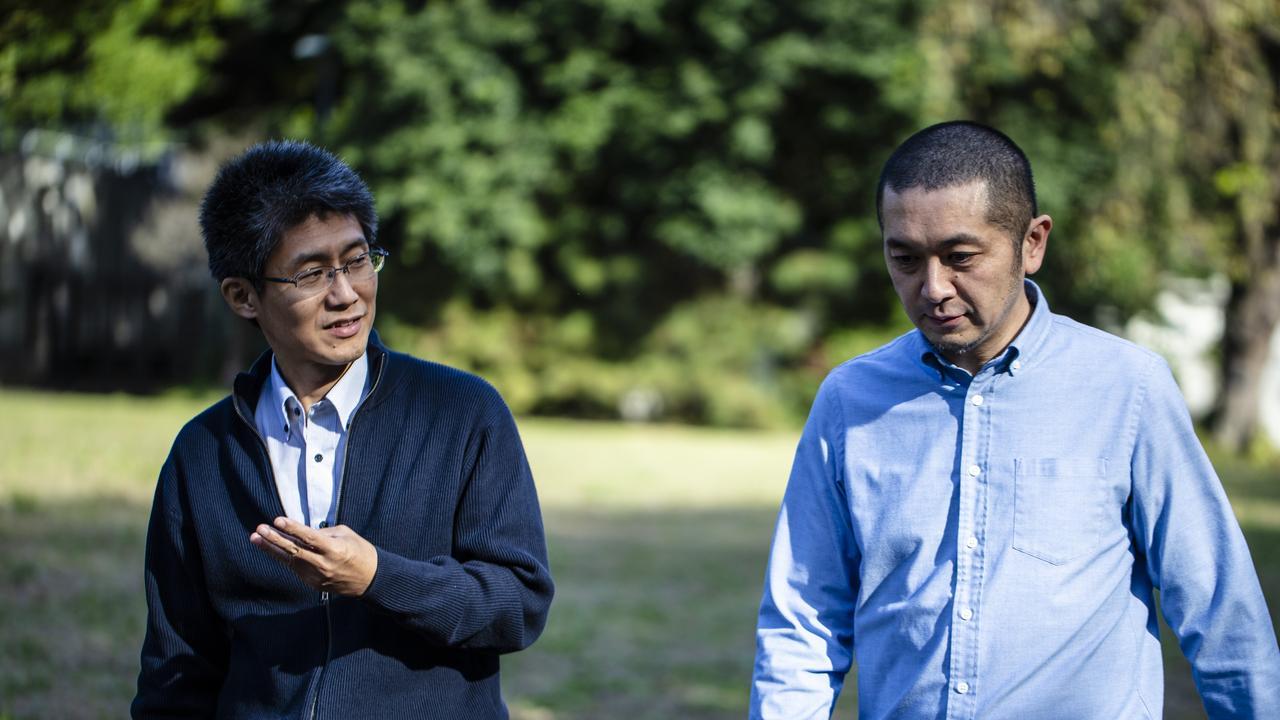
Arakawa: In my student days, I studied design in the department of industrial design of the faculty of engineering. Ever since I was in elementary school, I’d always loved working with my hands. I would amuse myself by doing things like modifying Tamiya Mini 4WD cars. That interest evolved into a desire to study the art of building things, which is why I chose to major in design. On graduating from university, I got a job as a designer with a manufacturing firm, a world leader in its field. In the course of working there, though, I started considering a career change because I wanted to try my hand at a wider range of products. A former fellow student who was ahead of me at university had joined Hitachi, and he talked about the company’s “scalability”: it gave you the chance to design everything from Shinkansen trains to social systems invisible to the eye. So I applied for a position at Hitachi, which was looking to hire mid-career professionals, and switched employers.
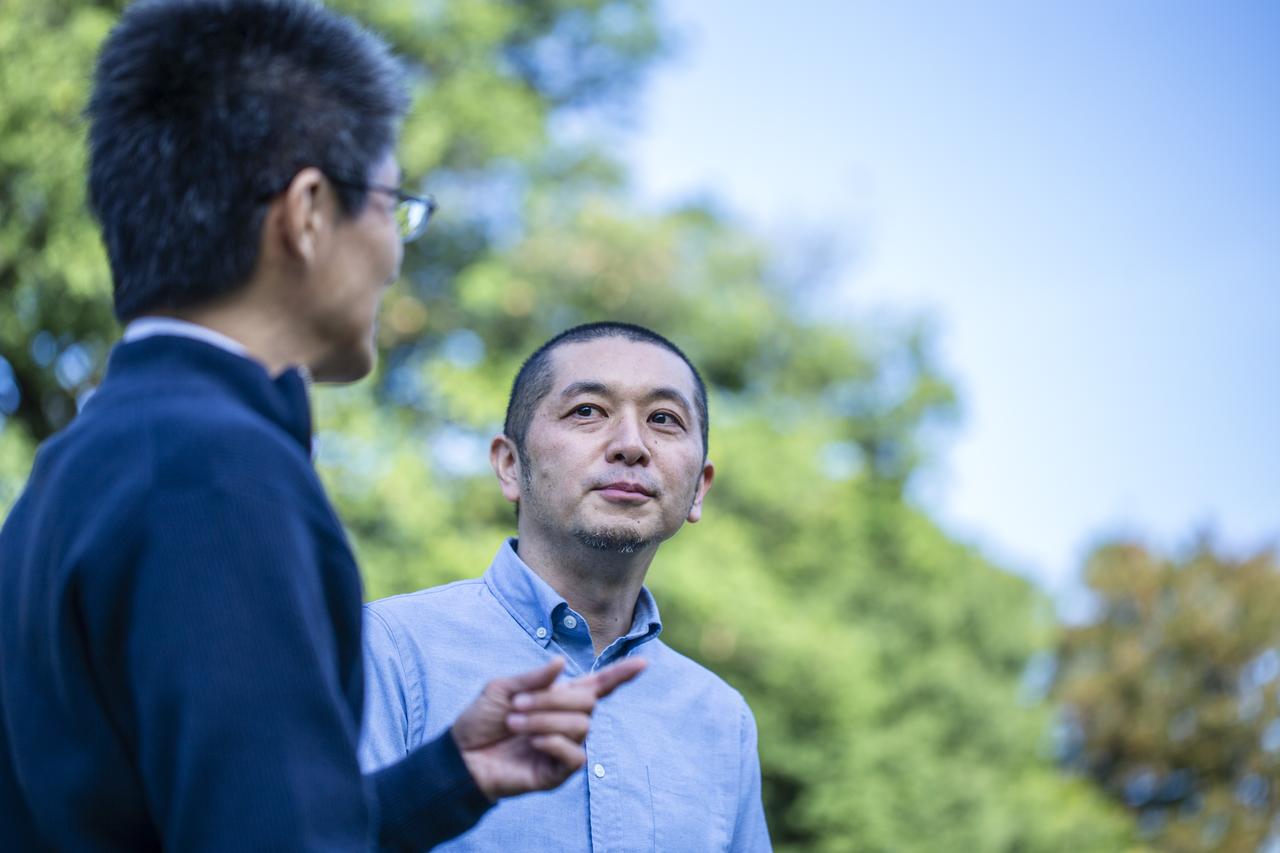
Masayuki ARAKAWA, UX Design Department, Design Center, Digital Innovation R&D, Research & Development Group, Hitachi, Ltd.
During my first ten-odd years at Hitachi, I was involved in designing home appliances like vacuum cleaners and air purifiers. That was when demand for vacuums was shifting from canister-style models with wheels attached to the main unit to stick and robotic vacuums. So those were exciting times. Another memorable experience was collaborating with a renowned designer from outside Hitachi on designing an air purifier for the overseas market. I learned a lot about approaches to design and staying focused and being a stickler for detail.
I then started working as a designer in the healthcare field. I designed hospital equipment, including blood analyzers and radiotherapy equipment for treating cancer. By extension, I’ve also been involved in designing the clinical laboratory of the future, where robots and people will collaborate. Now I’m part of Osaki’s project, which explores potential services from the perspective of data analytics in the healthcare field. In designing all the things I have been a part of over the years, I try to never forget the importance of leaving users happy.
Osaki: I graduated from the electrical engineering program of a technical high school. I love building things too: I belong to the GUNPLA1 generation. I was impatient to get a job and devote myself to building things. I decided to join Hitachi when I found out that it had its own in-house training institute where you could study and grow.
1) Plastic model building kits based on the Mobile Suit Gundam animation series.
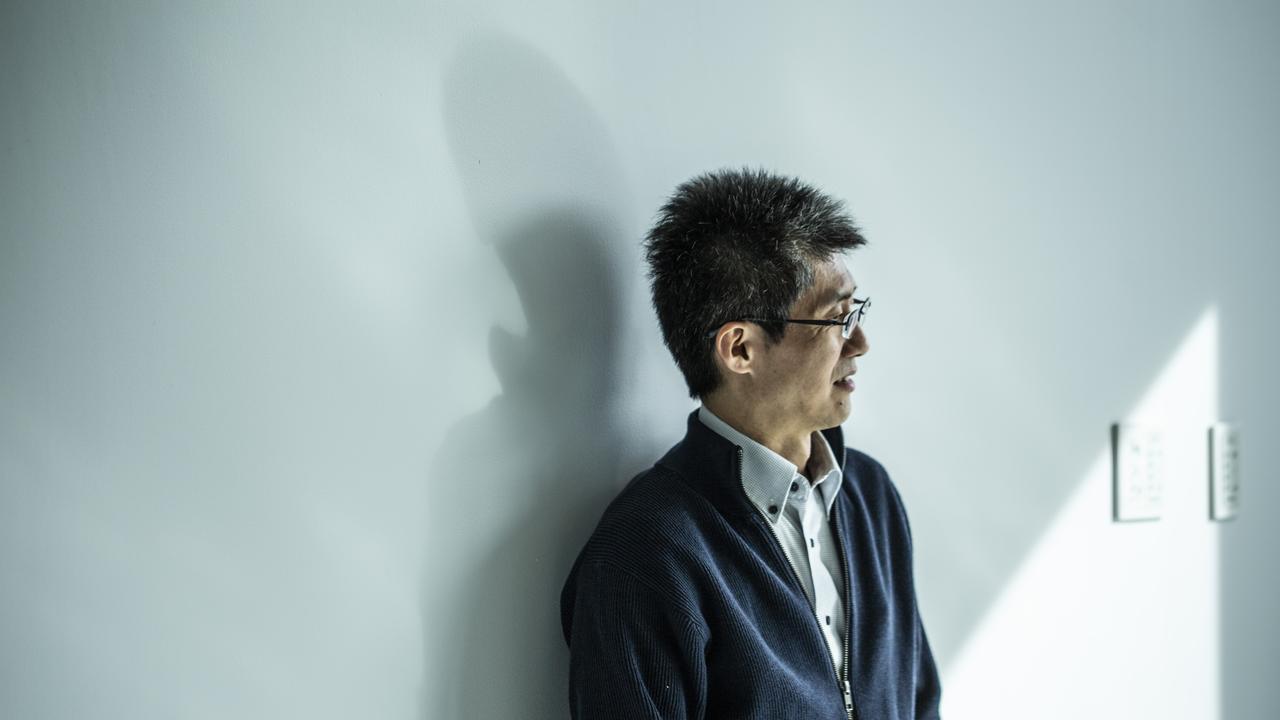
Takanobu OSAKI, Digital Healthcare Research Department, Healthcare Innovation Center, Sustainability Innovation R&D, Research & Development Group, Hitachi, Ltd.
My first assignment was to a healthcare-related research department, where I started out as a research assistant. For example, in a project on processing images to distinguish blood cells and substances in urine, I would collect data by running things through a mainframe. On the job, I studied coding and learned how to develop experimental programs myself. When research on telemedicine got under way in the late 1990s, I mainly focused on programming experimental systems for what we’d now call teleconferencing. They enabled people to share X-ray images between remote computers and talk with each other with their screens synced up.
In the 2000s, I got involved in research on utilizing data from health checkups and medical expense statements. This research wasn’t just about treating diseases—it was about preventing them too. We analyzed the risk of lifestyle diseases like diabetes by drawing on massive amounts of data collected by clinics performing health checkups on Hitachi employees. Then discussions arose on the need for a method of mitigating such risks, not just identifying them. So we developed an Internet-based specific health guidance program called the Harasuma Diet. Not only is it used in-house at Hitachi, it also continues to be offered as a service to others. This program, along with our diabetes- and lifestyle disease-prevention program, has been pilot-tested in the United Kingdom as well. I received my doctorate in 2019 with a thesis synthesizing the findings obtained in the process. Our research focuses on contributing to better health using data, and we continue to provide support for efforts to commercialize initiatives in the field.
Tokamachi’s local challenges underscore the need for social prescribing
Osaki: As we continued our work analyzing healthcare data, we were approached by Professor Shobugawa2 of Niigata University. Professor Shobugawa was working on solving social challenges, with the city of Tokamachi in Niigata Prefecture serving as a model community. I initially assumed that we would be identifying risks by analyzing data, but as we discussed how to proceed, we ended up thinking through the entire process together, from defining issues to formulating solutions.
2) Specially Appointed Professor Yugo Shobugawa, Department of Active Aging, Tokamachi, Graduate School of Medical and Dental Sciences, Niigata University.
First, we discussed what challenges were facing the community. Tokamachi is situated in a hilly and mountainous region, and it has a declining population. With healthcare resources dwindling and fewer people of working age, one issue that came into sharp focus was how to keep residents healthy. Given that it might be difficult to rely on healthcare resources alone, we delved into the possibility of harnessing various other resources available in the community. Specifically, we focused on diabetes as one community challenge. We came to see the possibility of leveraging community resources to promote exercise and deliver nutritional counseling. Maintaining health by using available community resources to improve social factors is called social prescribing, a concept that originated in the UK. And we realized that the Tokamachi initiative was exactly that—social prescribing. The idea is not just to provide a medical cure but also to maintain people’s health by improving the social environment and thus create a more livable society.
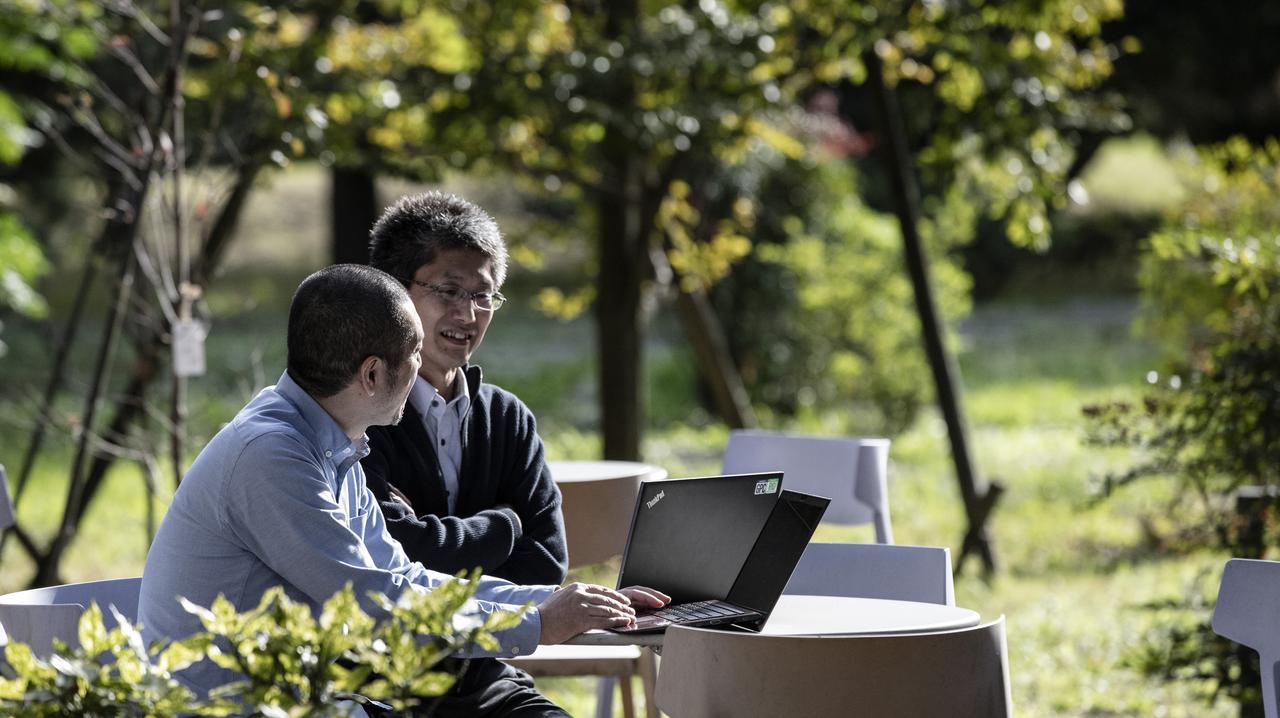
Zeroing in on link workers, who connect people in need to community resources
Osaki: Niigata University, Tokamachi City, and Hitachi then initiated a project to create a vision for a healthier society by harnessing social prescribing and technology. Implemented from 2023 to 2024, it had two goals: to evaluate local challenges by analyzing data and to maintain residents’ health by leveraging community resources. We zeroed in on link workers, who connect people in need to community resources such as government and private-sector community programs and services. Specifically, we conducted an experiment where public health nurses acted as link workers by providing diabetics needing to make lifestyle changes with referrals to registered dietitians or fitness clubs in the community. Arakawa provided design support by defining challenges and designing a future blueprint.
Arakawa: They asked for designers to get involved in a case involving diabetics being interviewed. When you’re a designer at Hitachi, conducting surveys and interviews is often part of the job, so I suppose it was perfectly natural that I ended up working with Osaki’s team. My job was to come up with a future blueprint for solving problems on the ground in Tokamachi alongside hospital doctors and the staff at city hall.
Osaki: In the initial pilot program, ten diabetics made use of registered dietitians or fitness clubs recommended by a link worker. The participants showed improvements in their HbA1c level, which indicates sugar levels in the blood, demonstrating the effectiveness of social prescribing. Before the pilot began, we reckoned that even if we found ten participants, only a handful would stick with the program to the end, but eight actually stayed on. Since the pilot ended, some have even continued going to the fitness club at their own expense. Besides helping restore diabetics to good health, the initiative also makes communities more vibrant.
Arakawa: In the project focusing on diabetics, Hitachi, Professor Shobugawa of Niigata University, the staff at city hall, and others working on the ground constantly consulted with each other as they developed the service together. We designers put things into pictures, which kept everyone on the same wavelength and stimulated discussion. Even now, I frequently visit Tokamachi to compare notes.
Streamlining link workers’ jobs with AI
Osaki: Based on the pilot’s outcomes, the Niigata prefectural government, Niigata University, and Hitachi launched a project to support link workers involved in social prescribing by taking the use of technology to the next level. In FY2024, the effort was selected as a new Solution-Driven Co-creative R&D Program for SDGs (SOLVE for SDGs) Solution Creation Phase project—one of the RISTEX R&D Programs sponsored by the Research Institute of Science and Technology for Society (RISTEX) of the Japan Science and Technology Agency (JST).
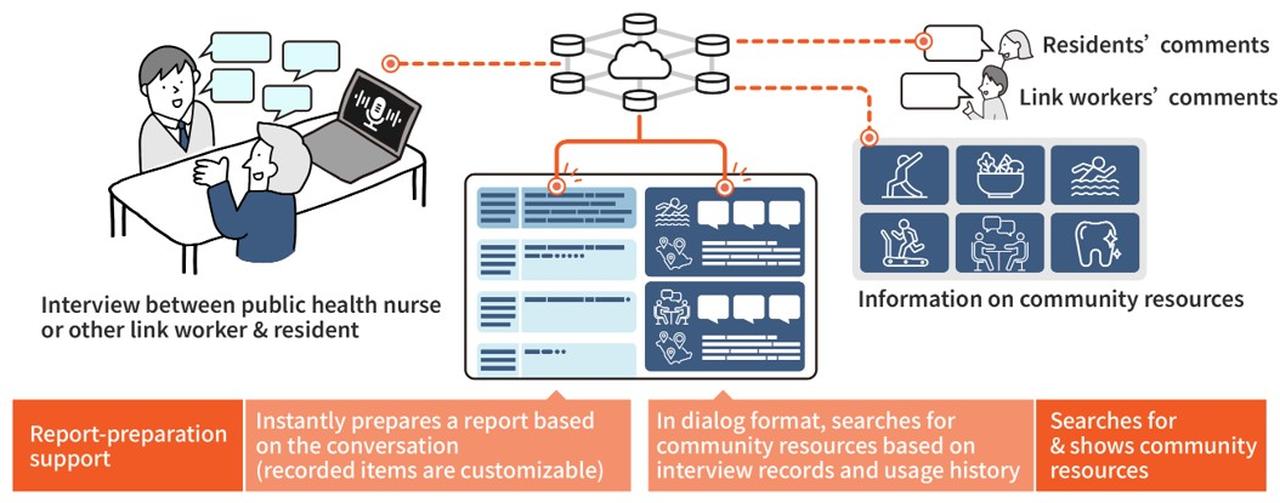
The pilot project found that the workload of public health nurses acting as link workers was larger than anticipated. The link worker starts by asking the client about their living conditions and state of health. Based on their situation, the worker then matches them up with a community resource such as a fitness club or registered dietitian. In practice, the worker has to keep a record of their interview with the client in the form of a report and take the time to connect them with the recommended community resource. Public health nurses have a lot of other things to do, and a program that increases their workload is simply unsustainable. That led to the decision to develop a way of automatically compiling a report on each interview using AI and then recommending the right community resources.
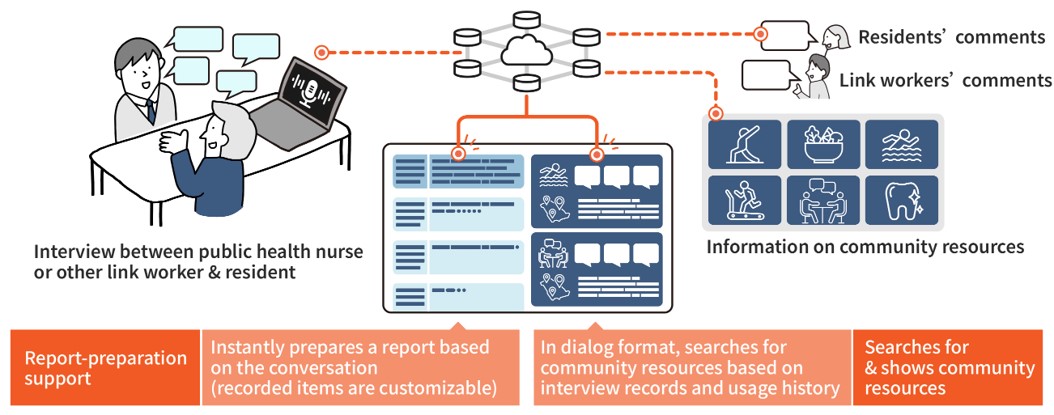
What that meant in concrete terms was developing an AI-based support system for link workers. First, the system converts what the link worker and the client say during the interview to text in real time. Then it organizes and summarizes the information required for recommending community resources, including state of health, living conditions, and the type of support sought, and displays it in a report format. The link worker can thus check visually whether they’ve forgotten to ask anything, which ensures that they ask everything required on the spot. Further, the system searches for and displays potentially useful community resources based on the interview summary compiled by generative AI.
Arakawa: I’ve still hardly touched the interface design of this AI-based support system for link workers, since development speed took priority. To ensure the system worked properly, though, I was involved from the design stage in aspects including developing ways to control noise that might interfere with speech recognition. To that end, I conducted a survey on where link workers interview clients.
Osaki: With generative AI evolving so rapidly, our top priority was to quickly develop an application ready to be tested on site. We were particularly careful to ensure that the system classified and organized the necessary information in a way that aligns with how link workers go about their job.
Arakawa: We brought the prototype to the actual work location numerous times and fine-tuned it to ensure it could accurately recognize what people were saying. We built trust by constantly consulting with the people working on the front lines in Tokamachi. It was like a team effort where we created the system together.
The consultative process is all part of the design
Osaki: This AI-based support system for link workers is still an experimental prototype. Now we’re going to consider how to turn it into a commercial product in consultation with Hitachi’s business arm and others. The job of a link worker, up to and including document preparation, should be considerably easier now. During the validation stage, a link worker coordinator commented that the system could significantly reduce the amount of work involved in preparing and reviewing interview records to less than a third of the normal level. Work is currently underway on further observation and evaluation.
Arakawa: Easy-to-understand documentation is also essential to ensuring that residents become users. If there’s too much fine print, no one will read it. And the information needs to be well organized. Design, I feel, has an important role to play on the communication front as well. It’s a matter of designing the consultative process, so to speak.

Osaki: The design of the information conveyed to clients and link workers furthers mutual understanding and makes it easier for frontline staff to do their job. And Arakawa is responsible for design in an even broader sense. Bringing local challenges to light and offering a clear blueprint for the future provide a basis for discussion. Social prescribing involves many stakeholders. Social institutions are often organized into silos. So how can different stakeholders get where they want to be while collaborating effectively across those boundaries? That’s where it’s critical for Arakawa to design a common understanding.
Arakawa: The pilot program in Tokamachi is still small. The initial project served ten clients, and even now that it’s expanded, it has only about 50. Still, we hope that systematically validating the idea on a small scale first will lead to something bigger. That will require doing more exploring of what form the program should take and designing it with the larger picture in mind, setting the effort up to lead the way. It will also entail designing a validation process to solve issues on the ground. I think we should approach it from both directions.
Osaki: The big challenge is, how do we evolve this small-scale social prescribing initiative into something that can be sustained in the community? Our goal is to initiate a cycle that supports solutions to actual real-world issues by tapping data. First, tap the data available in the community and identify what social issues exist. Then think through concrete ways to address them. We also want to make the program deployable to other communities.
Part of this initiative was executed within the scope of a project for the Solution-Driven Co-creative R&D Program for SDGs (SOLVE for SDGs) program, sponsored by RISTEX of JST. In its solutions-creation phase, the R&D project is designed to generate community-driven solutions for a healthy, future-oriented society by leveraging social prescribing and technology with various link workers.
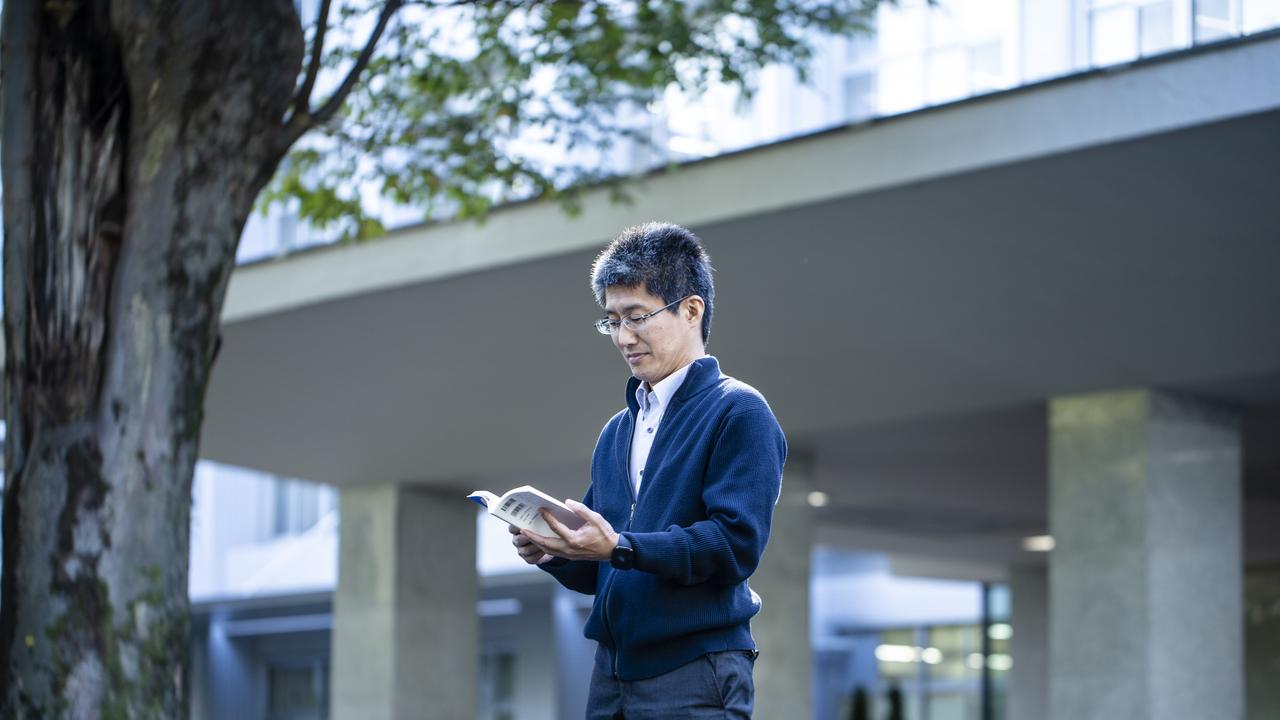
Takanobu OSAKI
Chief Researcher
Digital Healthcare Research Department,
Healthcare Innovation Center, Sustainability Innovation R&D,
Research & Development Group, Hitachi, Ltd.
Life: A wondrous cycle of creative destruction
I love the book Dynamic Equilibrium: Why Life Dwells There by Shin-Ichi Fukuoka (Kirakusha Publishing). I searched for it after seeing Dr. Fukuoka on TV several years ago and read it right away. The book is about the wonder of life. What particularly struck me was the idea that organisms destroy and remake bits of themselves to stay alive. By keeping the two processes in equilibrium, they change constantly in order to remain the same. Reading about how repeated destruction and creation is the only way to maintain life was an eye-opening experience. It also got me thinking: our job, too, requires creative destruction.
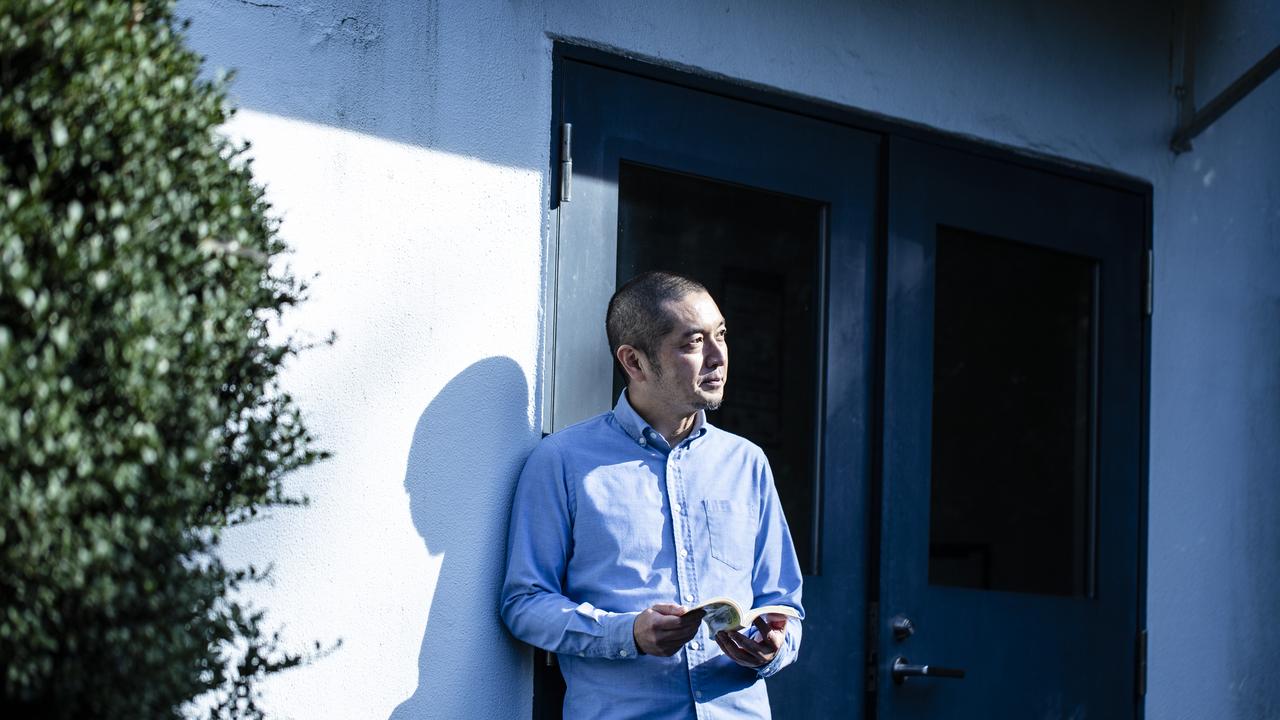
Masayuki ARAKAWA
Design Lead
UX Design Department,
Design Center, Digital Innovation R&D,
Research & Development Group, Hitachi, Ltd.
Rethinking Japanese handicrafts as a designer
One recent read that impressed me was Soetsu Yanagi’s Handicrafts of Japan (available in the Iwanami Bunko series), originally published about 80 years ago, soon after World War II. Though long aware of it, I’d never read it. I finally got around to doing so when a friend posted about it on social media. It was fascinating. Author Soetsu Yanagi, founder of the Japanese folk-craft movement, describes how Japanese handicrafts reflect the Japanese character and stresses the brilliant way in which they retain traces of the human hand. His observations on the beauty of the utilitarian, a theme to which he repeatedly returns throughout the book, are universal truths still relevant to manufacturing today. It’s a book that’s sure to inspire and encourage anyone who makes things.
(Photo by Kiyono Hattori)