Since 2018, the Hitachi-U Tokyo Laboratory Energy Project has been publishing proposals toward realizing energy systems to support Society 5.0. The proposals through the seventh edition have addressed a broad range of issues covering not only electricity and energy systems but also society as a whole, in an effort to contribute to the transition toward a decarbonized society.
At the Hitachi-U Tokyo Laboratory’s 8th Industry-Academia Collaboration Forum, held in January 2026, the first half of the forum focused on reviewing the proposals to date and the activities of each research group, and discussing the next regional transition strategies. The second half featured two panel discussions on the themes of the “publicness and competitiveness of the energy system” and “accelerating regional transition,” in order to consider the next actions needed to realize a sustainable society.
Opening Remarks
The Hitachi-U Tokyo Laboratory’s 8th Industry-Academia Collaboration Forum was held at the Hongo Campus of The University of Tokyo on January 27, 2026. Since its establishment in June 2016, the Hitachi-U Tokyo Laboratory has engaged in collaborative creation between industry and academia toward realizing Society 5.0 in two areas—smart cities and energy.
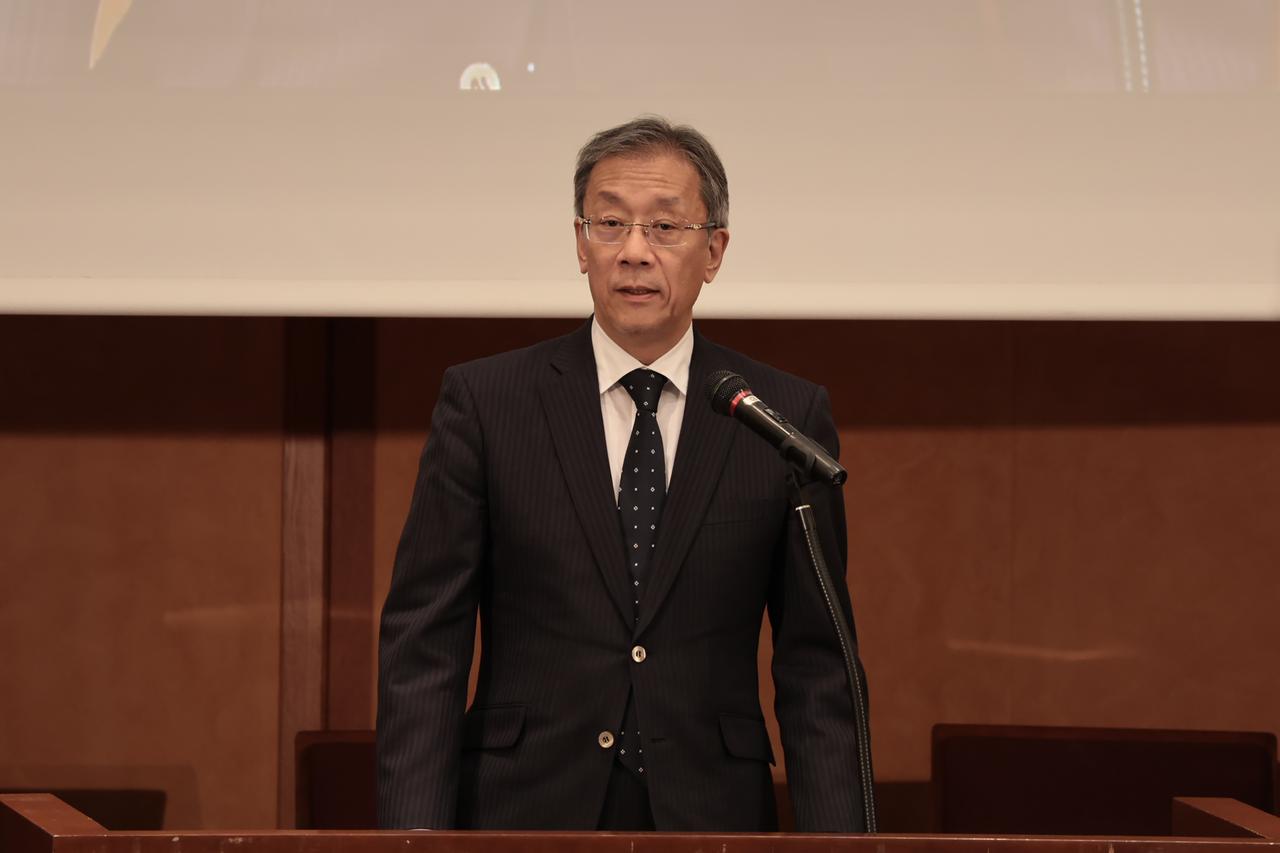
Fujii, President, The University of Tokyo
In his opening remarks, Teruo Fujii, President of The University of Tokyo, stated that in this turbulent era, where climate change, geopolitical risks, and technological innovation are unfolding simultaneously, it is not easy to achieve stable energy supply, decarbonization, and economic efficiency all at once. He also noted that energy-related issues involve the transformation of society as a whole, including not only technology but also institutions, local communities, and people’s awareness and behavior. And he expressed his hope that the forum would serve as a platform for diverse stakeholders to explore the way forward through dialogue and identify the next actions toward a sustainable society.
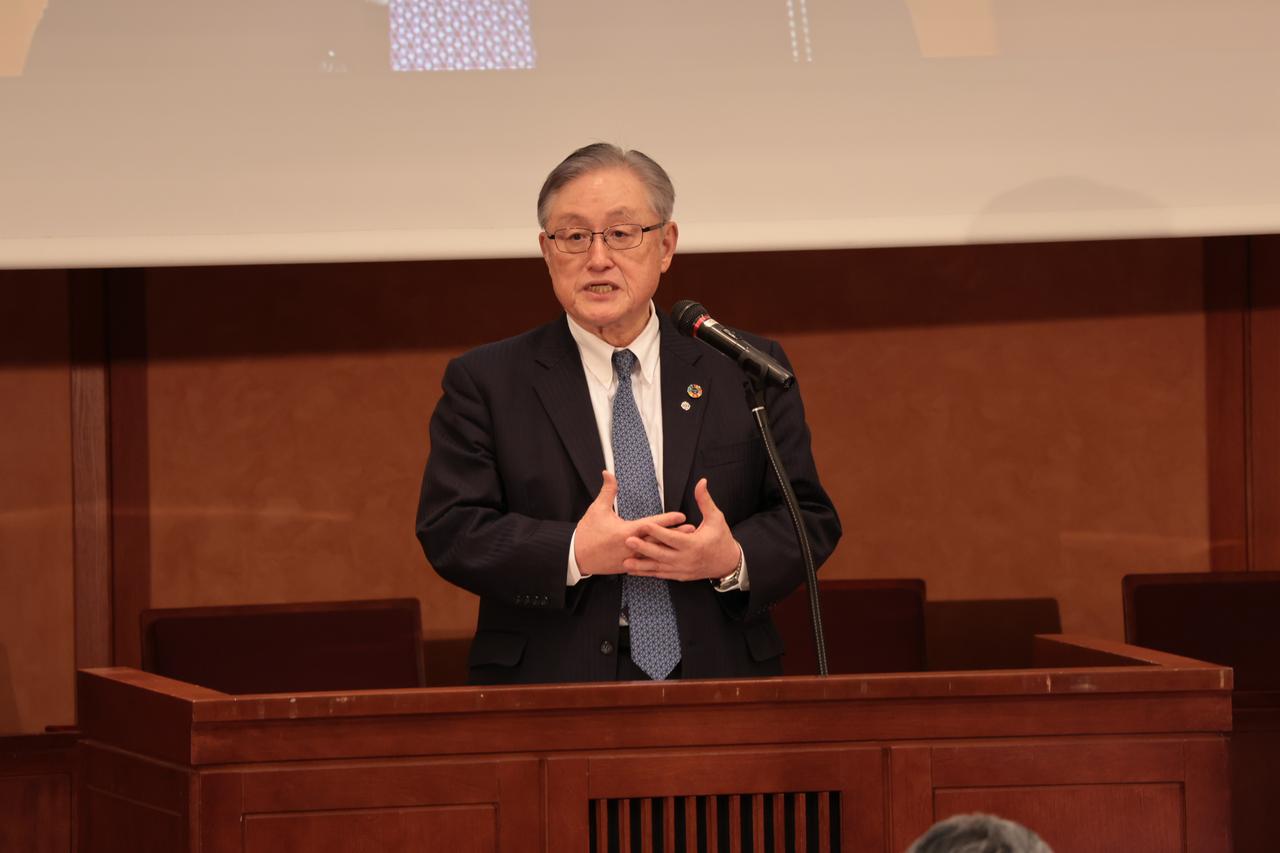
Higashihara, Executive Chairman, Hitachi, Ltd.
Next, Toshiaki Higashihara, Executive Chairman, Representative Executive Officer and Director, Hitachi, Ltd., stated that a whole-system optimization perspective is essential for achieving both stable energy supply and carbon neutrality. He stressed that a change in people’s awareness is important particularly for advancing decarbonization initiatives led by local governments, and called for collaboration across organizational boundaries.
Review of the Hitachi-U Tokyo Laboratory's Proposals
Shinobu Yoshimura, Project Professor at the Graduate School of Frontier Sciences, The University of Tokyo, then took the stage and gave an overview of the Hitachi-U Tokyo Laboratory’s activities while looking back on its proposals to date.
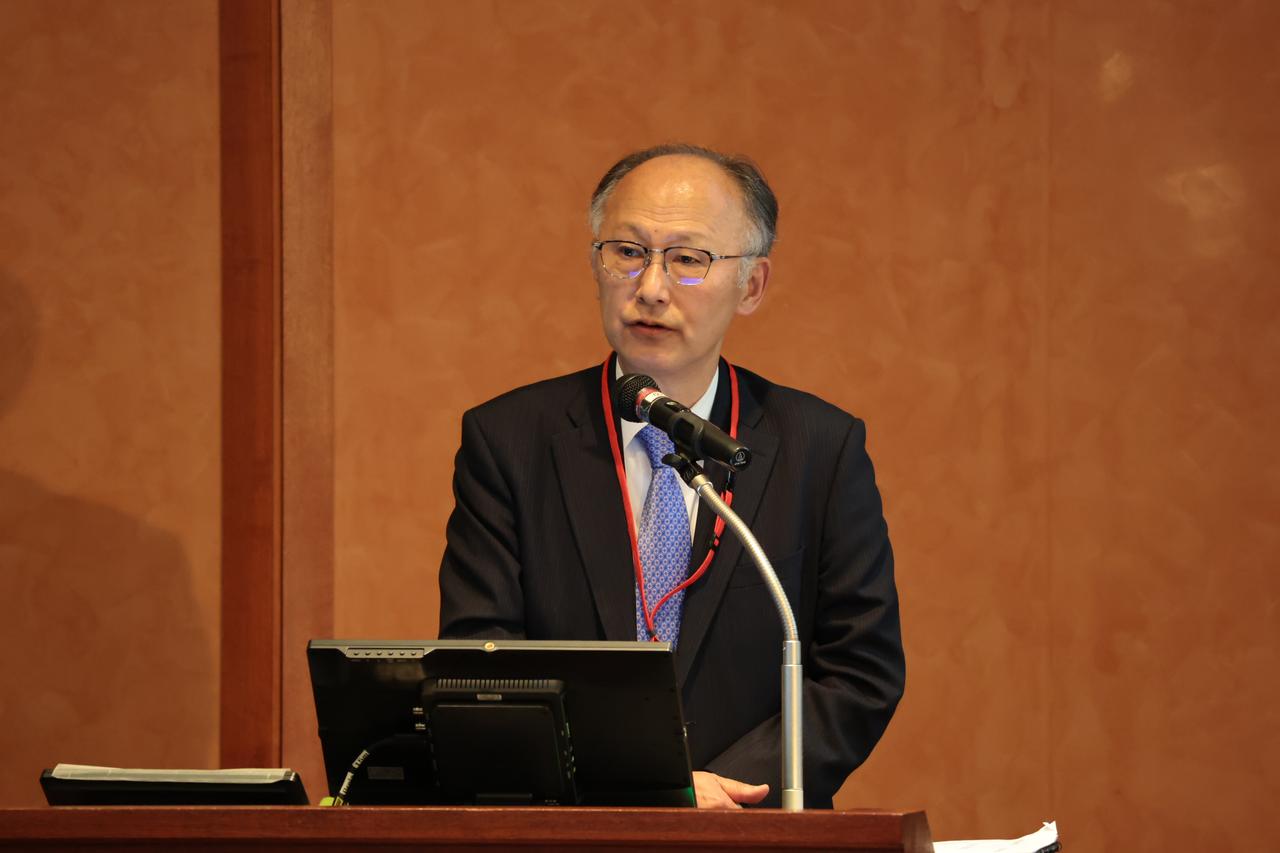
Yoshimura, Project Professor, The University of Tokyo
Reviewing the Hitachi-U Tokyo Laboratory's Proposals
Shinobu Yoshimura, Project Professor, Graduate School of Frontier Sciences, The University of Tokyo
The activities of the Hitachi-U Tokyo Laboratory rest on two pillars: the Habitat Innovation Project (Urban Transformation Project), which examines the future of cities and regions, and the Energy Project. Both projects are organized into three-year phases. In the Energy Project, Phase 1 focused on next-generation grid systems, Phase 2 on designing the entire energy system, including non-electric energy, and Phase 3 on decarbonization, growth strategies, and global presence.
A feature of the project is drawing a vision based on comprehensive, quantitative analysis of society as a whole, and then examining concrete solutions to social issues for achieving that vision.
Over the past decade, while renewable energy has expanded, constraints on grid operation, growing supply-demand uncertainty, and changes in the international environment have combined to make building a sustainable energy system increasingly important.
The Hitachi-U Tokyo Laboratory has put forward proposals regarding the importance of coordination between local communities and core systems, to begin with, coordination and competition for achieving carbon neutrality, and, more recently, the concept of “integrated transition.” It is important to develop forward-looking transition scenarios and share them with society. The Hitachi-U Tokyo Laboratory provides a framework for those discussions.
Discussion: The Energy System and Next Regional Strategies and Actions
Next, each research group reported on its activities, with Professor Yoshimura serving as the facilitator.
Addressing Medium- to Long-Term Challenges of the Core Power System
I am Ryoichi Komiyama of the Graduate School of Engineering at The University of Tokyo. In our research on the core power system, we have analyzed the challenges in achieving stable energy supply and decarbonization from the perspective of whole-system optimization and formulated proposals.
A backcasting analysis using a mathematical optimization model assuming carbon neutrality in 2050 showed that while a large expansion of renewable energy, mainly solar, is essential between 2030 and 2040, a rising share of renewable energy could affect the securing of balancing capacity and the profitability of existing power sources. Although expanding decarbonized power sources improves energy self-sufficiency, sustaining such expansion requires whole-system optimization that includes transmission and distribution costs.
Our simulation, incorporating nearly all of Japan’s core power grid, showed that if the share of renewable energy reaches about 50% in 2040, large regional electricity price disparities could arise. We proposed the need for an electricity pricing system that uses these price differences to guide demand and power-source siting. We also believe that enhancing system flexibility by combining storage batteries and thermal power is necessary to address surplus electricity and output curtailment associated with large-scale renewable energy deployment.
Energy Supply and Demand Contributing to S+3E
I am Kazuhiko Ogimoto of the Institute of Industrial Science at The University of Tokyo. As the power system and energy supply and demand evolve, the balancing function traditionally provided by supply-side thermal power generation and other sources is weakening. Consequently, creating balancing capacity using distributed resources such as demand-side equipment will become important. We have therefore proposed a coordination and control platform that adjusts equipment without compromising consumer convenience.
If electricity use can shift to hours when renewable output is high and market prices are low, supply-side output control can be reduced, and consumers can use cheaper electricity. For implementation, we also believe that developing institutional frameworks such as pricing and rate structures, as well as sharing best practices through local governments and chambers of commerce, are important.
Perspectives from SWG3’s Work
I am Hideaki Shiroyama of the Graduate School of Public Policy at The University of Tokyo. I have organized the social conditions for the energy transition from a public policy perspective, and our group has mainly examined the following three themes.
(1) Examining transition scenarios that identify pathways for social and technological transitions
Building on Professor Komiyama’s analysis, we examined multiple scenarios extensively, taking into account the views of diverse stakeholders, including government agencies, international organizations, NGOs, researchers, and energy companies.
(2) The path of climate and energy transition amid geopolitical (geo-economic) conflict
From the perspective of international politics and geopolitics, the importance of energy security has been reaffirmed in Japan since Russia’s invasion of Ukraine. As industrial policy in Europe also shifts toward emphasizing competitiveness, Japan is being called on to build multi-layered partnerships and strengthen supply-chain resilience.
(3) Integrated transition
Climate action and energy security cannot be separated from diverse social issues such as disaster prevention, digitalization, and healthcare. Advancing a cross-cutting, integrated transition toward decarbonization at the regional level will be an important theme.
Looking Back on Power System Reform (2011–2020)
I am Hiroshi Ohashi of the Graduate School of Economics at The University of Tokyo. The power system passed through an era of competition in the Meiji period, national control during wartime, and regional monopolies after the war, and is now undergoing its third major transformation, moving from regionally closed systems to a nationwide integrated system.
Power system reform initially proceeded smoothly, but after Russia’s invasion of Ukraine, concerns over supply capacity grew, making it a challenge to rebuild the balance among stable supply, decarbonization, and economic efficiency.
One of the most significant proposals from the Hitachi-U Tokyo Laboratory was the revenue cap system. This was proposed as a system to provide transmission operators with investment incentives, and was actually adopted. However, the actual system is closer to a mechanism for managing a revenue ceiling than one for strengthening incentives, and there is still room for improvement.
We have also deepened discussions on the need for nuclear power. Although challenges such as restarts and replacements remain to be examined, I believe this has had a certain influence on public debate.
Ideally, S+3E+S, the basic principle of energy policy, is achieved with a balance like an equilateral triangle. Past power system reforms have strengthened economic efficiency and decarbonization, but challenges remain in stable supply, and rebuilding that balance will be important.
Elements Needed to Deepen the Discussion
After reviewing each research group’s activities, a discussion was held on future challenges from a cross-cutting perspective. Professor Yoshimura asked what would be needed to further deepen the discussions at the Hitachi-U Tokyo Laboratory to date, and the panelists shared their respective views.
Komiyama: In a power system requiring large-scale investment, what matters is investment from a whole-system optimization perspective. We need to use mathematical tools to analyze and determine which options contribute most to S+3E and achieve stable electricity prices while keeping overall costs down. In the energy field, where facilities have long construction lead times, responding to uncertainty is also important. We will continue to study effective options using mathematical models and other tools.
Ohashi: Until now, regional electric power companies were responsible for the power supply infrastructure, but today, following power market reform, the system is premised on a nationwide, unified market. As a result, while legal responsibilities such as the obligation to maintain frequency remain, it has become somewhat unclear in practice who ultimately bears responsibility for supply. This has increased uncertainty, with operators tending to avoid risk and hold back investment. I therefore believe it is important to design a system for supply responsibility.
Ogimoto: The perspective of creating a society where what can be done is actually done is important. Power companies’ management and investment decisions require the sharing of information that allows a certain degree of foresight. It is also important to promote the distribution and use of data. Phasor measurement units (PMUs) continuously measure voltage, current, and phase at each point in the power grid in sync with GPS timing. If data from PMUs could be used for purposes such as detecting early signs of faults, it might be possible to build a resilient power system.
Shiroyama: To advance long-term energy transition, it is important to build a decision-making framework that strikes a realistic balance taking multiple values into account. To that end, it is necessary to avoid excessive politicization and hold expert discussions repeatedly in forums such as a national council. Furthermore, just as the concept of regional healthcare plans is being explored in medical policy, I believe it is also necessary to explore a new framework for “regions” in the energy system that differs from the conventional one.
Finally, Professor Yoshimura reflected that, through repeated joint discussions between universities and companies, the Hitachi-U Tokyo Laboratory has advanced realistic discussions incorporating practical, international, and regional perspectives. He concluded the session by saying, “Energy issues are extremely complex and cannot be understood by simplifying them. It is important for diverse stakeholders to correctly recognize the complexity of the issues and work to solve them through shared discussion.”
Panel Discussion: Energy and Regions Supporting a Sustainable Society
Session 1: The Publicness and Competitiveness of the Energy System—The Transformation We Aim for and Definition of a Sustainable Energy System
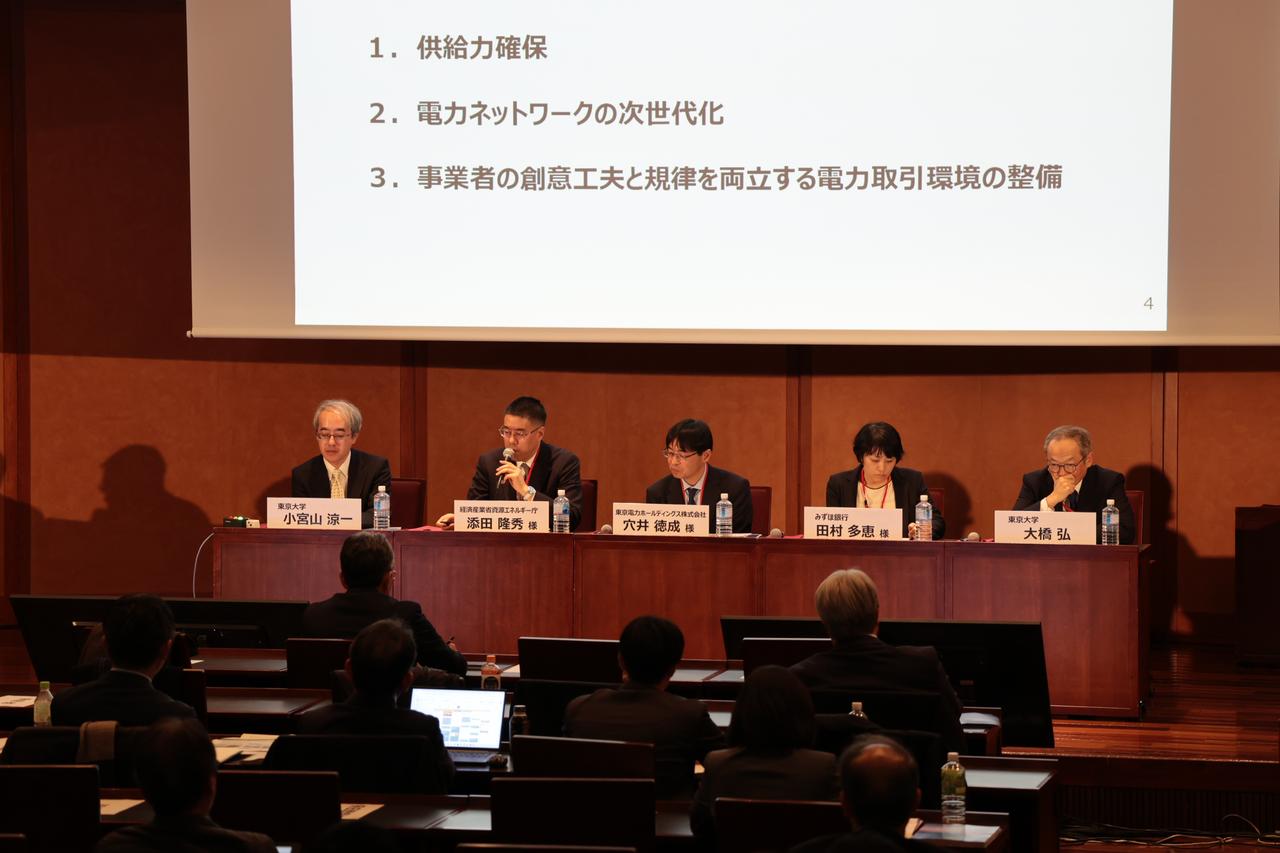
Panel discussion (from left): Prof. Komiyama, Mr. Soeda, Mr. Anai, Ms. Tamura, and Prof. Ohashi.
Komiyama: Against the backdrop of decarbonization, power system reform, and the growth of distributed energy, publicness is expected of energy as social infrastructure, while efficiency and innovation through competition and market principles are also expected. This session discusses the future vision of a sustainable energy system, centered on the two seemingly conflicting concepts of “publicness” and “competitiveness.”
Toward Building a Next-Generation Power System
Takahide Soeda, Director, Electricity Infrastructure Division, Electricity and Gas Industry Department, Agency for Natural Resources and Energy, Ministry of Economy, Trade and Industry:
Five years have passed since the legal unbundling of power generation and grid operations in 2020, and the achievements and challenges of power system reform have become apparent.
The achievements and challenges of power system reform can be organized into three main points.
(1) Securing stable supply: The establishment of the Organization for Cross-regional Coordination of Transmission Operators (OCCTO) and the development of transmission and distribution networks have advanced nationwide network integration. Meanwhile, the expansion of renewable energy has lowered the operating rates and profitability of thermal power plants, with more of them being suspended or retired. Since 2020, tight supply-demand conditions have also occurred intermittently.
(2) Electricity rates: While liberalized rates have remained lower than transitional tariffs, dependence on thermal power has amplified the impact of soaring fuel prices.
(3) Expanding consumer choice and business opportunities: While many operators entered the market and consumer choice expanded, there has also been a wave of market exits following the situation in Ukraine.
There are three key points regarding future institutional design efforts.
(1) Securing supply capacity: Decarbonized power sources are capital-intensive, require large investments, and have long project periods; they need greater predictability of investment recovery. We will foster an environment where operators can more easily develop future outlooks, while reviewing systems such as the long-term decarbonized power source auction.
(2) Modernizing the power network: To meet new large-scale demand such as data centers and semiconductor plants and to expand renewable energy adoption, we will develop intra-regional grids along with interregional interconnection lines. We will consider measures such as loans for general transmission and distribution operators facing financial constraints.
(3) Improving the power trading environment: Trading volume in the highly volatile spot market has increased, destabilizing power generators’ revenues. We will consider mechanisms to make it easier to secure a certain volume of long-term bilateral contracts and the development of medium- to long-term trading markets.
Horizontal and vertical collaboration among operators is also an important issue. I believe it is important to develop a business environment that encourages collaboration across generation, transmission and distribution, and retail, as well as in fuel procurement and power plant construction.
A Power System That Leverages Demand-Side Flexibility
Tokunari Anai, Manager, Inter-regional Power Exchange Promotion Office, Corporate Management and Planning Unit, Tokyo Electric Power Company Holdings, Inc.:
Until now, the power system has maintained supply-demand balance by adjusting large, directly controllable power sources such as thermal and hydroelectric power in response to demand fluctuations. As variable power sources such as wind and solar expand, it will be necessary to shift toward a system that utilizes demand-side resources such as EVs, storage batteries, data centers, and heat pumps.
However, since it is difficult to control many devices individually, it is important to design a system in which the demand side autonomously optimizes demand through price signals.
A simulation analysis at the distribution level in the Tokyo area suggested that price differences arise between regions depending on adoption levels and differences in demand, and that the optimal solution for siting and control also varies.
Going forward, a platform including distributed markets will be needed. As a direction, we should aim for aligning forecast-based regional supply-demand planning and control with the wide-area market.
Future Challenges in Power Source Investment and Issues in Financing
Tae Tamura, Deputy General Manager, Natural Resources and Energy Team, Industry Research Department, Mizuho Bank, Ltd.:
Assuming carbon neutrality in 2050, huge investment will be needed in renewables, zero-emission thermal power, nuclear power, and the maintenance and reinforcement of transmission and distribution grids, with cumulative investment estimated to reach around 180 trillion yen. Converted into an annual investment amount, this far exceeds the average investment cash flow of the 12 major power companies over the past decade, and a considerably high level of investment will need to be sustained over the long term.
Discussions on financing are indispensable to support such investment. Financial institutions look at the significance of an investment, business continuity, and the stability and predictability of revenue and expenditure, but what matters most is the outlook for revenue and expenditure. Since financial institutions’ lending periods are limited, whether the borrower will be in a position to raise funds again five or ten years from now is also an important factor in making a decision.
Since 2011 Fukushima Disaster, power companies’ ordinary profit margins have stayed lower than those of other infrastructure sectors, but lenders do not look only at the level of ordinary profit. Expanding investment going forward will require not only efforts by power companies to increase cash inflows and curb cash outflows, but also institutional and policy measures to complement those efforts. In addition, it is important to address constraints such as labor shortages and declining construction capacity. A stable power supply is essential to supporting Japan’s industrial competitiveness. For this reason, I believe it is desirable to build a system that generates a virtuous cycle of investment.
Power System Reform (the 5th System Reform)
Hiroshi Ohashi, Vice President, The University of Tokyo; Professor, Graduate School of Economics, The University of Tokyo:
Under the power system reform, institutional reforms have been advanced to efficiently utilize existing assets. The objectives are to (i) realize a nationwide merit order (a mechanism of ranking power plants in ascending order of generation cost and dispatches the lowest-cost plants first), (ii) instill an awareness of profit maximization centered on the spot market in the generation and retail sectors through the legal unbundling of power generation and grid operations, and (iii) enable price signals to function.
On the other hand, while power source suspensions and retirements continue, electricity demand is expected to increase. This has led to concerns over insufficient capital investment and fuel procurement. It is therefore necessary to promote facility and network investment aligned with Green Transformation (GX).
There are three challenges going forward.
(1) A mismatch between mechanisms for efficiently using assets and mechanisms that provide incentives for investment and procurement
(2) How to redesign a system that is desirable for society as a whole as generation, transmission, and retail are separated through legal unbundling and individual optimization progresses
(3) How to redefine the division of roles between the private sector and government to achieve both decarbonization and stable supply
Japan has a low primary energy self-sufficiency rate, and its power and fuel networks are independent of overseas networks. Liquefied natural gas (LNG), a promising option in the transition toward decarbonization, is difficult to stockpile over the long term, so ensuring a stable power supply requires consideration not only of generation facilities but also of fuel procurement.
Japan’s energy system is a decentralized system based on balancing groups (BGs), in which multiple electricity consumers and retail electricity providers work together to balance electricity supply. Ideally, supply capacity should be secured within a BG, with transmission and distribution operators covering uncertainty. In reality, however, retailers’ supply responsibility is not sufficiently recognized. I believe we should place emphasis on ingenuity through bilateral trading, rather than relying solely on the spot market.
A precondition for the market to function is that the responsible party clearly bears supply responsibility. If that precondition stays ambiguous, price signals will not function sufficiently either. How to rebuild the foundation of the system is important.
How to Balance Competition and Collaboration
Komiyama: First, let me ask Mr. Soeda. Vertical and horizontal collaboration offer a somewhat different perspective from competition. To what extent should they be permitted in the future power market? While there are benefits such as improved investment predictability, I think there are also boundaries that need to be considered carefully.
Soeda: For vertical collaboration, a fundamental premise is that competitively sensitive information must not be disclosed. That said, sharing information about power plant closures may be necessary to make it easier for transmission and distribution operators to consider grid operations and necessary investments in advance. From a whole-system optimization perspective, guiding new large-scale consumers such as data centers to locate near generation facilities is also important. Furthermore, I believe institutional design is needed to align the perspectives of generators and retailers.
For horizontal collaboration, it is necessary to distinguish between areas of competition and areas of cooperation. There should be areas where multiple companies working together can benefit the whole, such as human resource development, R&D, standardization of central load dispatching systems, and power plant construction through joint investment.
Komiyama: I’d like to ask each of you the following questions. First, who should provide information, to what extent and at what level of granularity, to promote location guidance while effectively using distribution-level price signals? Second, is a virtuous cycle of investment actually working? And third, how should retailers’ responsibility and flexibility be balanced within the BG system?
Anai: For distribution-level price signals, fairness and transparency are important. Within a mechanism like a distributed market, it is necessary to make prices visible and appropriately disclose network information such as available capacity. On top of that, it is important to create an environment where market participants can analyze that information and make investment decisions themselves. I think it is desirable to provide support in the early stages, while ultimately enabling operators to use the information themselves.
Tamura: As for whether the results of a virtuous cycle of investment are sufficiently evident at this point, I don't think we can say that yet. Since it takes time from an investment decision to a power plant’s completion, today’s supply-demand situation is also the result of investment decisions made five or ten years ago. However, in recent years, systems such as the long-term decarbonized power source auction have been put in place, and consideration of investment itself has begun to move forward. The power demand outlook has also shifted significantly from decline to increase, and even as assumptions change substantially, there is a gradual shift toward a virtuous cycle.
Ohashi: Running a retail electricity business requires financial strength, procurement capability, and the ability to understand demand. Whether all operators are currently fulfilling their responsibilities sufficiently needs to be reconsidered. The ingenuity of retail operators should lie in designing products to match customers’ load curves and putting together optimal supply. If the premise is that transmission and distribution operators make adjustments in the end, there is no incentive to secure supply capacity. Fundamentally, supply capacity should be secured through the voluntary business activities of private operators, and for that reason, I think it is important to reaffirm discipline within BGs.
Komiyama: Thank you very much. We have had many insightful discussions centered on securing a stable supply, financing, and market institutions. I hope this provides an opportunity to consider what questions to keep asking in the electric power business going forward and where new options may lie.
Session 2: Integrated Transition Shaping the Future of Regions—Challenges in Human Resources, Investment, and Governance
Introduction
Hideaki Shiroyama, Professor, Graduate Schools for Law and Politics, The University of Tokyo:
In advancing decarbonization, the role of regions and local governments is extremely significant. As the places where GX is put into practice, regions are called on to coordinate the interests of diverse stakeholders. Challenges also need to be considered in an integrated way, including decarbonization, regional revitalization, disaster prevention, and healthcare.
With these points in mind, we conducted a web survey of 47 prefectures and 1,741 municipalities to understand the challenges and possibilities of transition in local governments. We received responses from 1,189 organizations, with an extremely high response rate of 66.5%.
Concerning questions about past efforts, only some local governments had experience applying for or being selected for the Decarbonization Leading Areas program. Large differences in awareness and motivation among local governments show the difficulty of expanding model projects more broadly.
In terms of funding, shortages were felt strongly, particularly in the decarbonization of buildings and energy transition, with many calling for raising subsidy caps and relaxing standards.
Regarding human resources, cross-cutting and comprehensive policy planning capabilities, knowledge of local environments and resources, and the ability to raise residents’ awareness are required. For securing human resources, expectations were high for information sharing with the national government and other local governments and for recruiting personnel from the private sector.
On governance, while some effect is expected from national policies and guidelines, there is a strong perception that implementation is not easy, and many responses indicated low resident interest.
Taking the above into account, funding, human resources, decision-making frameworks, consideration of regional characteristics, and collaboration with residents appear to be important issues in integrated transition.
Yoshikawa: I am Hisashi Yoshikawa of the Graduate School of Public Policy at The University of Tokyo. From here, we will move on to the panel discussion. First, I’d like to ask each of the panelists to give a presentation.
Efforts Toward Regional Decarbonization
Haruhiko Nishimura, Deputy Director-General, Minister's Secretariat, Ministry of the Environment:
I have long been involved in global warming policy at the Ministry of the Environment. At the same time, I have also worked on matters closely involving local communities, such as measures to address Minamata disease, and decontamination and the development of interim storage facilities in Fukushima. From that experience, I feel strongly that the environment and economy should be understood in an integrated way rather than as opposing axes. I think it is better to see global warming measures as a “means” of helping to solve regional issues and regenerate and revitalize local economies, rather than as an “end” in themselves. I proposed the concept of a “Circulating and Ecological Economy” and launched the regional decarbonization (regional GX) policy. We have advanced this policy through dialogue with local governments, regional financial institutions, chambers of commerce, and companies. I believe the main actors are the regions themselves, with the national government supporting them according to their needs.
As part of these efforts, we have adopted about 100 proposals by fiscal 2025 in the selection of Decarbonization Leading Areas, which serve as models for simultaneously achieving decarbonization and solving regional issues. Under the priority measures acceleration program, which promotes the introduction of solar power and EVs, we have selected 171 local governments. The future challenge is spreading these leading examples nationwide. Also, the selected local governments’ efforts have not all gone smoothly, but knowledge and human resources are gradually being built up among local governments, regional companies, and financial institutions, and the scope of these efforts is expanding. I believe it is important to continue these efforts persistently rather than stopping here.
Hioki City’s Decarbonization Challenge
Takashi Uchida, Councilor, Planning Division, General Affairs and Planning Department, Hioki City Office:
Behind Hioki City’s decarbonization efforts lies a low rate of regional economic circulation. Through promoting local production and consumption of renewable energy and developing industry and human resources, we aim to create a city that can generate income through decarbonization.
Initially, we faced a shortage of staff with specialized knowledge and experience. But by using the Regional Revitalization Entrepreneur Initiative promoted by the Ministry of Internal Affairs and Communications, we were able to bring in personnel from private companies and formulate a decarbonization vision and apply for and be selected as a Decarbonization Leading Area.
In collaboration with local residents, we are advancing efforts to promote the installation of solar power systems in detached houses. The employees of Hioki Regional Energy, a local power partly owned by the city, identify households with high installation potential based on factors such as location and roof condition, then visit them with neighborhood association presidents and engage in repeated dialogue with residents. This activity is called the “Nishihonmachi method” after the neighborhood association where it began, and is gradually making progress by engaging closely with residents. We are also strengthening cooperation with neighborhood associations in each area through efforts including easing the burden of electricity costs for community centers.
I believe the following four elements are important for regional decarbonization. First is “building a story that fits the local context.” In Hioki City, we emphasize regional economic circulation and regional pride. Second is “a locally rooted driving entity.” We leverage entities like Hioki Regional Energy that operate with a focus on revitalizing the region. Third is “a citizen-focused, hands-on approach.” We work steadily to build relationships of trust. Fourth is “ongoing commitment” from the head of the local government. It is precisely the commitment of the head of the local government that enables progress in securing personnel and making use of subsidies, allowing these efforts to continue.
Implications from the Decarbonization Leading Areas
Keisuke Takegahara, Professor, National Graduate Institute for Policy Studies:
As a member of the selection committee for Decarbonization Leading Areas, I have seen the realities. Because this program requires both decarbonization and the resolution of regional issues at the same time, many local governments struggle to balance securing the required level of decarbonization with resolving regional issues. Another challenge is the focus on the residential and commercial sectors and the weak connection to the industrial sector.
In addition, gaining resident consent is a major hurdle; even when residents express support at explanatory meetings, concerns about long-term contracts and weak incentives to switch from existing electricity contracts can surface at the actual contract stage, and in some cases adoption does not proceed.
Furthermore, the profitability of individual projects is not always examined sufficiently, and combined with the difficulty of building consensus, this can sometimes cause concern among financial institutions. In the end, I think it is necessary to revisit the fundamental question of what decarbonization means for a region.
This is where the context of regional economic circulation becomes important. While the central theme for regional economies is strengthening their earning power, discussions of renewable energy often remain focused on the spending side—stopping the outflow of energy costs from the region. But what truly matters is reinvesting the funds kept within the region to strengthen local industries, create jobs, and expand investment. The question is whether the local governments can go further and develop a transition scenario for the region’s core industries.
Analysis for Expanding Good Practices
Tomoko Suzuki, Chief Researcher, R&D Group, Hitachi, Ltd.:
The survey on integrated regional transition introduced earlier by Professor Shiroyama showed that a wide variety of integrated efforts tailored to regional characteristics are underway in conjunction with decarbonization, including optimal management of public facilities, improving energy self-sufficiency, disaster prevention, forestry promotion, and effective use of waste.
On the other hand, about 20% answered “no integrated efforts in particular,” indicating that how to expand and scale good examples like Hioki City’s is a challenge. From a corporate perspective, it is essential to identify the common elements that can be scaled and the elements that should be localized to suit each region, and I believe we need to separate the two through case analysis.
Key Points in Regional GX
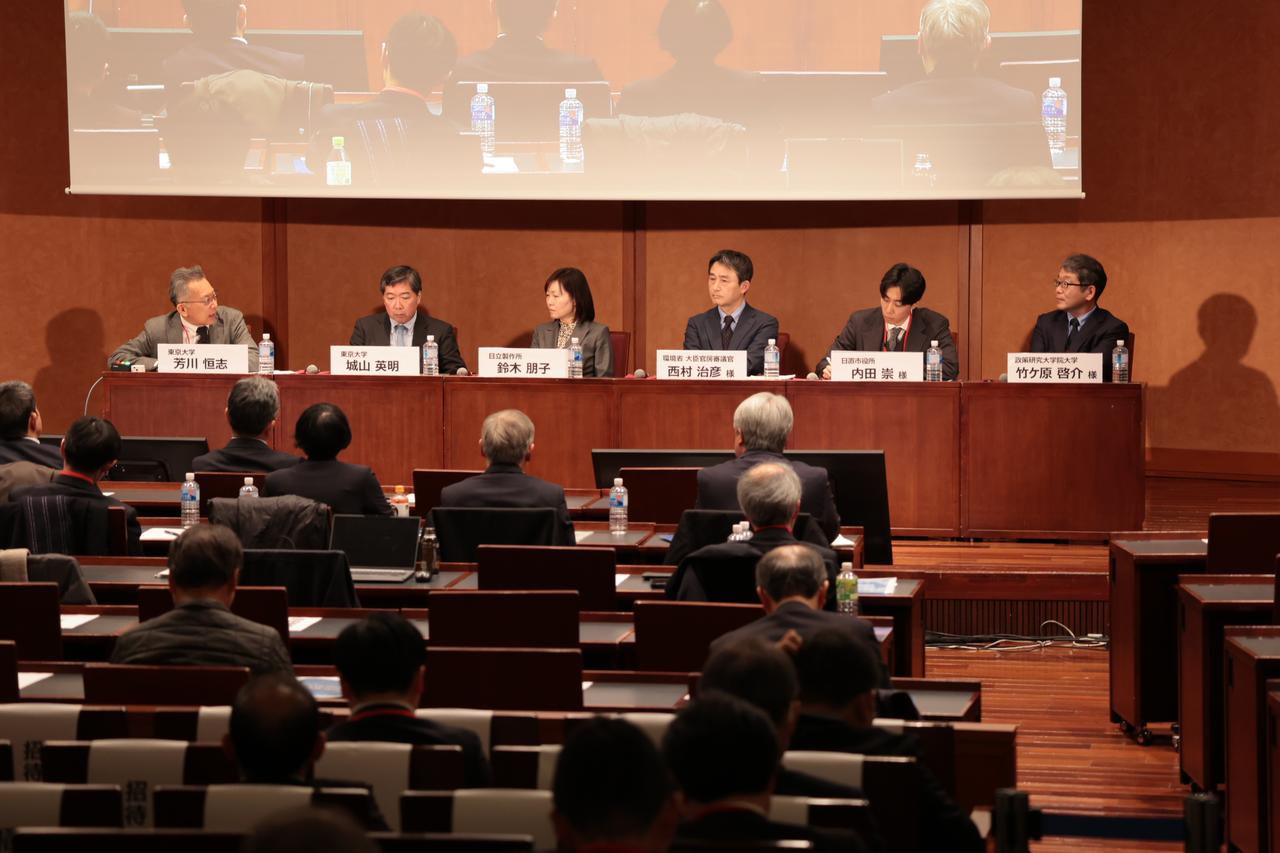
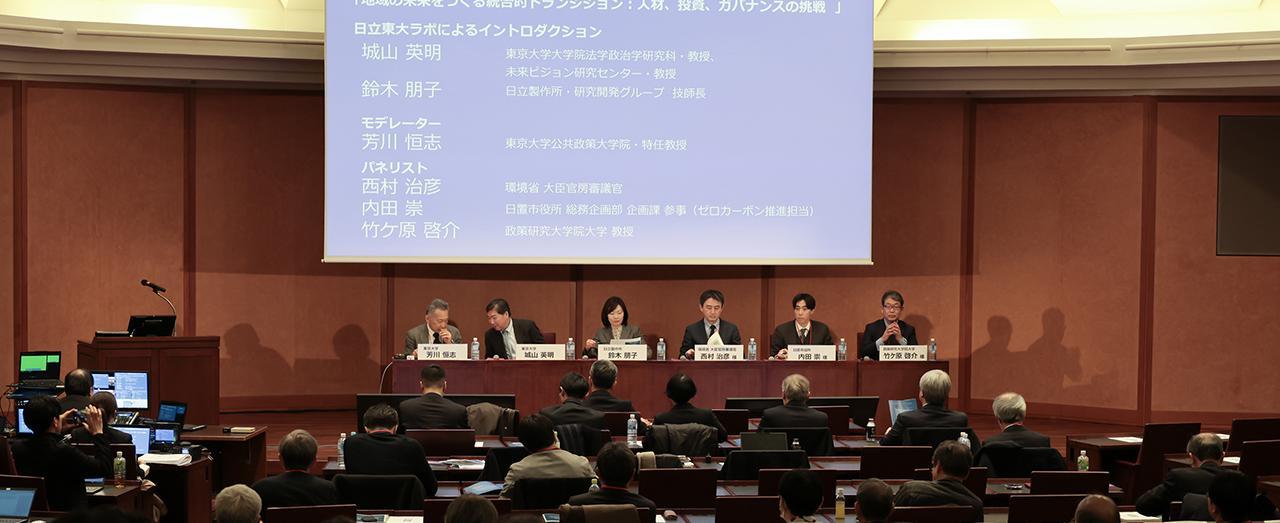
Panel discussion (from left): Prof. Yoshikawa, Prof. Shiroyama, Suzuki, Mr. Nishimura, Mr. Uchida, and Prof. Takegahara.
Yoshikawa: First, let me ask Mr. Nishimura. Since the war in Ukraine, as interest in energy security and geopolitics has grown, the message of decarbonization seems harder to get across than before. How should regional GX be advanced going forward?
Nishimura: As Professor Ohashi said, what is important for achieving carbon neutrality is maintaining the balance of S+3E. Stable energy supply, economic growth, and decarbonization are by no means opposing concepts and can move in the same direction. Efforts based on Japan’s basic policy of achieving all three simultaneously are also important for regional GX.
Yoshikawa: Mr. Uchida, from Hioki City's perspective, could you tell us if you have any requests for the national government?
Uchida: Human resources and funding are indeed major challenges on the ground for local governments. In Hioki City too, only two of us, including myself, are in charge of decarbonization, and we are supported by staff from the local power company. Also, as with other local governments, given limited general funds, we have no choice but to rely on national government subsidies. However, if the purpose of a subsidy does not align with our needs, it can be difficult for local governments to carry out their own initiatives. I think the national government needs to consider how to pick up on local governments’ ingenuity. At the same time, I also feel it is important to provide support in cases where progress stalls due to a lack of understanding on the part of the mayor or senior officials, even when the staff in charge are motivated.
Yoshikawa: There also seems to be a gap in how local and national governments perceive the issues. Professor Takegahara, what are your thoughts?
Takegahara: My impression is that discussions of regional decarbonization often stop at preventing the outflow of energy costs. It is important to reinvest the money retained in the region and channel it into industrial clusters in which each region has strengths. Of course, it is local governments and local businesses that draw that picture. However, when it comes to reinvesting funds in the region with an eye to the future of local industries and the potential use of resources, I believe there are high expectations for the role of regional banks and credit unions that have long worked alongside local industries.
Yoshikawa: Finally, I’d like to ask how we should think about the key actors and the scale of a region.
Nishimura: The question of who the key actors should be is extremely important, and I myself am still searching for an answer. We at the Ministry of the Environment have been expanding cooperation with local governments and regional financial institutions, but I think there is still much more to do. Going forward, mechanisms to increase flexibility on the regional energy demand side will likely be needed to enable more advanced initiatives. I think who will be responsible for providing such local flexibility is a major future challenge.
Uchida: For Hioki City, I think the first priority is to establish a model that can operate within the city. On that basis, I think we will consider whether to expand the scope of the region or apply the model to a different unit. Also, regarding the regional circulation Professor Takegahara mentioned, we are moving forward with a plan to set aside part of Hioki Regional Energy’s revenue as the “Hioki Future Fund” and channel the funds into new local challenges.
Takegahara: What I find notable is that voluntary cooperation is emerging among local governments selected as Decarbonization Leading Areas, such as Hioki City. Mainly younger staff are organizing cross-regional study groups to share best practices and operational know-how. The knowledge accumulated through these cross-regional connections should provide an important basis for expanding good practices in the future.
Shiroyama: Through today’s discussion, I once again felt the need to think in an integrated way about promoting industrial transition and preventing the outflow of funds from the region. This concerns governance at both the national and local levels and can be seen as the next important challenge.
Another point is what unit to use when thinking about a “region.” Regions are undoubtedly important. But in fields like energy that are characterized by complementarity and a broad geographic scope, some aspects cannot be dealt with by a conventional unit of local government alone. The appropriate form of regional cooperation likely differs by field, and I believe how best to approach this will be an important theme going forward.
Closing Address
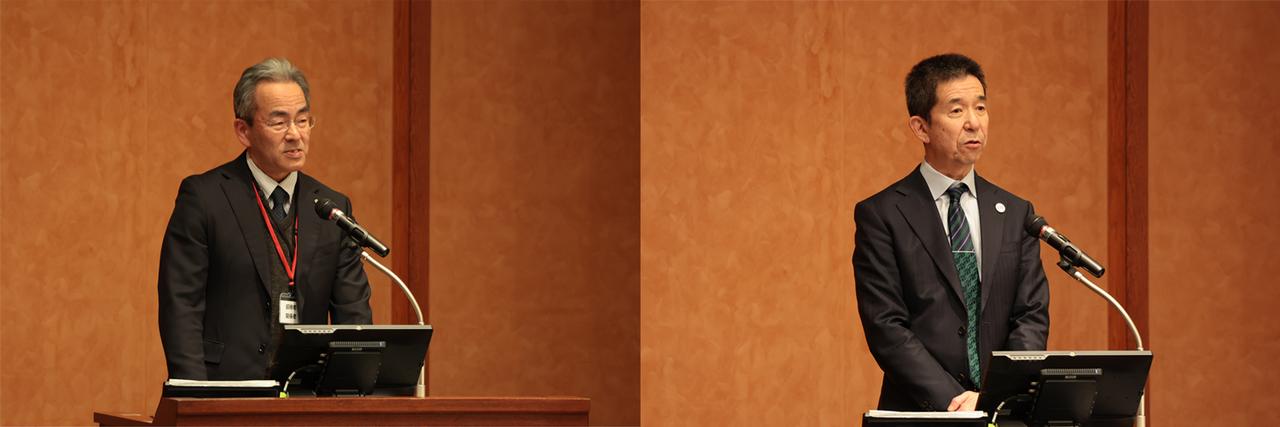
Left: Sameshima, Vice President and Executive Officer / Right: Tsuda, Executive Vice President
Shigetoshi Sameshima, Vice President and Executive Officer of Hitachi, Ltd., gave the closing remarks. He summarized the wide-ranging discussions at the forum, which covered publicness and competitiveness, stable energy supply, institutional frameworks and financing, and regional transition, including regional economic circulation and industrial development. He also expressed his intention to incorporate these discussions into the 8th edition of the proposal and move forward with a comprehensive examination that includes energy security.
Atsushi Tsuda, Executive Vice President of The University of Tokyo, emphasized that co-creation involves creating new value on an equal footing, and expressed his intention to pursue new developments and further growth toward Phase 4. He also noted that a regional approach is essential to addressing decarbonization and stressed the importance of sharing and expanding good practices and developing human resources. He concluded his remarks by thanking the participants.